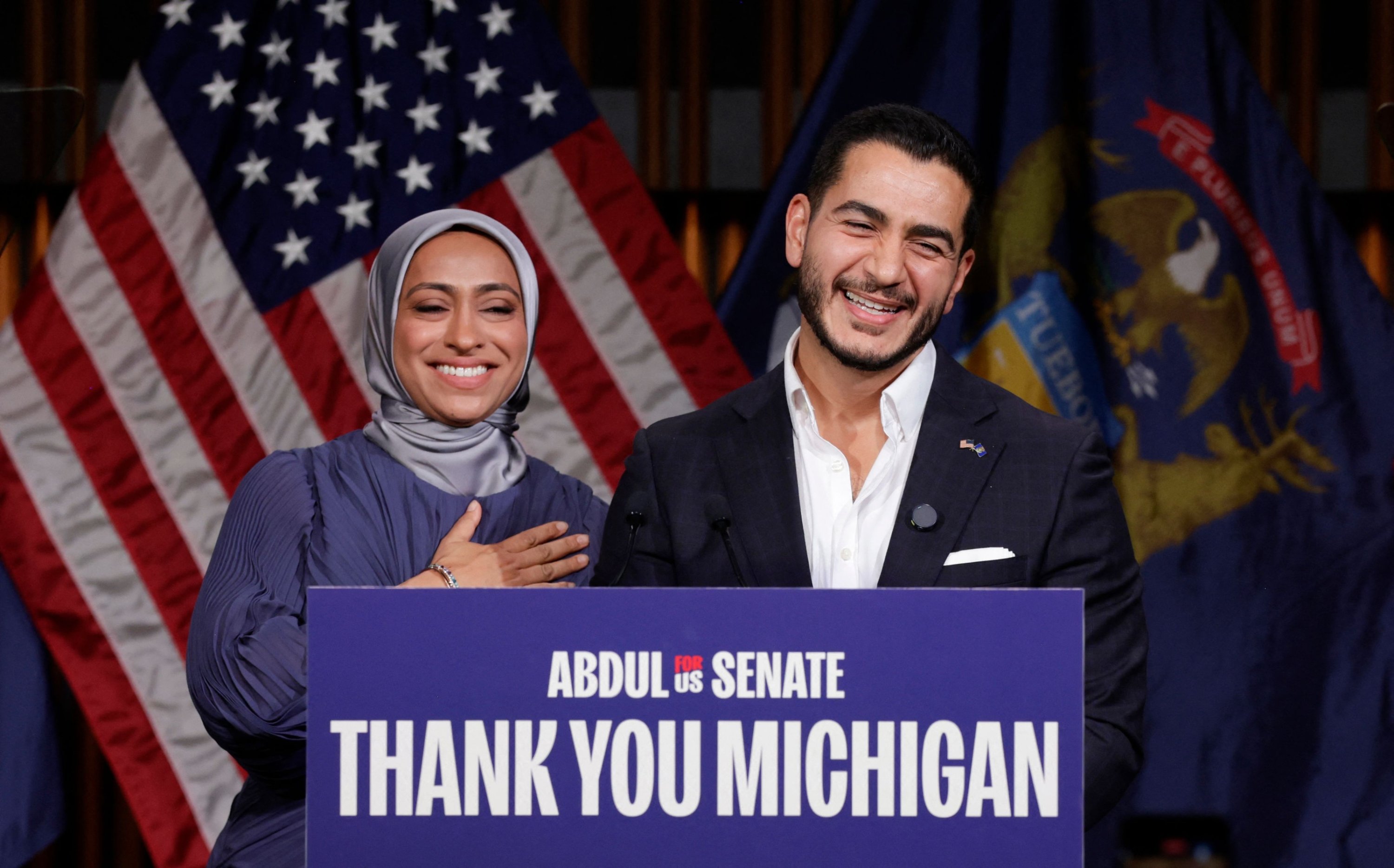
On the night of the midterm elections in the United States, a critical national election held halfway through a president's four-year term, many Muslim households paid close attention to one state's results: Michigan. After nearly 250 years of American history, the region is witnessing a historic rise of Muslim leaders to top-tier government spaces.
When Abdul El-Sayed, a progressive Muslim-American doctor, ran for the U.S. Senate in Michigan as the Democratic Party nominee, his campaign was not just a quest for public office; it was a mirror reflecting the aspirations, anxieties and political awakening of minoritized communities. For Muslim Americans, long accustomed to political isolation, El-Sayed offered a new vocabulary of leadership.
To bring these ideas into a clearer perspective, let me share some findings from a study we conducted on public reactions to his candidacy.
By examining a digital dataset of 130 public reaction profiles surrounding his run, we gained an empirical window into what his political existence means for the next generation of youth trying to find their footing in everyday American society. We then examined the roots of these sentiments, exploring how systemic biases, particularly Islamophobia, shape public perceptions of a Muslim leader’s political viability and how his public presence and representation serve as a source of inspiration for younger generations.
To explore these questions and better understand public perceptions, we adopted a straightforward three-step research methodology. First, we collected 130 public comments posted on reddit on the actual day of the midterm elections, as they represent real-time public reactions. Second, we tracked the upvote scores of each comment. On reddit, upvotes mean that users reading the discussions agree with the comment, find it credible or believe it contributes valuable insight to the discussion. This high score shows strong community endorsement. Finally, we used a simple Python-based coding platform to categorize the reactions into three tones: positive, negative and neutral.
For decades, Muslim civic engagement in the U.S. has been defensive, focused primarily on counteracting post-9/11 surveillance and protecting basic civil liberties. El-Sayed flipped this script entirely.
Our analysis of public discussions revealed a remarkably constructive and vibrant reception, with 79.2% of the analyzed discourse exhibiting positive sentiment and the remaining 20.8% remaining neutral, with 0% purely hostile. The community engagement was intense and highly cooperative, yielding an average upvote score of 71.5 per comment, with peak support reaching as high as 149 upvotes.
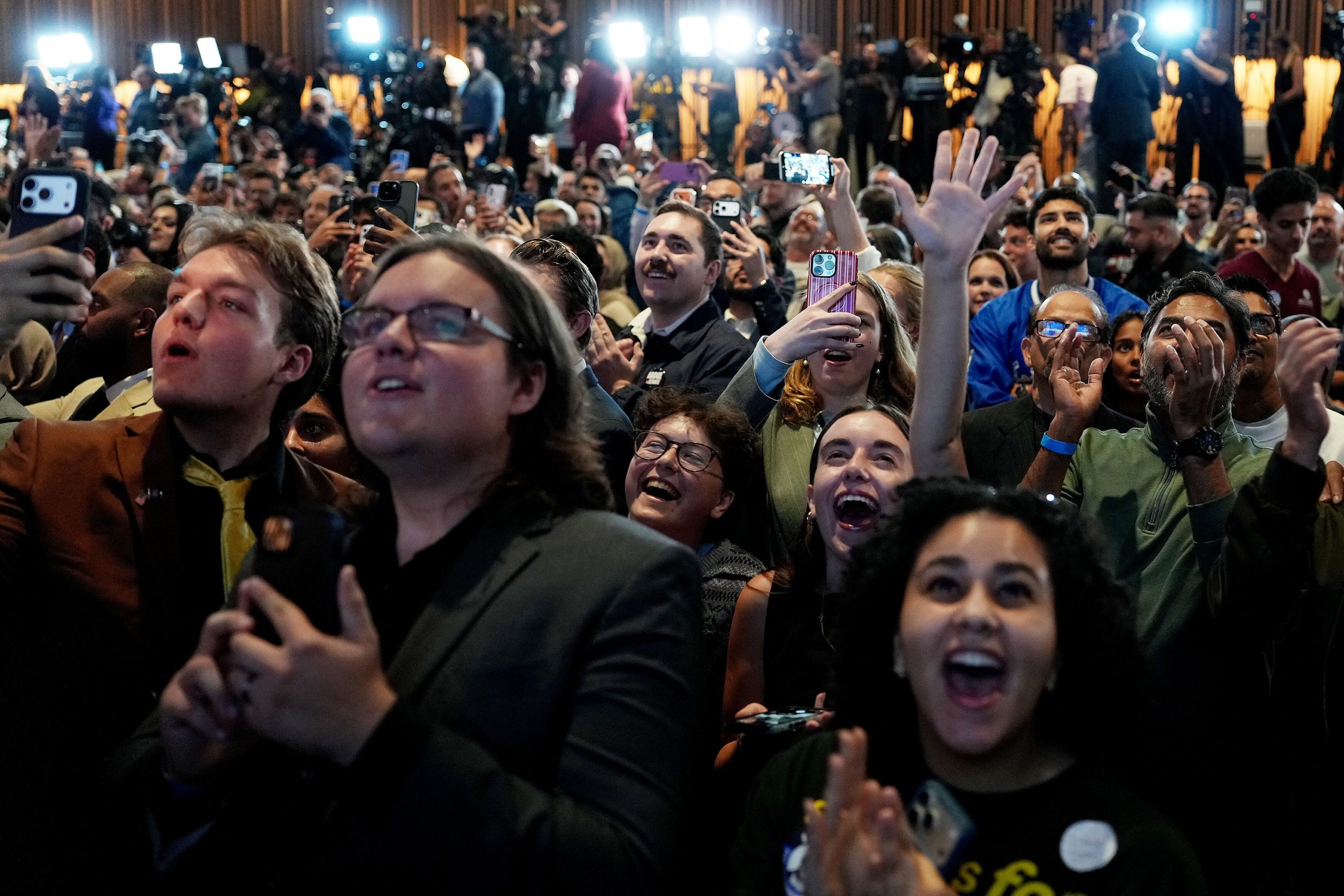
One local voice in our dataset expressed, "I'm from Flint, and we will never forget what happened. His public health background speaks volumes. We absolutely need this change in Detroit."
Another observer highlighted how policy successfully bridged his background with systemic issues: "Policy matters more than identity, and thankfully his policies on environmental justice are stellar."
This change is sociologically profound. For Muslim youth, seeing a leader champion clean water in Flint, Michigan, or universal health care means seeing their faith’s core tenets of stewardship (Khilafah) and justice ('Adl) translated into universal, compassionate public policies. It teaches young people that they do not have to compromise their identity to serve the common good; rather, their identity can be the catalyst for healing a divided society.
Despite his formidable background as a public health doctor, El-Sayed's identity made him a target of unspoken biases. The discourse around his campaign frequently ran into structural hesitation, often masked as concern over whether a swing state was "ready" for a Muslim leader.
Our analysis indicates that 66.2% of the discussion was deeply anchored locally in Michigan, referencing localized concerns in Flint, Detroit and Lansing, while 33.8% focused on national political dynamics. Within these discussions, key phrases reflecting structural hesitation were prevalent, centering on the intense competition during the state's internal party selection process against deeply entrenched, establishment-favored candidates, alongside general election viability in a crucial swing state.
This "electability" trap is a subtle manifestation of everyday Islamophobia. It suggests that a candidate's faith is an inherent political liability. For Muslim youth facing daily microaggressions in schools and workplaces, this discussion reflects their own experiences: the feeling of having to be twice as qualified just to be considered "viable."
Ultimately, El-Sayed’s campaign delivered a simple, powerful message to Muslim children across America: You belong in the rooms where decisions are made.
His visibility normalizes Muslim leadership. A victory is not just about holding an office. It is about reshaping the imagination of a generation. It reassures a Muslim child in Detroit, Chicago or New York that their heritage is not a barrier to their dreams, but a source of strength.
The numbers from our study do more than count words or categorize sentiments; they tell a story of systemic transition. The overwhelming 79.2% positive sentiment and strong community resonance, averaging 71.5 upvotes, reveal a public hungry for authentic, policy-driven leadership that rises above empty tokenism.
Even the anxious discussions surrounding "electability" in Michigan's crucial 66.2% local discourse reflect a community that is deeply engaged, protective and strategically thinking about its future. For the next generation of Muslim Americans, Dr. Abdul El-Sayed’s political journey proves that identity and progressive public service can coexist beautifully. By shifting the conversation from survival to leadership, this movement has constructed an enduring blueprint of hope.