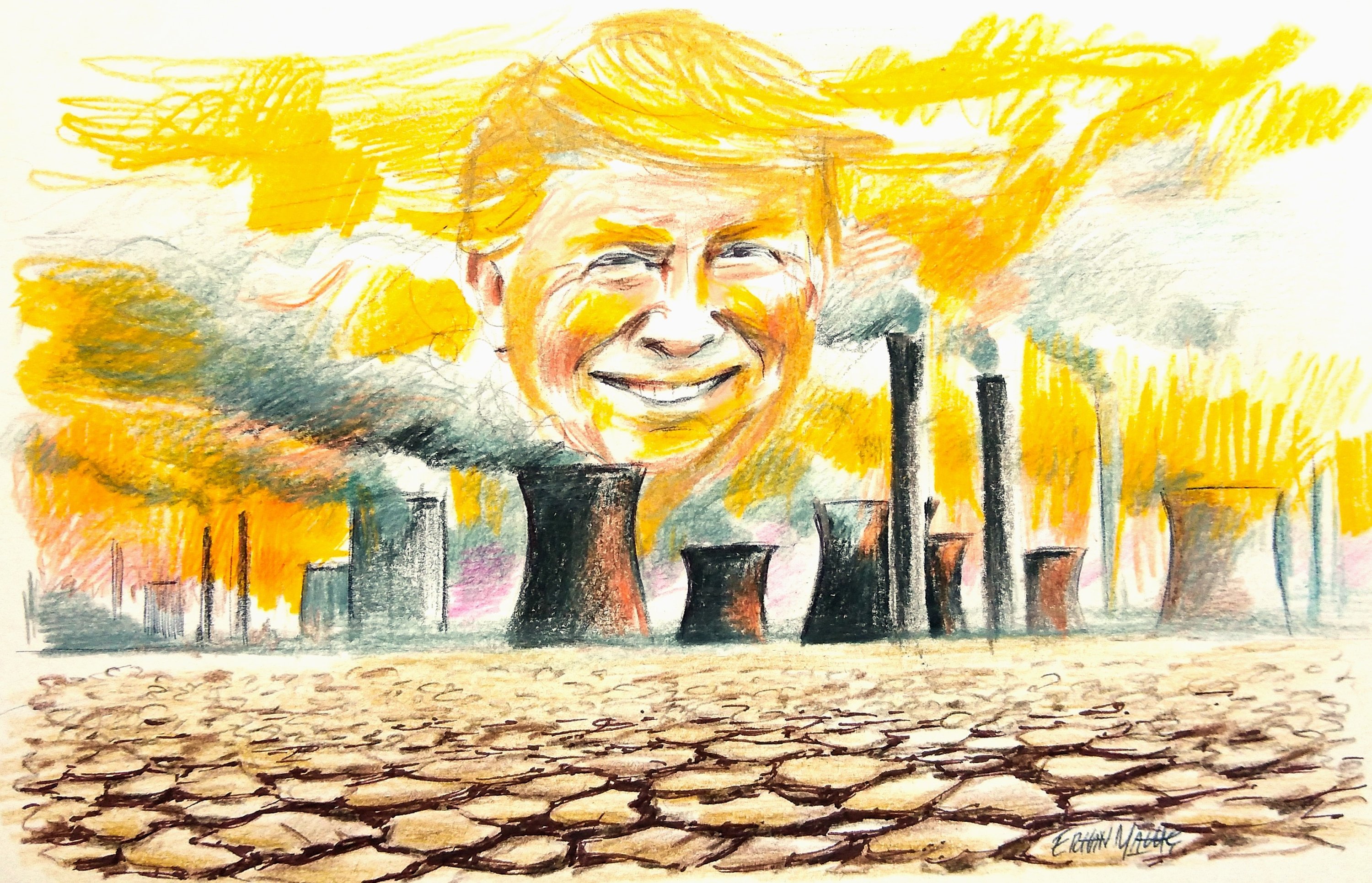
With Donald Trump winning the U.S. presidential elections, a rapid transformation in both domestic and foreign policy has begun. Among the most significant shifts is the reversal of numerous green energy and climate crisis-related policies implemented during former President Joe Biden's administration. In this context, the Trump era marks a profound shift in climate and energy policies, the consequences of which will have far-reaching global implications.
It is widely acknowledged that global warming has reached a critical threshold. This reality is underscored by United Nations Secretary-General Antonio Guterres' statement declaring the arrival of the "era of global boiling." The year 2024 represents a turning point in the fight against climate change, with the Copernicus Climate Change Service and COP29 Summit emphasizing the urgent need to raise climate targets.
Then what is the trajectory of climate policies under the Trump administration? Where will the aggressive expansion of fossil fuel extraction, and assess the broader implications of the escalating global climate crisis lead to us? As in many other areas, Trump's confrontational approach to environmental policies is expected to exacerbate existing vulnerabilities within the global system, further destabilizing its already fragile nature.
In the international arena, actors primarily focus on energy security in terms of its preservation and acquisition. However, while energy plays a crucial role in sustaining the system, it is also evident that it significantly impacts the fundamental unit of that system: the environment. The relationship between energy and the environment has been disrupted since the Industrial Revolution. This transformation has had profound implications, particularly in terms of global warming.
Since the Industrial Revolution, global scientific studies have highlighted the alarming temperature increase. Over the past 12 months, global temperatures have risen by 1.62 degrees Celsius (2.92 degrees Fahrenheit) compared to the 1850–1900 average, coinciding with when humanity began burning large quantities of coal, oil and gas. The uncontrolled use of fossil fuels and the reluctance of developing countries to take necessary measures regarding carbon emissions are among the primary drivers of global warming. A major issue in this regard is the rapid increase in carbon emissions. In 2023, atmospheric CO₂ concentration reached 420 ppm, which is 51% higher than pre-industrial levels.
In this context, various international initiatives and agreements should be considered. These regulations play a crucial role in mitigating the climate crisis and reducing environmental damage. When analyzing the global framework, several key treaties and agreements stand out. The measures taken by countries to limit carbon emissions encompass a broad range of actions, including the restriction of fossil fuel usage. Among these, the Kyoto Protocol, signed in 1997, is particularly significant. This protocol set a target for developed countries to reduce their greenhouse gas emissions by at least 5% compared to 2008–2012 levels. However, its effectiveness remains a subject of debate.
Another crucial agreement, particularly in the context of the United States, is the Paris Agreement. This treaty was adopted during the 21st Conference of the Parties (COP 21) under the United Nations Framework Convention on Climate Change (UNFCCC) in 2015. What makes this agreement particularly important is its role as the most comprehensive and legally binding international framework for the post-2020 global climate regime. One of its primary objectives is to limit global temperature increases to below 2°C compared to pre-industrial levels and, if possible, to 1.5°C.
The impact of environmental and climate policies and their reception at the state level are directly linked to the structure of the international system. One of the fundamental principles of international relations is the anarchic nature of the system, characterized by the absence of hierarchy – meaning that in a system of sovereign and equal states, no higher authority can enforce binding regulations. Although international organizations have the authority to adopt resolutions, their ability to enforce them remains limited. This limitation becomes even more evident when dealing with major global actors such as the U.S.
In 2017, Donald Trump decided to withdraw the U.S. from the Paris Climate Agreement, arguing that the agreement harmed the U.S. economy and disproportionately favored countries like China. However, when Joe Biden took office in 2021, he reinstated U.S. participation in the agreement, emphasizing the urgency of global climate action. Given that Democrats have consistently prioritized climate policies, Trump has persistently criticized these efforts. Consequently, upon his reelection, Trump once again withdrew from the Paris Agreement.
Notably, there are no tangible consequences for such a decision – at least in the short term. As a result, Trump has embarked on his second presidential term with even more aggressive policies regarding energy and environmental regulations. One of the most intriguing aspects of this situation is the stance of Elon Musk, one of Trump's most prominent allies in his administration.
In 2017, Trump fulfilled one of his key campaign promises by withdrawing the U.S. from the Paris Climate Agreement. This decision led to the resignation of Elon Musk, who was then a member of the White House advisory board. Musk even publicly declared on Twitter, "Climate change is real," highlighting his disagreement with Trump’s stance.
Alongside the withdrawal from the Paris Agreement, another critical policy shift was the declaration of the "National Energy Emergency," aimed at boosting fossil fuel production in the U.S. Trump justified this move by arguing that the U.S. needed to combat high energy prices and maintain energy independence. He drew a parallel with the 1970s energy crisis, during which President Jimmy Carter declared a similar emergency due to a global shortage of fossil fuels.
However, the most striking difference is that the U.S. today is not facing an energy crisis comparable to that of the 1970s. This decision, therefore, cannot merely be attributed to economic necessity but rather to a form of aggressive capitalism – one that prioritizes fossil fuel expansion over environmental sustainability.
Regardless of whether the consequences unfold in the short or long term, it is evident that prioritizing economic stability and increasing energy supply will come at a significant environmental cost on a global scale. The Alaska oil drilling projects, initiated under this policy, serve as a particularly alarming example of the severe environmental consequences that could arise from such an approach.
As part of Donald Trump’s Make America Great Again (MAGA) policy, his administration’s fossil fuel-driven growth strategy must be assessed in terms of both its economic benefits and its long-term environmental costs. Domestically, one of the most concerning aspects of this strategy is the authorization of oil drilling in the Arctic National Wildlife Refuge (ANWR) in Alaska. This ecologically sensitive region is home to grizzly bears, polar bears, wolves, and more than 200 bird species, all of which are now at significant risk due to the expansion of fossil fuel extraction.
Beyond its domestic impact, this policy shift also has profound international ramifications. It undermines global cooperation among states, weakening collective efforts to combat climate change. Rather than fostering a balanced and sustainable approach, this trajectory is marked by disorder and disruption. The rising global temperatures, increasing carbon emissions, and the cascading environmental effects that follow will exacerbate the already precarious state of the global climate crisis. Ultimately, these developments will further strain international relations and amplify the challenges that governments must collectively address to mitigate the far-reaching consequences of climate change.