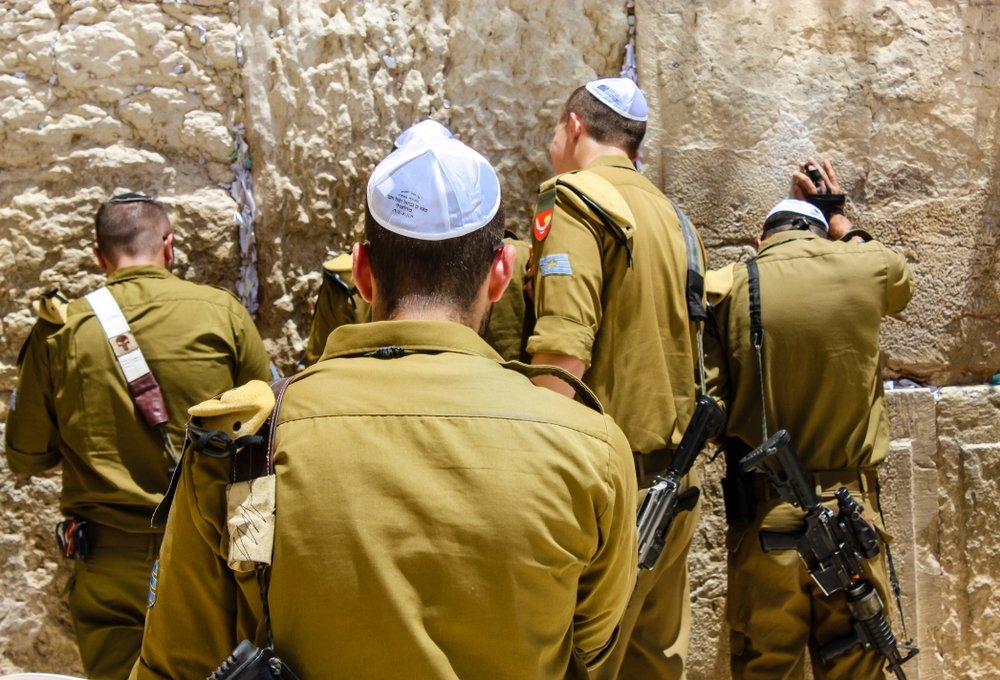
In an interview conducted on March 23, 2026, with the American commentator Tucker Carlson, former speaker of the Knesset Avraham Burg remarked, while commenting on the current war and developments in the Middle East, that Israel lacks both the mindset and the vocabulary necessary to speak about peace.
Similarly, Israeli journalist and intellectual Gideon Levy, speaking on March 13, 2026, on the international independent news program Democracy Now!, drew attention to a survey conducted in Israel, noting that 93% of the public supports the current war.
The first of these examples points to Israel’s foreign policy orientation away from diplomacy, while the second highlights the popularity of war discourse and practice among the public. Based on the statements of Burg and Levy, it can be concluded that both politics and the social sphere in Israel are centered on conflict, and that an understanding distant from a culture of coexistence prevails at both the governmental and societal levels. This situation seriously threatens the prospect of sustainable coexistence with other societies in the region, a reality already reflected across various parts of the Middle East.
When we consider the Middle East, we observe that for thousands of years, numerous religions, languages, ethnic identities and cultures have participated in a shared practice of life. These lands have not historically been structured as a space where “everyone merely defends their own rights;” rather, despite periodic conflicts, they have long constituted a geography in which different beliefs and communities have built a culture of coexistence. In this context, Muslims and Christians of various sects, and Jews, alongside other faith groups, have experienced living together over millennia. This reality is clearly visible both in historical sources and in the patterns of traditional social structures.
By contrast, under the influence of anti-Semitism and nationalism, the Zionist ideology that emerged in late 19th-century Europe – particularly articulated by figures such as Theodor Herzl with the aim of establishing a national homeland for Jews – has long advanced claims that contradict this historical culture of coexistence. According to this discourse, a vast geography in the Middle East was promised thousands of years ago to the Jews. Within this region, Jews alone can – and indeed must, by divine will – establish sovereignty, regardless of existing states and nations.
Furthermore, statements circulating on social media and the press, especially those attributed to Jewish religious figures and even Israeli leadership, suggest that other nations are expected to acquiesce to this claim. It is evident that such teachings and demands have influenced the shaping of Israel’s foreign policy, yet this discourse and practice stand in serious contradiction with historical realities.
Israeli Prime Minister Benjamin Netanyahu frequently employs historical and religious references, implying that the region belongs exclusively to Jews. For instance, in a speech delivered in the autumn of 2025, he made striking remarks about Jerusalem, saying, "We’re here, this is our city, Mr. Erdoğan. It’s not your city. It is our city. It will always be our city. It will not be divided again."
Netanyahu’s statements indicate a politicized and unilateral interpretation of the region’s historical and cultural heritage, reflecting a discourse that disregards or distorts both the long-standing culture of coexistence and historical realities. As will be discussed below, Jerusalem has not been a city belonging exclusively to Jews over the past 2,500 years.
Another example emerged during Netanyahu’s meeting with the Indian leader Narendra Modi. Referring to World War I, he stated: “While we were under Ottoman occupation, it was Indian soldiers and commanders who helped us achieve our freedom. We will not forget those who advanced and gave their lives in the Battle of Haifa.”
These statements contain three historical distortions. First, during the period of World War I, there was no state called Israel; thus, claims of “Ottoman occupation” and “liberation” from an Israeli perspective do not align with historical facts.
Second, at that time, the region was under Ottoman administration, and Indian soldiers fighting as part of the British colonial army were primarily fulfilling military duties within the broader struggle among imperial powers; the matter was not directly related to Jews. Third, there is the question of whether Jews truly required or asked for “liberation” from Muslim rule, which is an issue that can be analyzed in conjunction with the 2,500-year history of Jerusalem.
Zionist ideology is grounded in the concept of the “Promised Land” in the Torah, referring to a sacred region promised in the Tanakh to the descendants of Abraham, Isaac and Jacob. Accordingly, it is a central tenet of Jewish thought that the land of Canaan was granted by God to the Israelites in perpetuity.
In reality, however, according to the narrative of the Tanakh, it is evident that following the destruction of the northern Kingdom of Israel by the Assyrians in 722 B.C. and the southern Kingdom of Judah by the Babylonians in 586 B.C., the Israelites were never again able to establish a continuous sovereign state in these lands.
Except for the relatively brief Hasmonean rule (140-63 B.C.) toward the end of the Second Temple period, the Israelites did not exercise sovereignty in this geography for approximately 25 centuries, living instead under the rule of various foreign powers. During these periods, governance was assumed by the Persians, Hellenistic kingdoms, Romans and later Muslims.
More importantly, ancient texts such as I and II Maccabees demonstrate that Jews, while striving to preserve their monotheistic belief and identity, were at times subjected to the pressures of pagan Hellenistic rulers, as exemplified by Antiochus IV Epiphanes (175-164 B.C.).
First-century Jewish authors such as Flavius Josephus and Philo of Alexandria record numerous instances of persecution during the Roman period. As is well known, the Temple was destroyed by the Romans in 70 A.D., countless Jews were killed in wars and revolts against Rome, and many were sold in slave markets. During the reign of Emperor Hadrian (117-138 A.D.), Jews were even banned from entering Palestine.
This historical trajectory contradicts the claim that the region was divinely granted to the Israelites in perpetuity. History demonstrates that many different political powers have ruled these lands, while Jews, often living in diaspora, constituted one of the subject populations within them.
Consequently, assertions such as “Jerusalem has historically belonged solely to Jews” or that “Jews were liberated from Ottoman rule” have little grounding in the discipline of history.
When we also consider the periods under Muslim rule in the Middle East, it becomes evident that Jews and Christians, in most cases, lived under relatively peaceful and tolerant conditions. During the eras of the Rashidun Caliphs, the Umayyads, the Abbasids, the Seljuks and the Ottomans, different religious groups – despite occasional difficulties arising in the course of life –were generally able to maintain their ways of life and practice their faiths freely, without facing forced exile or systematic extermination policies.
In contrast, from the Rhineland massacres to the Khmelnytsky uprising, and from Spain to the Holocaust, Jews were subjected to systematic violence in many Western and European contexts. No comparable pattern of persecution is observed under Muslim administrations, which stands as an indication of the region’s culture of coexistence.
Reconsidering Netanyahu’s historical discourse, it emerges not only as a theological reference but also as a political instrument. This reflects a tendency to replace the culture of coexistence with a narrative of “land belonging exclusively to a single group.”
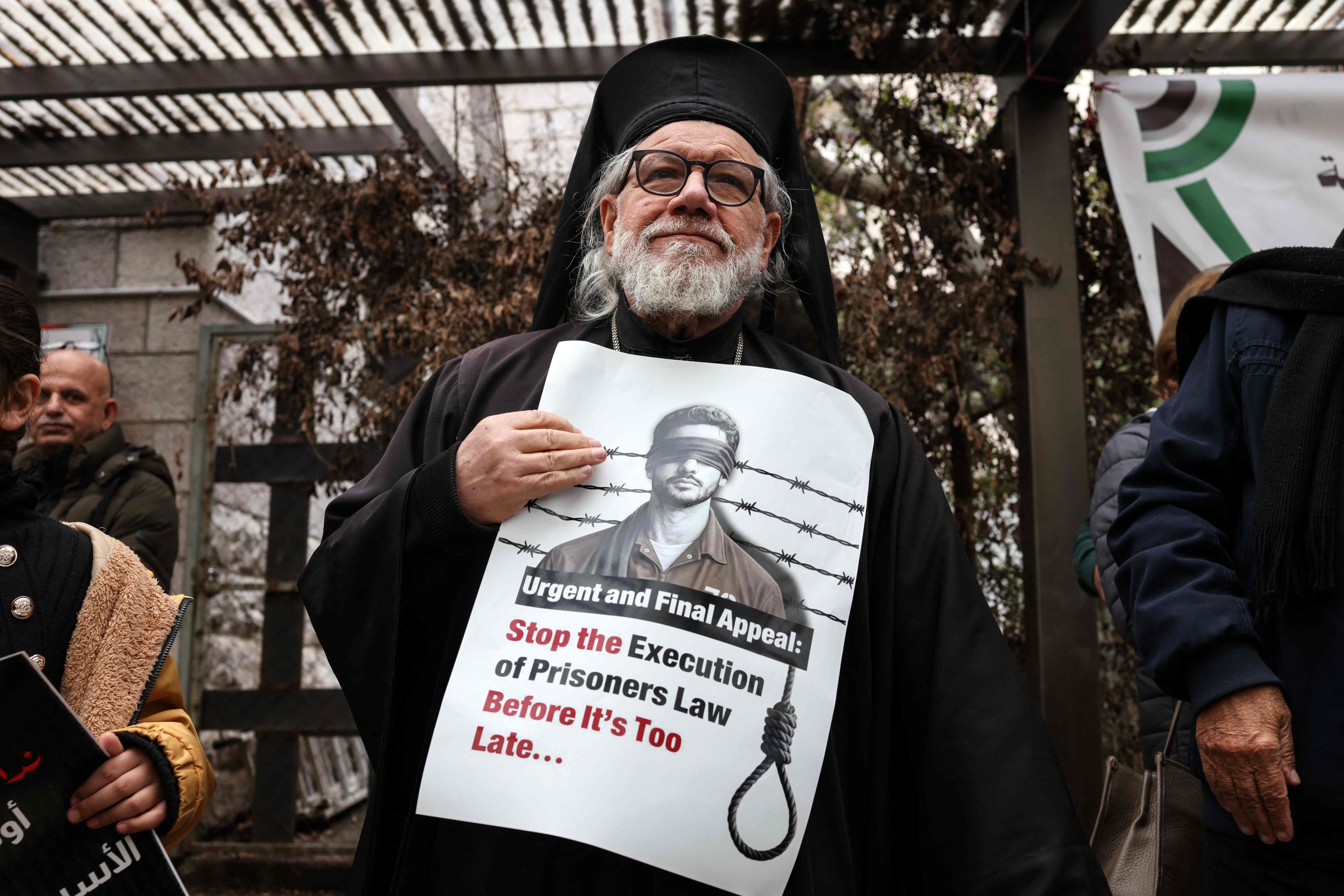
This approach is concretized in Israel’s foreign policies. Aggressive strategies on the international stage, a preference for the use of force over diplomacy and practices resulting in the deaths of countless people and the displacement of millions all weaken the culture of coexistence.
Certainly, religious references such as the “Promised Land” may form part of a historical narrative and archaeological findings can provide evidence illuminating the historical presence of the Israelites in this ancient geography. However, employing such narratives as standalone instruments of territorial claim in modern politics generates serious problems. It amounts to the direct application of theological and historical texts to contemporary border policies, an approach that clearly contradicts both historical realities and the rights of neighboring peoples to exist.
Neither historical processes nor the millennia-long practice of coexistence in this geography can be interpreted through the lens of exclusive ownership by a single group. An understanding grounded in respect for the presence of all peoples and equality of rights constitutes the foundation of a just and sustainable peace. Therefore, priority must be given to peace rather than war, and to coexistence rather than destruction.
The Middle East is not a “possession” to be claimed solely by reference to religious texts. It is a historical geography in which diverse beliefs and cultures have lived together for extended periods. Preserving and sustaining this heritage today is both a human and a political imperative.