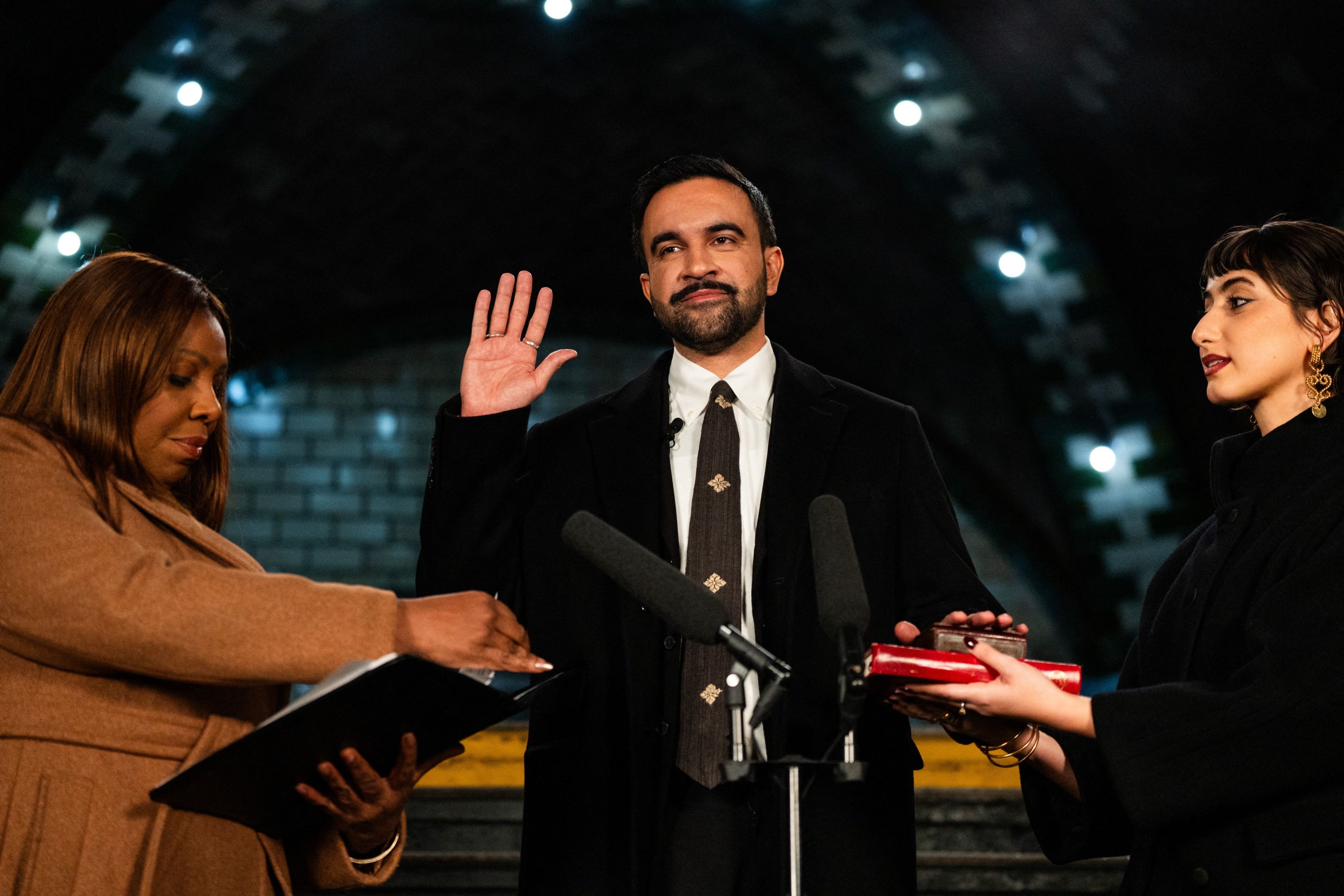
During his three terms, Michael Bloomberg unabashedly described New York as a “luxury product,” a sterile playground for the wealthy where governance was defined by financial capital and the detached view from a chauffeured car. Today, however, the winds are shifting. Whether it is Sadiq Khan in London or the new mayoral archetype represented by Zohran Mamdani in New York, a new generation is fundamentally rejecting this corporate narrative. Instead of the "CEO-Mayor" model that treats the city as a commodity to be bought, these leaders leverage “attention capital,” generated not by spending millions, but by visibility, proximity and a practiced sincerity. They are stepping onto the stage with a promise to transform the city from an elite showcase into a "livable home," proving that the new model of leadership is not about control, but about standing shoulder to shoulder with those dwelling in the backstreets.
Interpreting the rise of these Muslim-identified leaders as a "religious conquest" as right-wing conspiracy theorists often claim would be a grave mistake. This phenomenon represents a class-based compromise developed against the abyss created by neoliberalism. The fact that Mamdani swears on the Quran at his inauguration does not sever him from Western democracy; rather, it functions as a bridge spanning the massive gap between the “Manhattan skyscrapers” and the “backstreets of Astoria.” In these figures, voters do not see a religious agenda, but a sincere ally who speaks their language against the "plutocrats" who have long ignored them. This is more than identity politics; it is a struggle for dignity in which the city's forgotten are marching toward the center.
The label “socialist technocrat” often sounds like an oxymoron; Western political literature tends to divorce socialist romanticism from cold, bureaucratic technocracy. Yet the lineage stretching from Sadiq Khan to Zohran Mamdani quietly fuses these concepts. For them, governance isn’t about ideological speeches. It is a mechanism ensuring the city moves for those who can’t afford delays.
In the winter, an elderly man waits at a Queens stop with a plastic bag of groceries, shoulders tight against the wind. The bus is late again, but when it finally comes, at least the door opens without a price tag. No lecture, no sermon, no performance: just access. Morality stops being a set of lofty words and turns into something you can hold onto, fast, free buses; public services that meet people where they actually stand.
This approach shatters the Orientalist gaze that views Eastern or Muslim figures as backward and resisting modernity. These mayors utilize "management science" better than the established elites. Functionally, there is no difference between a capitalist technocrat and a socialist one; the distinction lies solely in who the turning gears serve. Mobilizing efficiency and discipline not for profit maximization, but for human dignity, is the very definition of moral urbanism. The fact that trains run more punctually under a mayor who swears on the Quran proves that faith does not conflict with rationality.
This moral clarity does not stop at the city limits. Mamdani’s recent response to reports that the U.S. military planned to detain Venezuelan President Nicolas Maduro in New York revealed the same ethic at work on a global scale. Rejecting unilateral intervention, he framed such an act not as geopolitics but as a violation of law, sovereignty and the safety of New Yorkers, particularly the city’s Venezuelan community. The statement was striking not because it was radical, but because it was municipal: a mayor speaking not in the language of empire, but of responsibility. Moral urbanism, in this sense, extends beyond zoning and transit; it insists that a city cannot be just at home while remaining silent about injustice abroad.
Charisma now stems from problem-solving capacity rather than old-school authority. “Talent” no longer means financiers hired to run the city like a corporation. It refers to experts who prioritize the public good, signaled by appointments of figures like Lina Khan. The rise of these leaders represents an ethical restoration. For a growing segment of voters, electing a Muslim mayor is not about fearing Sharia, but about hoping for the return of a lost moral order where corruption is absent, tenders are transparent, and public resources are spent on the many rather than the privileged few.
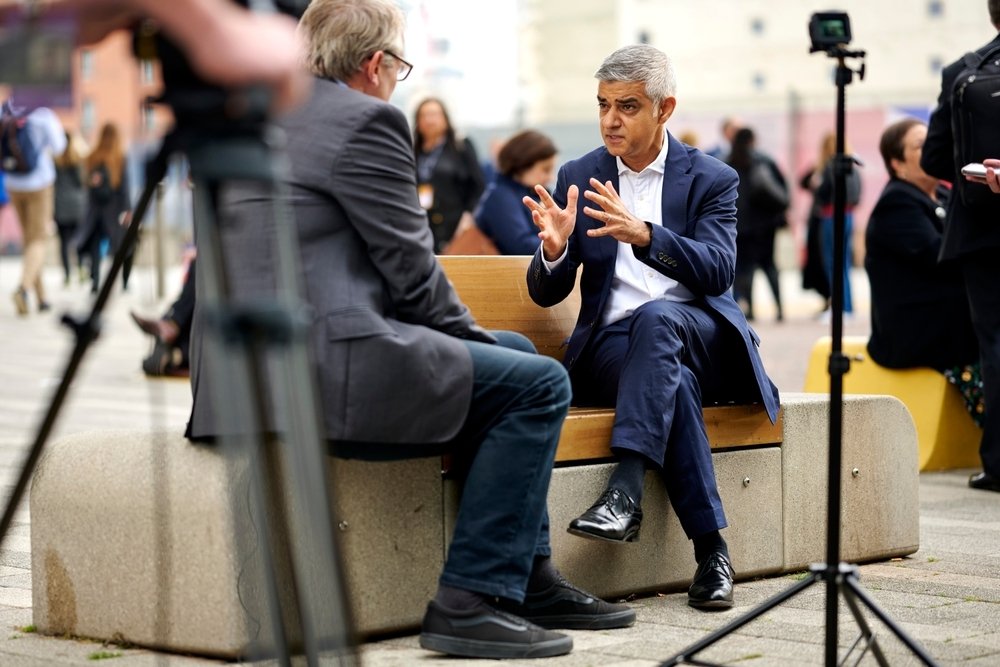
Moral urbanism is the idea that a city’s success should be judged not by growth metrics, but by the dignity it affords its most vulnerable residents. For leaders like Mamdani or Khan, the city is not a "real estate portfolio" but a living space entrusted to its inhabitants. In this perspective, which bears traces of the Muslim intellectual tradition, the balance between profit and right always tips in favor of the right. Successful urbanism designs the city not as a tangle of highways where the wealthy speed through, but as a "home" where the poor, the elderly, and the child can exist in safety. This is a moral leveling act, championing the right of those pushed to the periphery to access the center.
Success is no longer measured by the height of skyscrapers, but by the condition of the city's most vulnerable individual. This is the ability to see “the invisible.” Sadiq Khan’s fierce battle against air pollution in London's Ultra Low Emission Zone (ULEZ) or Mamdani’s approach to the housing crisis are more than technical regulations. They are requirements of "neighborly rights." They reject the neoliberal principle of "every man for himself" and reimagine the city as a massive solidarity network. Their success stems from translating faith not as a tool of imposition, but as an “ethics of service.”
This philosophy rejects ghettoization. The "block party" Mamdani organized after his inauguration, inviting the entire city, was a spatial manifestation of this understanding. He builds not gated communities that erect walls, but squares where people mingle. By injecting "compassion" and "justice" into the cold, metallic face of modern urbanism, these leaders create a new “politics of belonging”, not just for Muslims, but for all city dwellers alienated by modern life.
Zohran Mamdani’s symbolic victory represents the latest link in a global chain. Looking at the atlas – from Sadiq Khan in London to Humza Yousaf in Scotland – it becomes clear that Samuel Huntington’s famous “Clash of Civilizations” thesis has been consigned to the dustbin of history. In moments of crisis, Western metropolises are handing the steering wheel to the very "others" they produced from within. These leaders exhibit a hybrid character, fusing Eastern spirituality with Western rational intellect. This march to the city hall is not an invasion; it is the maturity test of Western democracy.
The image of the Quran resting beside the Constitution on the inaugural podium symbolizes a renewed social contract. This is not the end of Western values, as right-wing populists claim; on the contrary, it is proof that values like justice and liberty have become truly universal. By electing these figures, the public is screaming that they want to be viewed not as “consumers” in a luxury product, but as "citizens" in a shared home. The walls of fear are crumbling, replaced by new forms of moral urbanism.
If Mamdani’s story teaches us anything about the 21st century, it is that Muslims and immigrants are no longer merely the city’s laborers, taxi drivers or bodega owners. They are becoming its architects and, increasingly, its moral conscience. While the old elites remain trapped in their ruins with their fears, the sun is rising over a city, a city beginning to imagine itself as fairer, slower, and more compassionate. It turns out that Muslims wanted more than just a “zip code.” They wanted the horizon.