A few days ago, Palantir Technologies posted a clear summary of its CEO Alex Karp’s new book on X. The post listed 22 main points from “The Technological Republic: Hard Power, Soft Belief, and the Future of the West.” Critics reacted fast. Authors, social media influencers and newspapers ran stories titled with phrases such as “technofascism.” They said the book promotes a dangerous mix of technology and authoritarian control. Academics called it anti-democratic. Some even compared it to older ideas of fascism.
But let us pause for a moment. Before settling on a single label, we should ask a few basic questions. Who are Peter Thiel and Alex Karp? What exactly does the book say? Why do they post this now? And is the world’s fast tech growth their fault or are they offering one possible (but dangerous) answer to a bigger problem?
I am not here to defend Thiel, Karp or Palantir. I am interested in understanding why this vision has emerged, why it resonates with certain political and technological circles and why it should still worry us.
As someone who studied these issues for years, I believe we need clear thinking, not slogans. My Ph.D. thesis examined security mechanisms and techno-politics in the United States. I turned that work into a book. The English version, titled “Security Mechanisms and Techno-Politics in the United States,” will be published by Routledge in August 2026. In my research, I saw how technology and power mix in complex ways. That experience helps me read Karp’s book with care.
First, we need some background. Peter Thiel co-founded PayPal and then Palantir. He is a successful investor. He also supported JD Vance early in his career. Thiel gave Vance his first job in venture capital and supported him at the 2019 Rockbridge Conference. Later, Thiel gave millions to help Vance win a Senate seat. Today, Vance serves as vice president. Palantir itself holds big contracts with the U.S. government. The company builds software for defense, intelligence and the military. It works with the U.S. Army and other agencies. This is not hidden but its public nature does not make it politically neutral.
Thiel travels around Europe to create a theology with his “Anti-Christ Lectures,” as I’ve analyzed in another Daily Sabah opinion piece.
Alex Karp is Palantir’s CEO. He studied social theory and philosophy in Europe. He once called himself a socialist. Now he leads a company that focuses on “hard power,” real strength through software and artificial intelligence. Karp wrote the book with Nicholas Zamiska, Palantir’s head of corporate affairs. The book came out last year. Palantir’s recent X post simply repeated its main ideas in short points. These points sound strong. They reject endless consumer gadgets. They call for tech to serve the nation first. They praise “hard power” and warn against weak pluralism.
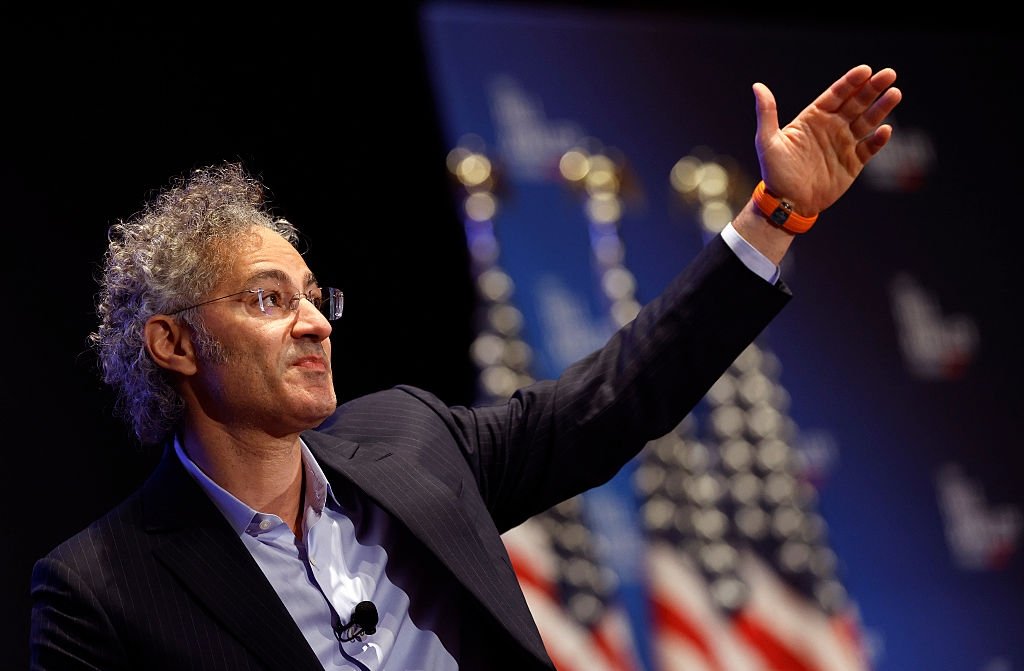
Critics hate this. They call it techno-fascism. Belgian philosopher Mark Coeckelbergh used that exact word. Greek economist and former Finance Minister Yanis Varoufakis, who wrote “Techno-Feudalism” from a neo-Marxist view, said Palantir adds AI danger to nuclear risk. He warned of “AI-powered killer robots.” Others say the ideas are anti-democratic. They fear a world where tech billionaires push nationalism, conservatism and military force. They see Palantir’s contracts in places like Gaza as proof of real-world harm.
Yanis Varoufakis has a point in his own book. He argues that capitalism has changed. Big Tech now acts like feudal lords. They own “cloud capital.” They extract rent from our data and attention. Ordinary people become digital serfs. His neo-Marxist lens sees power moving from markets to tech platforms. Karp and Thiel seem to agree that something broke. But their answer is different. They want tech to serve the nation-state again, not global markets or endless apps.
Here is where I ask us to think deeper. Are Karp and Thiel creating today’s high-speed techno-political world? Or did the world reach this point through decades of global change? And if the second is true, are they powerful actors seeking to shape a crisis that has been building for decades?
Let us look back. Technology accelerated fast from the 1990s. The internet arrived. It connected the world in ways we never imagined. Companies like Google, Amazon and Facebook grew huge. They promised democracy, knowledge and freedom. Billions of people gained access to information. Trade exploded. Globalization lifted millions out of poverty in some countries.
But problems came too. Jobs changed. Factories moved. Many workers in the West lost stable employment. Inequality grew. A small group of tech owners became billionaires. Everyone else faced gig work, low wages and uncertainty. Social media arrived. It connected friends but also spread anger and lies. Societies polarized. Privacy disappeared. Governments and companies collected data on everything we do.
By the 2010s, smartphones ruled daily life. Apps delivered food, rides and entertainment. But they also tracked us. Algorithms decided what we see. Mental health suffered, especially among young people. Then AI arrived faster than anyone expected. It now writes text, creates images and analyzes huge data sets. Companies say AI will boost productivity. Yet many experts warn it could replace millions of jobs, from clerks to coders.
This is the international techno-political economic system, which is global. It does not respect borders. Tech giants operate everywhere. They answer to shareholders, not nations. They move money fast across countries. They avoid taxes when possible. National governments feel weaker. Citizens feel left behind. Trust in democracy drops.
Karp, Zamiska and Thiel say Silicon Valley wasted talent on “the tyranny of the apps.” They argue that tech must return to big national goals, like defense, security and real innovation. They want AI used for strength. They call this a “technological republic.” They believe societies need hard power to survive.
Is this anti-democratic? Parts of it feel that way. Saying some cultures are “dysfunctional” risks arrogance. Calling for military service in the U.S. for all sounds harsh. Praising force over soft power can scare people who remember past wars. Palantir’s work with governments raises real worries about surveillance.
Yet we must also be honest. The old system of pure globalization did not deliver for everyone. Many ordinary citizens in America, Europe and elsewhere feel their countries have lost control. They see borders ignored, jobs gone, and values questioned. They watch tech billionaires shape culture while ignoring national needs.
In this light, Karp’s call for loyalty to the nation should not be dismissed too quickly as mere fascism but neither should it be romanticized as a simple return to civic responsibility. It is a response to real failures, yet it also carries serious risks such as militarization, surveillance, exclusion and the concentration of technological authority in private hands. Varoufakis and Karp see the same broken system from a different angle. They may be responding to the same crisis but their answers are politically very different.
What does this mean for the rest of us? For Türkiye and middle powers like it, the debate matters. We live in a world of fast AI and global tech. We cannot ignore it. If America builds a strong AI defense, others must respond. If tech serves only a few nations, smaller countries risk dependence. We need our own strategies. We must invest in education, data rules and sovereign technology. We must protect democracy while building real strength.
My own book looks at how the U.S. built its security through techno-politics. I show how power, technology and ideas mix. I learned one clear lesson. Technology is never neutral. It reflects the values of those who control it. If we leave tech to global markets alone, we get inequality and weak states. If we push it only toward nationalism, we risk division and conflict. The smart path lies in balance.
Critics are right to question Palantir’s ideas. Democracy needs debate. But calling everything “technofascism” stops thinking. It turns complex problems into simple enemies. We should instead ask hard questions. How do we make tech serve people, not just profit? How do nations keep sovereignty in the AI age? How do we protect freedom while facing real threats?
The world has changed since the 1990s. Technology accelerated. It brought good things and serious problems. Thiel, Karp or Zamiska did not start this acceleration. They live inside it. Karp and Zamiska’s book tries to propose a problematic solution that holds tech that strengthens free societies through hard power and national purpose.
We do not have to agree with every point. But we must understand the “why.” Only then can we build better answers. Türkiye and the world need clear-eyed discussion, not slogans. Our future depends on it.