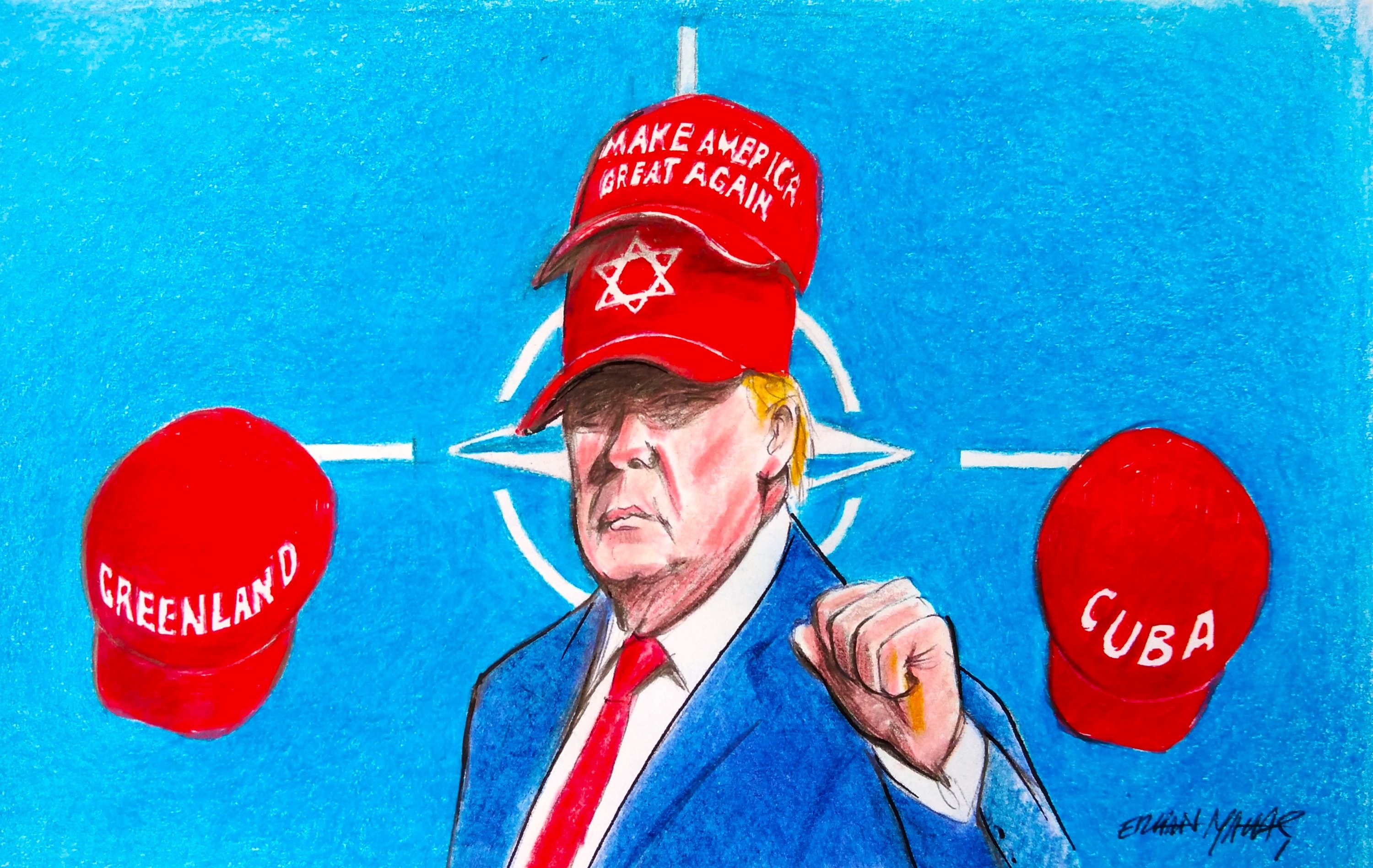
Last month, U.S. President Donald Trump intensified his criticism of NATO, stating that he had not received the support he expected from its allies in the ongoing war with Iran. Trump described NATO as a “paper tiger” and indicated that the United States could withdraw from the alliance. He criticized Europe for not taking enough responsibility, particularly regarding the Strait of Hormuz, saying that while the U.S. has been responsible for Europe’s security, NATO has failed to protect the U.S.
Trump’s anti-NATO rhetoric is nothing new. Since his first term, he has viewed NATO as a costly organization and consistently advocated for increased defense spending by European allies. In this context, during his first term, he emphasized that NATO allies should allocate at least 2% of their gross domestic product to defense. In his second term, he has set a much more ambitious target of increasing this rate to 5%. Trump’s increasingly frequent and harsh rhetoric has unsettled other NATO members and has paved the way for the long-debated strategic autonomy approach to gain strength.
To properly evaluate Trump’s statements, it is necessary to briefly touch upon NATO’s function. As is known, NATO was established in 1949 to create a collective defense line against the Soviet threat. In this respect, NATO functioned as a cornerstone of the Western alliance’s security architecture during the Cold War era and played a critical role, particularly in protecting Europe against Soviet expansionism. Furthermore, from Washington’s perspective, NATO was seen as an institutional tool that allowed the U.S. to establish its political and military power in Europe.
Indeed, in the post-Cold War era, debates arose about whether NATO had lost its function and its raison d’etre. However, the organization’s continued existence and expansion clearly demonstrate that the alliance is not merely a temporary structure dependent on the Soviet threat, but rather a permanent part of the U.S. global hegemony strategy. Therefore, even today, NATO continues to play a central political and military role in maintaining American hegemony in global politics.
Trump’s recent criticisms of NATO are based on the claim that the alliance has not shown sufficient solidarity with the U.S. during difficult times. However, NATO countries have historically stood by the U.S. in many crises, particularly in Afghanistan, and contributed to Washington’s military operations. Conversely, the U.S. has not shown the same level of solidarity in every security threat faced by its allies.
One of the most concrete and recent examples of this is Türkiye. During a period when Türkiye faced intense security and terrorist threats originating from Syria, it did not receive the expected support from NATO and the U.S. Ankara was left alone in its fight against terrorist organizations such as PKK and its offshoots in Iraq and Syria and Daesh operating in northern Syria, and despite its urgent need for air defense at the time, it was denied access to Patriot systems.
This situation sufficiently proves that Trump’s criticisms are based on a selective and pragmatic perspective. Therefore, contrary to Trump’s claims, the real problem is not that NATO is entirely dysfunctional but rather to what extent the alliance intervenes for which members during times of crisis.
NATO’s fundamental principle of collective defense comes into play in the event of a direct armed attack against one of its member states. However, this is not the case in the U.S.-Israel-Iran conflict, because this crisis does not involve a direct attack on NATO or its member states. In the war, the conflicts between the parties are shaped by the military support the U.S. provides to Israel. Therefore, there is no situation that would require NATO members to engage in this conflict under the framework of collective defense.
Similarly, NATO members other than the U.S. do not want to directly engage in the crisis with Iran because they consider Iran to be an “out-of-area” region. As is known, in NATO jargon, the concept of “out-of-area” refers to threat and crisis areas outside the North Atlantic region, which is the alliance’s geographical area of responsibility. Accordingly, in crises outside this region, NATO members do not automatically have an obligation to intervene or collectively defend themselves. As can be understood from the statements of political elites such as French President Emmanuel Macron, European countries use this situation as a justification for not wanting to stand alongside the U.S. on the ground regarding Iran.
Contrary to Trump’s threats, the likelihood of the U.S. withdrawing from NATO is quite low for four reasons.
First, it should be remembered that hegemonic stability theory argues that stability in the international system largely depends on the presence of a dominant power. According to this approach, the hegemonic power shapes the functioning of the system not only through its military capacity but also through the institutional order and structures it establishes. In other words, the hegemonic power uses international organizations as a tool to expand its sphere of influence. From this perspective, the U.S. effectively uses and needs institutional structures like NATO to maintain its global leadership. Therefore, U.S. withdrawal from NATO would not only mean leaving an alliance but also narrowing its own global sphere of influence.
Secondly, it should not be forgotten that NATO is also an important economic tool for the U.S. since it sells billions of dollars of defense products to NATO member countries every year. This generates a significant revenue source for the American military industry. According to the Stockholm International Peace Research Institute (SIPRI) data, the fact that the U.S. exported the most weapons to European countries (35%) between 2020 and 2024 clearly demonstrates that NATO is not only a security measure but also an economic sphere of influence for the U.S. Therefore, withdrawing from NATO would also harm Washington’s global economic interests.
Thirdly, in a scenario where the U.S. withdraws from NATO, the sustainability of the American military presence in Europe becomes questionable as the American security guarantee in Europe disappears. This would call into question the closure or significant downsizing of nearly 50 American bases and facilities spread across different regions of Europe. Such a development would directly weaken the U.S. military and strategic influence over Europe and restrict Washington’s global power projection.
Fourthly, a U.S. withdrawal from NATO would mean the loss of the alliance’s strongest and most decisive actor. This could trigger a process that would not only weaken NATO but also lead to its disintegration in the long term. This is because NATO’s military capacity, deterrence and operational strength largely depend on the U.S.
Indeed, according to a report shared by NATO Secretary-General Mark Rutte in March 2026, approximately 60% of the alliance’s total defense spending last year was covered by the U.S. European countries, having built their national security on this structure for many years, have yet to develop an alternative defense architecture that can balance their dependence on NATO and, consequently, on the U.S. Therefore, a sudden U.S. withdrawal from NATO would create a serious power and security vacuum in Europe. This vacuum would have not only military but also political consequences, increasing Europe’s vulnerability, particularly against Russia.
In addition, a U.S. withdrawal from NATO could trigger anti-American sentiments in European public opinion and erode the social foundation of trans-Atlantic relations. Given the growing debate in Europe in recent years regarding strategic autonomy and criticism of U.S. unilateral policies, such a step could further deepen the existing climate of distrust. Therefore, a withdrawal from NATO could also weaken the U.S.’ soft power and national image, both globally and in Europe in particular.
Finally, Trump stated that the U.S. Congress would not be able to prevent him from withdrawing from NATO if he decided to do so. While the U.S. Constitution gives the Senate a clear role in ratifying international treaties, it does not contain a clear provision regarding who has the authority to withdraw from these agreements. This naturally gives the executive branch a certain degree of room for maneuver. Indeed, Trump’s instruction earlier this year to withdraw from 66 international organizations that he described as “anti-American, unnecessary, and wasteful” demonstrates the president’s ability to take initiative on such matters.
However, when it comes to NATO, the issue becomes more controversial from a political and legal perspective. This is because NATO, unlike the aforementioned 66 organizations, is an institutional structure at the heart of the U.S. global security architecture. Therefore, Trump’s claim that Congress would be completely bypassed in the matter of withdrawing from NATO lacks legal certainty and risks leading to a serious power struggle between the legislative and executive branches.
Based on all this, Trump’s rhetoric about withdrawing from NATO can be seen as part of his populist political style. His foreign policy, shaped by his “America First” slogan, is based on a framework that presents international obligations and alliance relationships as a cost to the domestic public. In this context, it can be said that these statements are largely part of a “stick-wielding” strategy aimed at putting pressure on allies and, in particular, forcing Europe to take on more responsibility. Trump’s past insistence on NATO members increasing their defense spending is a product of this approach. Nevertheless, the fact that Trump is an unpredictable political leader who can sometimes make sudden decisions should not be ignored. This means that, although unlikely, a radical scenario such as the U.S. withdrawing from NATO cannot be entirely ruled out.