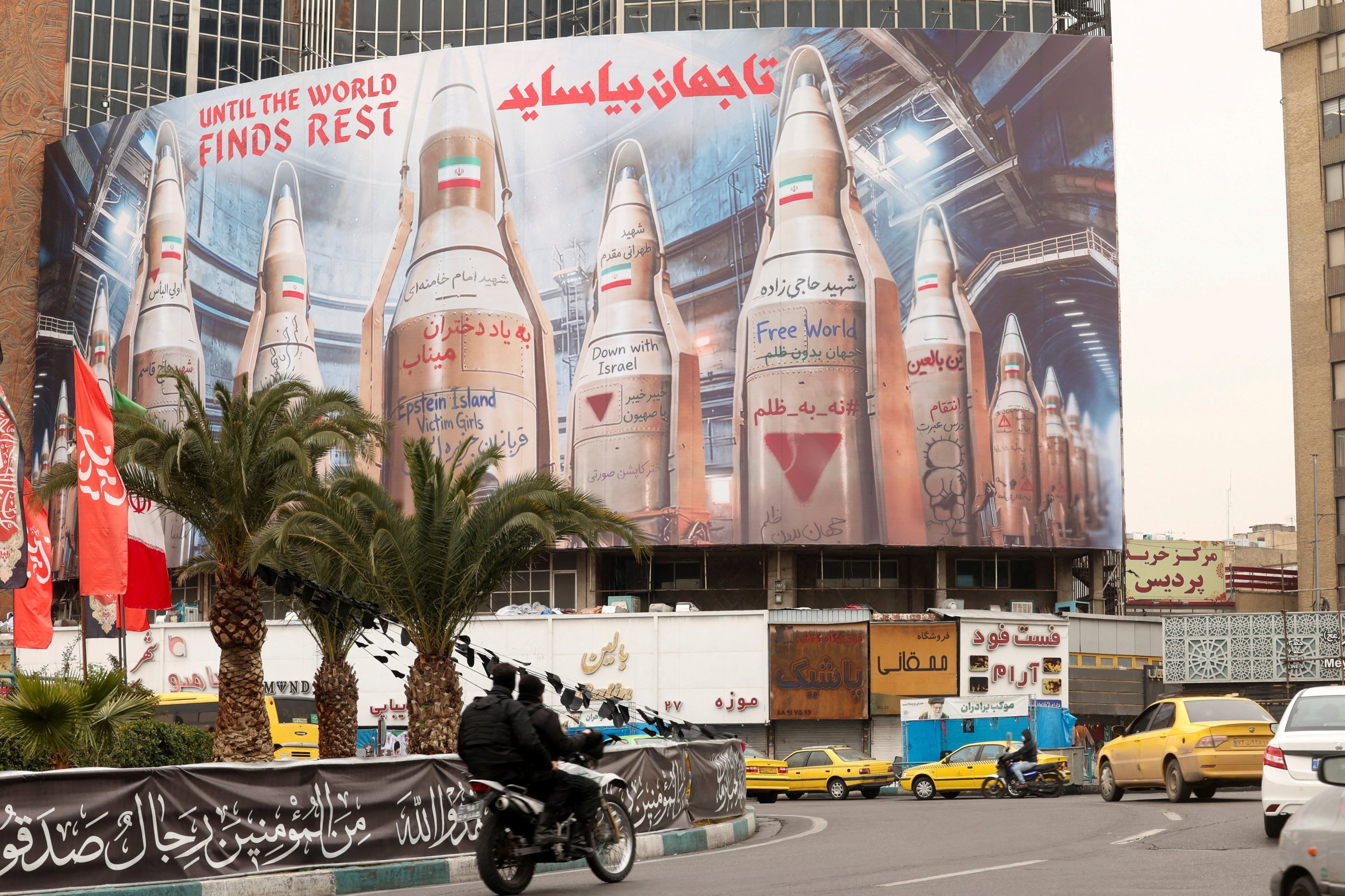
As the U.S.-Israeli war on Iran rages on, speculation grows about whether the U.S. will deploy soldiers on the ground.
Although the U.S. government has not confirmed the deployment of its soldiers in the region, it has not ruled it out either.
Military analysts say that a large-scale ground operation in Iran would be "extremely" difficult given its vast, rugged terrain, but not impossible.
Some say the U.S. would be more likely to carry out "limited, specialized operations involving small units targeting specific facilities."
Professor Thomas Bonnie James of Qatar and AFG College told Al Jazeera that the U.S. could support these smaller missions with rapid-deployment forces like the 82nd Airborne Division. The mission would aim to locate and neutralize enriched uranium in Iran and the most critical nuclear sites, including Natanz and Fordow.
He said that "any limited ground operation would likely begin with gaining air superiority and suppressing Iranian air defenses to allow aircraft and support assets to reach targets safely."
James explained that rapid-deployment forces would need to secure entry points, including airfields or staging areas.
Specialized units, such as the U.S. Navy SEALs or the U.S. Army Special Forces, would then handle the most sensitive ground operations.
The mission would likely involve penetrating hardened facilities, gathering intelligence, and locating or securing sensitive nuclear materials efficiently while minimizing exposure.
The United States currently maintains between 750 and 800 active military bases or facilities across more than 80 countries worldwide. These range from naval supply points to major air bases, providing global logistical support and operational reach.
Given such a powerful military infrastructure, many are questioning how successful the U.S. could be in a potential ground operation in Iran.
Looking at past examples like Iraq and Afghanistan offers some perspective, but it remains limited.
The U.S. invaded both countries for different reasons, leading to the deaths of millions and leaving behind a fragmented Iraq and a devastated Afghanistan. The outcome of the 20-year war in Afghanistan is clear, especially when the chaotic and shocking withdrawal of the U.S. forces is taken into consideration. As for the post-Saddam Iraq, the situation remains unstable. But Iran is a different kind of state with a higher level of experience and capacity.
During his first term, U.S. President Donald Trump had pledged not to send American troops into foreign wars and even withdrew forces from certain countries. But since the U.S.-Israel-Iran war began, the U.S. has already lost more than 10 troops. According to the U.S. Central Command, more than 200 American soldiers have also been wounded.
This situation does not look promising for Trump.
If casualties continue to rise as seen in Afghanistan, Iraq, or even the Vietnam War, it could become politically damaging. Each returning coffin could cost Trump support ahead of the Nov. 3, 2026, elections.
Moreover, it appears that the U.S. was not fully prepared for scenarios such as attacks on Gulf countries, the closure of the Strait of Hormuz, or the mining of key maritime routes.
At this stage, a U.S. ground deployment seems unlikely.
While Iran would certainly face damage from a prolonged war, its strategy of targeting the global economy could inflict even greater costs on its adversaries and those aligned with them.
But despite the disadvantages of the U.S. and Iran’s capability to sustain a long-term war must also be questioned.
While the U.S. and Israel, opening a second front in Lebanon, are intensifying their attacks to force Iran into submission, would Iran's geographical advantages in the Gulf, along with the pressure it exerts via allied groups like the Houthis at the entrance to the Red Sea, allow it to prolong the conflict?
The war with Iran is entering a critical and dangerous new phase. The U.S. is considering deploying thousands of troops – a move that could rapidly alter the course of the conflict. From securing the Strait of Hormuz to targeting Iran’s key oil hub, Kharg Island, the options under consideration carry serious global implications. There are even discussions about securing Iran’s enriched uranium, one of the most complex and dangerous tasks imaginable.
The risks associated with these steps are immense. Iran has declared its intention to retaliate with missiles and drones, and any ground operation could quickly spiral out of control.
No final decision has been made yet, but as casualties rise and pressure intensifies, the world is watching closely. Will the conflict remain limited, or will it escalate into something much larger?