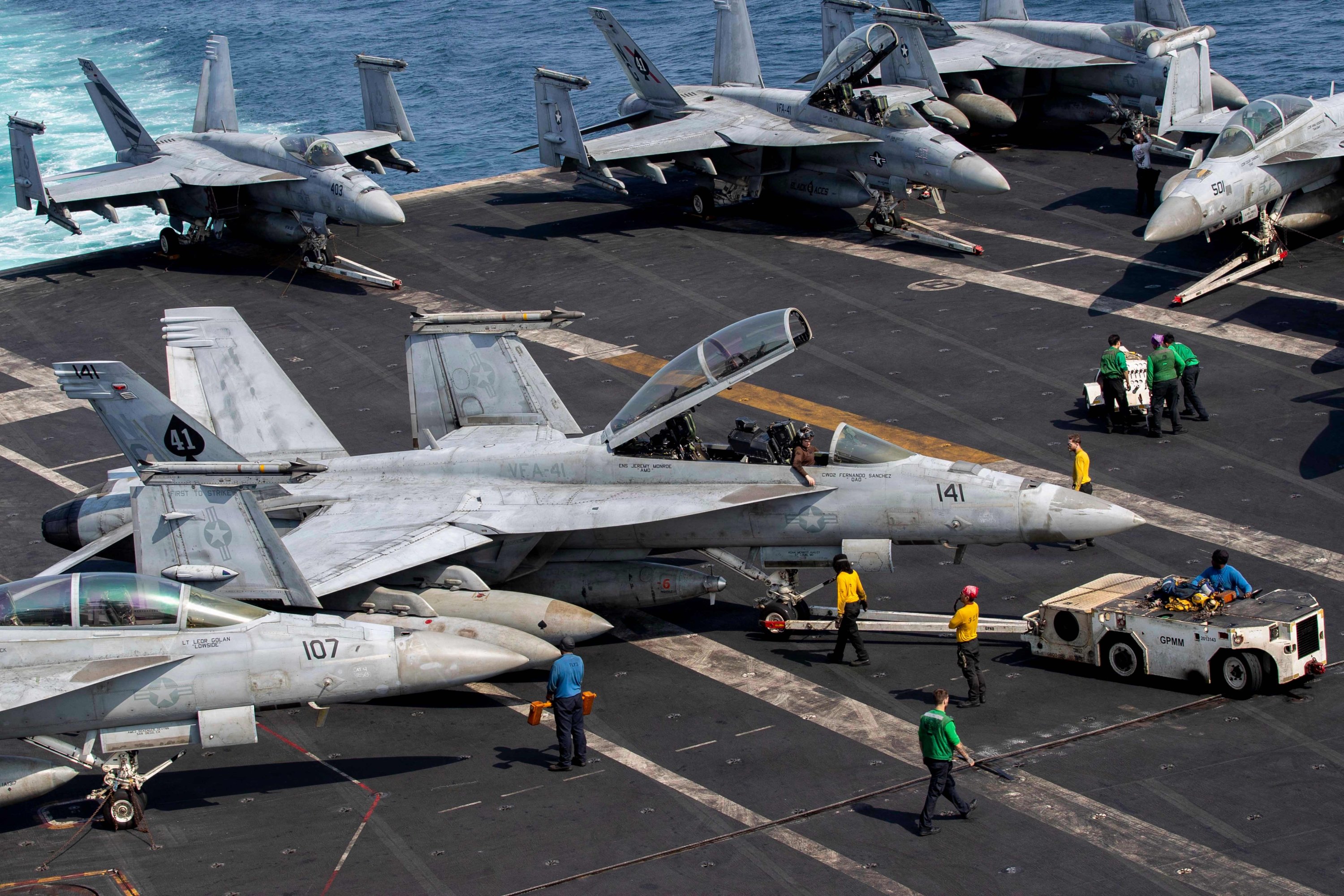
As the war with Iran enters its third week, neither side has been able to gain a clear upper hand over the other. The current conventional war continues as it is. While the U.S. and Israel continue their airstrikes, Iran continues to respond with missile attacks. This situation indicates that, unlike at the outset, the war has shifted from a conventional conflict to a war of attrition.
A war of attrition is generally an undesirable situation for the attacking side. This is because the attacking side seeks a decisive outcome as soon as possible, aiming to swiftly reach the war’s political conclusions by maintaining the initiative. However, when the war turns into a war of attrition, the attacking side loses the initiative, and a balance of power emerges where neither side can defeat the other.
This is precisely what Iran wants. Therefore, the reality on the ground shows that the war being waged is not the one desired by the U.S. and Israel, but rather the one desired by Iran. Iran seeks to prolong the war to wear down the U.S. and Israel and force them to the negotiating table on its own terms.
Moreover, the prolonged wear-and-tear of the U.S. and Israel is a desirable outcome not only for Iran but also for Russia, China and even Europe.
From a military perspective, the attacking side always seeks to maintain the initiative. However, once the conflict has turned into a war of attrition, three fundamental options emerge: Drawing other powers into the war, adopting a different operational approach, such as a ground offensive, and bringing in additional forces.
When evaluated within this framework, it is evident that the U.S. strategy of drawing other countries into the war, particularly through the security of the Strait of Hormuz, has backfired. Neither Europe, South Korea, nor Japan wishes to become involved in this war. In fact, the situation has reached such a point that U.S. President Donald Trump has even sought assistance from China.
This clearly highlights the gravity of the situation from the U.S. perspective. Consequently, it appears highly unlikely that the U.S. could involve a third party in the war at this stage. The alternative option, a ground assault on Iran, is virtually impossible under current conditions. Given the strength of the Iranian regime, the country’s geographical depth, and the military risks involved, such an operation would be extremely costly for the U.S.
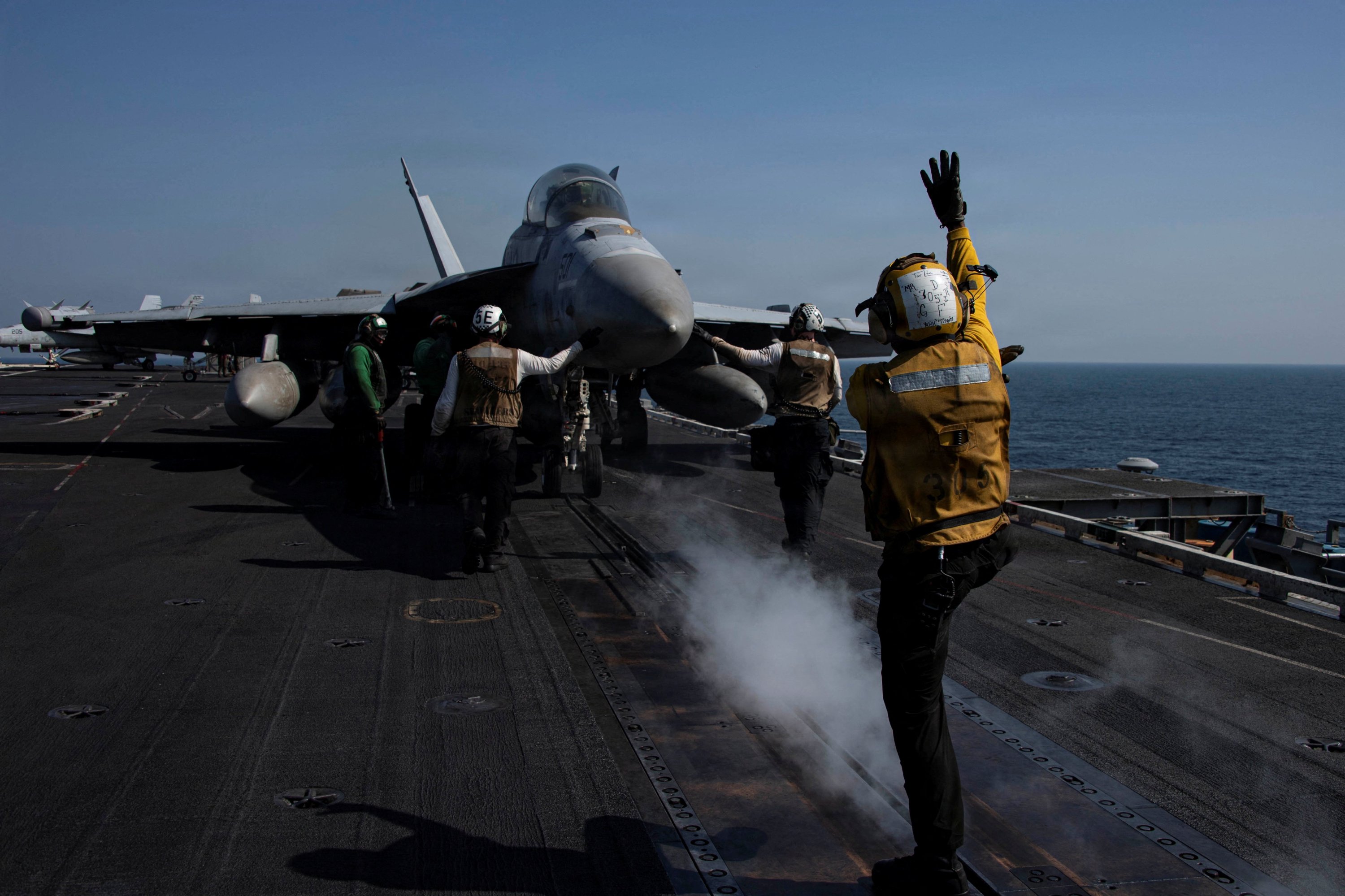
The most critical remaining option is to send additional forces to the front. The U.S. is capable of doing this. Indeed, it has been stated that the USS George H. W. Bush aircraft carrier will be deployed to the region. However, there has been no concrete development regarding this ship and its accompanying task force on the ground. Yet, the inclusion of new forces in the battle could yield results in favor of the attacking side and shift the balance of the war. So why isn’t this being done?
At this point, it appears the U.S. has made a very critical and strategic decision. The U.S. seems to have accepted that the war, in its current state, has turned into a war of attrition. In this context, it can be assessed that the U.S. and Israel aim to gradually eliminate Iran’s combat capabilities by using minimal force to reduce Iran’s missile stockpiles, lower its missile-firing capacity, and lay the groundwork for broader conventional operations at an opportune time.
This is because it is known that Iran cannot sustain this capacity indefinitely. Additionally, the fact that control of the airspace is largely in the hands of the U.S. and Israel is also making it difficult for Iran to procure missiles from abroad.
In an environment where the U.S. air defense system in the Middle East has largely become ineffective, and defense is primarily conducted using tactical radars, global positioning and electronic warfare support provided by China and Russia are bolstering Iran’s resistance. This, in turn, is significantly reducing the reaction times of the U.S. and Israel.
In conclusion, Iran is resisting, and so are the U.S. and Israel. Iran is wearing down the enemy, and so are the U.S. and Israel. Consequently, the war has clearly transformed into a battle of attrition. And it appears that the winning side will be the one that can endure longer.
Although there is talk that the U.S. might back down due to rising costs and ammunition consumption, the reality on the ground suggests otherwise. The U.S. and Israel are not backing down because this war, especially for the U.S., is not merely a war against Iran but a struggle for hegemonic power. If the U.S. were to abandon the war and sit down at the negotiating table with Iran, as China, Russia and Europe expect, the outcome may be costly for them.
It might be forced to withdraw from many regions, particularly the Middle East. It could enter a process of global disintegration, or at least, it could suffer a significant loss of its hegemonic power.
It is, however, impossible to predict how deep this disintegration might become. But still, one thing is for sure: The war with Iran has become a major test of whether the U.S. can sustain its global presence.
At the start of the war, it was believed that the U.S. would achieve a swift resolution through its own strength. However, the failure to achieve results in the early stages led to efforts to draw other powers into the conflict.
Despite this, the U.S. has found itself isolated at this point. One of the main reasons for this is that the U.S. left Europe to face Russia alone and reduced its support for NATO. This situation has caused Europe to distance itself from the U.S.
At this stage, a security dilemma has emerged for Europe. On one hand, there is the confrontation with the Iran war and the energy crisis; on the other hand, there is the Russian threat.
However, there is also a counter-scenario to the war. If the U.S. withstands this attrition war and achieves the desired outcome against Iran on its own, the stance the U.S. takes toward its allies in this scenario is of the utmost importance.
In this scenario, the U.S. could leave Europe even more isolated in the face of Russia, push Europe into a direct conflict or make much harsher geopolitical moves.
In conclusion, the conflict with Iran has evolved into a struggle that will determine global power balances, rather than merely a military clash. As the U.S. finds itself isolated, the attrition war Iran seeks is unfolding, and both sides continue to resist one another. The war is entering a more critical phase with each passing day. And it appears that the outcome of this war will be determined not so much by military strength as by strategic resilience.