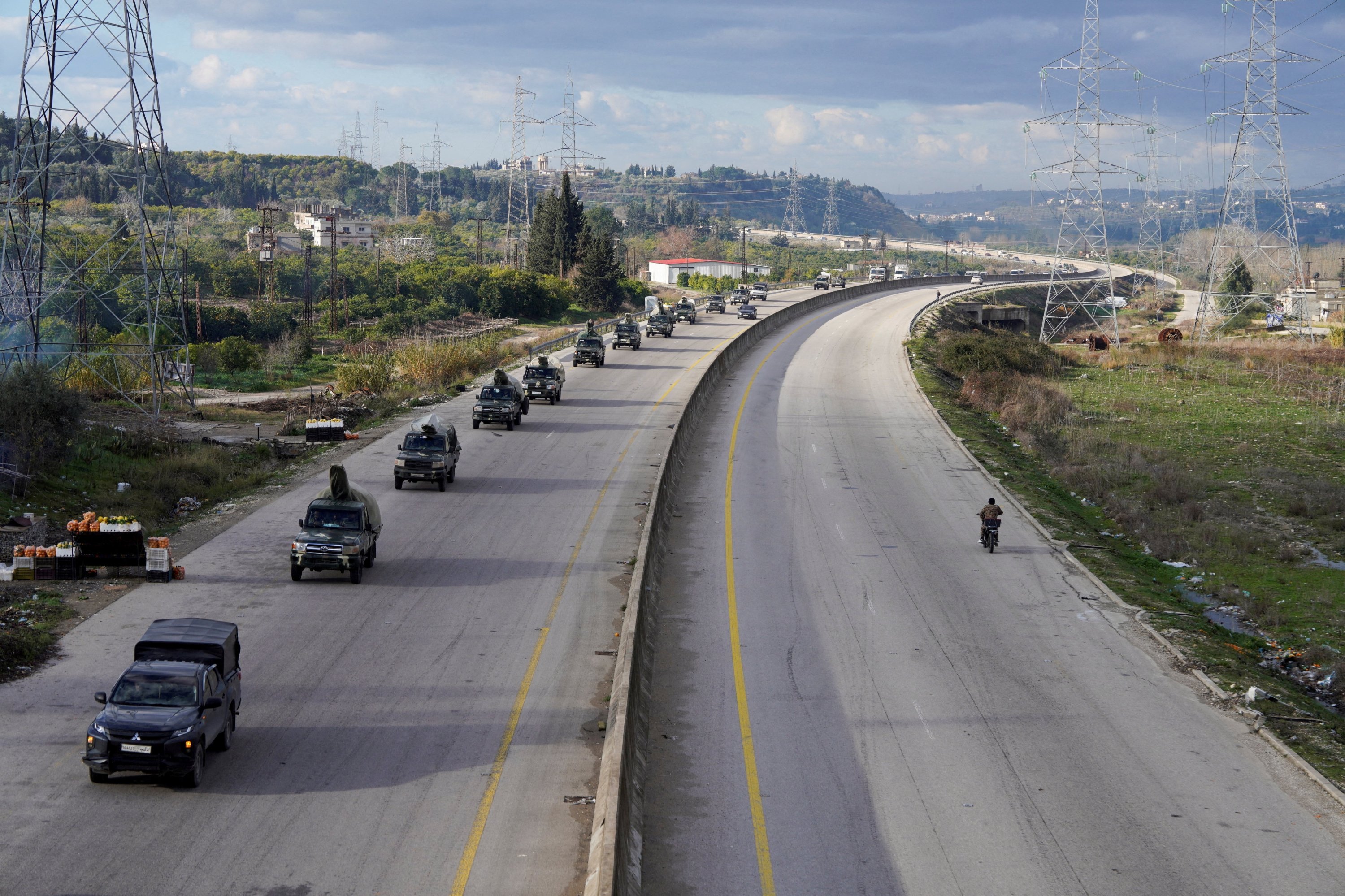
Following the collapse of the Bashar Assad regime in December 2024, the emergence of a new administration in Damascus under Ahmed al-Sharaa’s leadership opened a significant window for national consolidation. In March 2025, al-Sharaa and Ferhat Abdi Şahin code-named "Mazloum Kobani," head of the YPG terrorist group, signed a memorandum of understanding outlining a road map for the gradual integration of the YPG's so-called armed wing, SDF, into the Syrian state’s security apparatus. This agreement signaled a tentative attempt to reconcile armed non-state actors with a reconstituting central authority. Yet the recent offensive attacks launched by the YPG mark a deliberate and calculated escalation with far-reaching implications. The intensification of clashes in Aleppo’s Sheikh Maqsoud and Ashrafiya neighborhoods is therefore not a localized security incident, but rather the violent manifestation of a deeper strategic struggle over Syria’s post-Assad political order.
The timing of the YPG’s escalation reflects a convergence of tactical considerations and existential concerns regarding its long-term political project. The primary objective is not the immediate or outright partition of Syria – a goal that remains structurally unattainable – but the disruption of the March 10 integration framework, which posed a direct threat to the YPG’s de facto autonomy. By demonstrating its capacity to destabilize strategically sensitive urban centers such as Aleppo, the YPG seeks to recalibrate the balance of power at the negotiating table and compel Damascus to reconsider the terms of integration. The ultimate aim is to replace the existing framework with a model that institutionalizes far-reaching autonomy in eastern Syria, including independent security arrangements and control over economic resources under the banner of “Rojava.” Neither Damascus nor Ankara has shown any willingness to accept such an arrangement, rendering military confrontation an increasingly likely outcome, as reflected in the clearing of YPG positions in Sheikh Maqsoud and Ashrafiya.
At the same time, the YPG has attempted to exploit the structural uncertainty inherent in Syria’s post-regime transition. The fragility of state institutions, unresolved questions of authority, and competing claims to legitimacy have created a temporary opening in which the YPG has sought to consolidate territorial control, influence demographic balances and secure critical economic assets, particularly in energy-rich areas such as Deir el-Zour. Yet this escalation constitutes a risky gamble. While the al-Sharaa administration lacks a fully consolidated military capacity, it retains sufficient coercive tools and external diplomatic support to impose high costs on armed challengers, particularly when backed by Türkiye’s clear opposition to any YPG entrenchment along its borders.
Internal dynamics further complicate the YPG’s calculations. Recent attacks attributed to YPG-linked cells in Aleppo also reflect tensions within the broader movement, particularly the organization’s relationship with the PKK and the European-based KCK structure. More hardline factions, skeptical of negotiations with Damascus or Ankara, have exerted pressure on the YPG to maintain a confrontational posture. In this context, the Aleppo escalation can be read as an effort by the Syria-based YPG leadership to reaffirm its revolutionary credentials, assert strategic autonomy and neutralize internal criticism that frames political engagement as capitulation.
The YPG’s ability to sustain such escalation has been facilitated by external support, primarily from the U.S. and, more discreetly, Israel. For years, this support has been publicly justified almost exclusively through the lens of countering Daesh. Framed as a pragmatic partnership against a shared security threat, cooperation with the YPG allowed external actors to present their engagement as operationally necessary rather than politically transformative. In this narrative, Iran played a marginal role, and attempts to retroactively reinterpret this support as primarily aimed at countering Iranian influence following the regime’s collapse risk analytical overreach.
This framing, however, exposes a fundamental contradiction. If defeating Daesh were genuinely the primary objective, Türkiye – arguably the country that has borne the greatest military, human and financial burden in the fight against Daesh – would have represented the most logical and effective partner. Instead, Washington’s continued reliance on the YPG reflects a preference for an actor perceived as more controllable and less diplomatically demanding, even at the expense of long-term regional stability and alliance coherence. The choice was not dictated by necessity, but by convenience.
Claims that U.S. support for the YPG is driven by concern for Kurdish rights are equally problematic. The protection of Kurdish political and cultural rights does not require the empowerment of armed non-state actors designated as terrorist organizations by key regional states. More sustainable and legitimate pathways exist through diplomatic engagement with actors that prioritize negotiation and political integration, including Türkiye and the al-Sharaa administration in Damascus, both of which have demonstrated a willingness – however imperfect – to address Kurdish grievances within the framework of Syria’s territorial unity.
Israel’s engagement with the YPG follows a similarly instrumental logic. Rather than reflecting a principled commitment to "Kurdish autonomy," Israeli outreach should be understood as an extension of its long-standing preference for peripheral alliances and tactical leverage within fragmented regional environments. Yet, this engagement remains limited, indirect and constrained by broader international trends that increasingly favor Syrian sovereignty and reconstruction over prolonged fragmentation.
To sum up, the convergence of YPG ambitions, conditional external backing, and Syria’s fragile transition has transformed Aleppo into a strategic testing ground. The escalation represents a high-risk attempt by the YPG to convert territorial control into internationally tolerated political autonomy before a new Syrian state fully consolidates its authority. This strategy depends on the assumption of continued external tolerance, if not active support – an assumption that appears increasingly untenable as regional and international actors recalibrate their positions.
The al-Sharaa administration’s determination to reassert state authority, combined with Türkiye’s unwavering opposition to YPG entrenchment, constitutes a powerful countervailing force. In this sense, the struggle over Aleppo’s neighborhoods is not merely about local control, but about the broader question of whether Syria will emerge as a permanently fragmented arena of proxy competition or embark on a fragile, uneven process of reunification. Ultimately, Syria’s next chapter will be decided not only in symbolic confrontations but also by whether Damascus can reestablish authority east of the Euphrates and integrate the contested territories into a coherent political order.