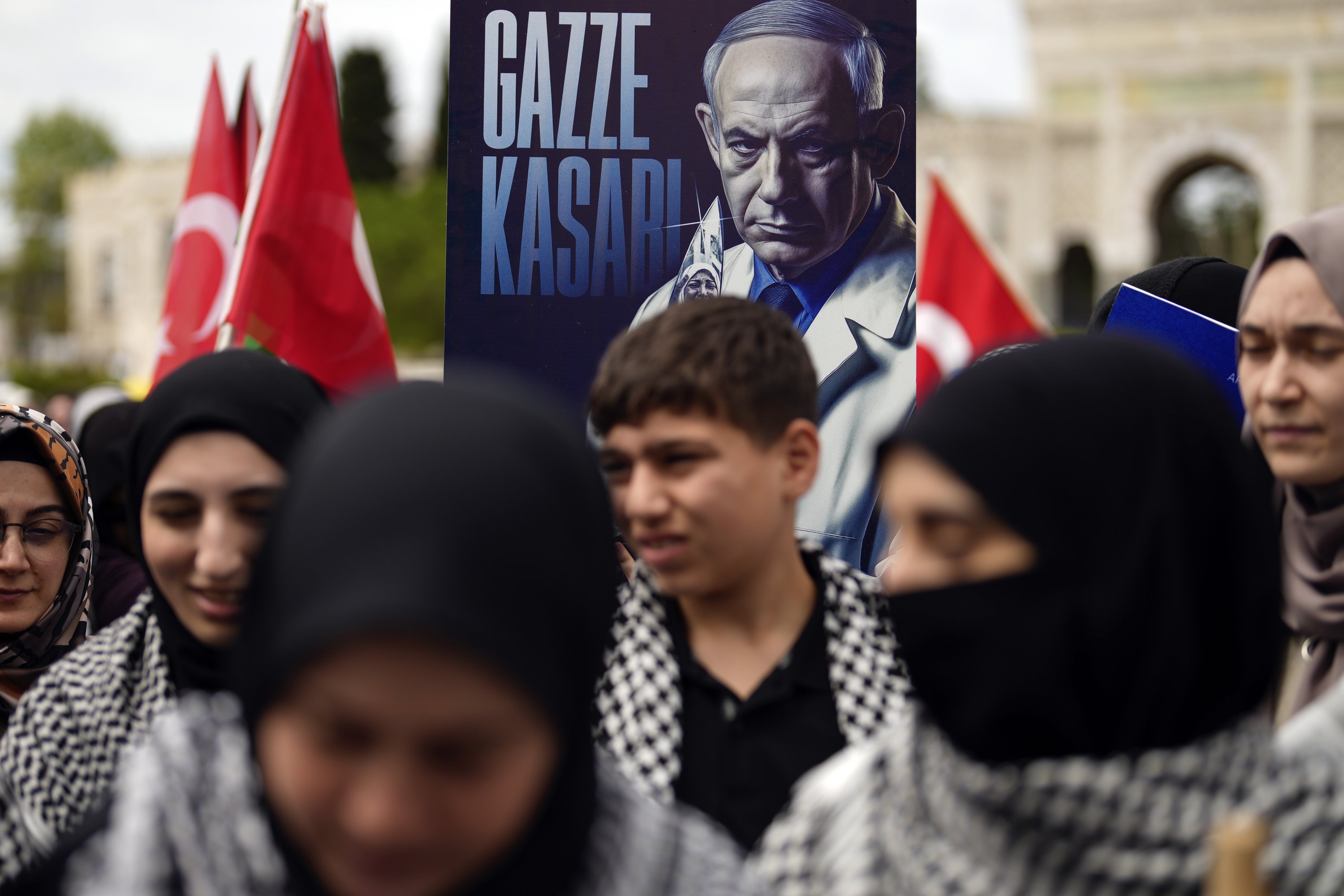
Anti-Semitism is still the most powerful weapon in Israel’s international lobbying to justify its genocidal attacks on Palestinians since 2023. In the post-truth world, Israel conveniently exploited the genuinely real phenomenon for its own purposes, tagging anyone opposing the country’s aggressive policies toward Palestinians and other countries.
Türkiye has had its fair share of anti-Semitism accusations, especially after October 2023, when the new round of the Palestine-Israel conflict began. Yet, these accusations do not translate into the facts on the ground, that is, although the Turkish public and politicians are strictly “anti-Israeli,” they do not necessarily harbor a hatred for Jews, or rather, take action based on this hatred, against Jews and even Israel. Israel’s efforts to portray anti-Zionism or even discourse against the incumbent Netanyahu administration as anti-Semitism spread across the world and surfaced most concretely in the U.S. but in Türkiye, the situation appears different.
Last March, President Recep Tayyip Erdoğan was clear about Türkiye’s stand on anti-Semitism. As he attended a dinner with representatives of the faiths in Türkiye, including the chief rabbi of the Jewish community of the country, Erdoğan underlined that anti-Semitism was as much a crime against humanity as Islamophobia, “an unreasonable evil that cannot be legitimized.”
“We built a country where everyone feels equal, free and safe,” he underlined while he pledged no tolerance against “Daesh and other dark networks bombing places of worship, from mosques and churches to synagogues.”
What Israel and pro-Israeli or Zionist lobbies are portraying as anti-Semitism in Türkiye are limited to a strong discourse against Israel’s genocidal policies, something that has been most evident in massive rallies since 2023 against the Netanyahu administration’s genocide in Gaza and attacks in the regional countries.
Several media outlets that appear supportive of the government occasionally use wording lumping the global Jewish community with Israel’s genocidal actions, despite considerable opposition by Jews themselves to those actions. Yet, the mainstream media in Türkiye, relentless in its criticism of Zionism and the Netanyahu administration, largely shuns anti-Semitic tropes. Instead, they squarely focus on Israel’s massacres and Türkiye’s efforts to stop them. Indeed, Türkiye has doggedly pursued diplomacy to end the genocide, mostly due to the enormous support in the West for Israel that hindered any non-diplomatic, collective action to stop what Turkish authorities called a “Hitler-like regime” in Tel Aviv.
One of the most glaring examples of anti-Semitism in recent years can be calls for stripping citizenship of Türkiye’s Jews, as some among the community also serve in the Israeli army. Even this has more to do with those accused of aiding Israel’s genocide of Palestinians, rather than a questioning of the “patriotism” of Türkiye’s Jewry.
Türkiye’s Jewish community numbers below 20,000, though no official figures are available. Some among those with dual citizenship proudly display their service in the Israel Defense Forces (IDF) on their social media accounts. In parallel, Turkish social media has been awash with calls for terminating the citizenship of those they called “loyal” to Israel rather than Türkiye. Nevertheless, this social media campaign, perpetuated by hardline anti-Israeli circles in the country, has gone unanswered by the authorities so far.
A report by the Academics and Authors Association of Islamic Countries (AYBİR), based in Istanbul, released two years ago, tried to gauge whether anti-Semitism raged in the country after 2023 and how the Jewish community in Türkiye responded to it. The report prepared by associate professor Eldar Hasanoğlu notes that the Jewish community has been largely silent about Israel’s attacks, while some members have been open to their opposition to the genocide. The report also confirms the absence of a full-on anti-Semitism translating into violence.
The Jewish community, from a religious perspective, has been loyal to the state in which they live, something most evident in the Hanoten Teshua, the Jewish prayer for the government of the country in which they have citizenship. Some researchers trace the origin of this prayer to Sephardic Jews of the 16th century, who fled oppression in Spanish territories to the Ottoman Empire, where they were warmly embraced and have called it home since then. As a matter of fact, most of the Jewish community, particularly those living in Istanbul, are descendants of these people.
To an extent, AYBİR’s report links the perceived silence of Türkiye’s Jews on Israel’s genocide to the reaction of Turkish people to Israel, apparently fearing genuine anti-Semitism could rear its ugly head. Their fear, in some ways, is justified as the community was targeted in the past, most notably during the 2003 terror attacks on Istanbul’s major synagogue, Neve Şalom, which, to this day, is under police protection.