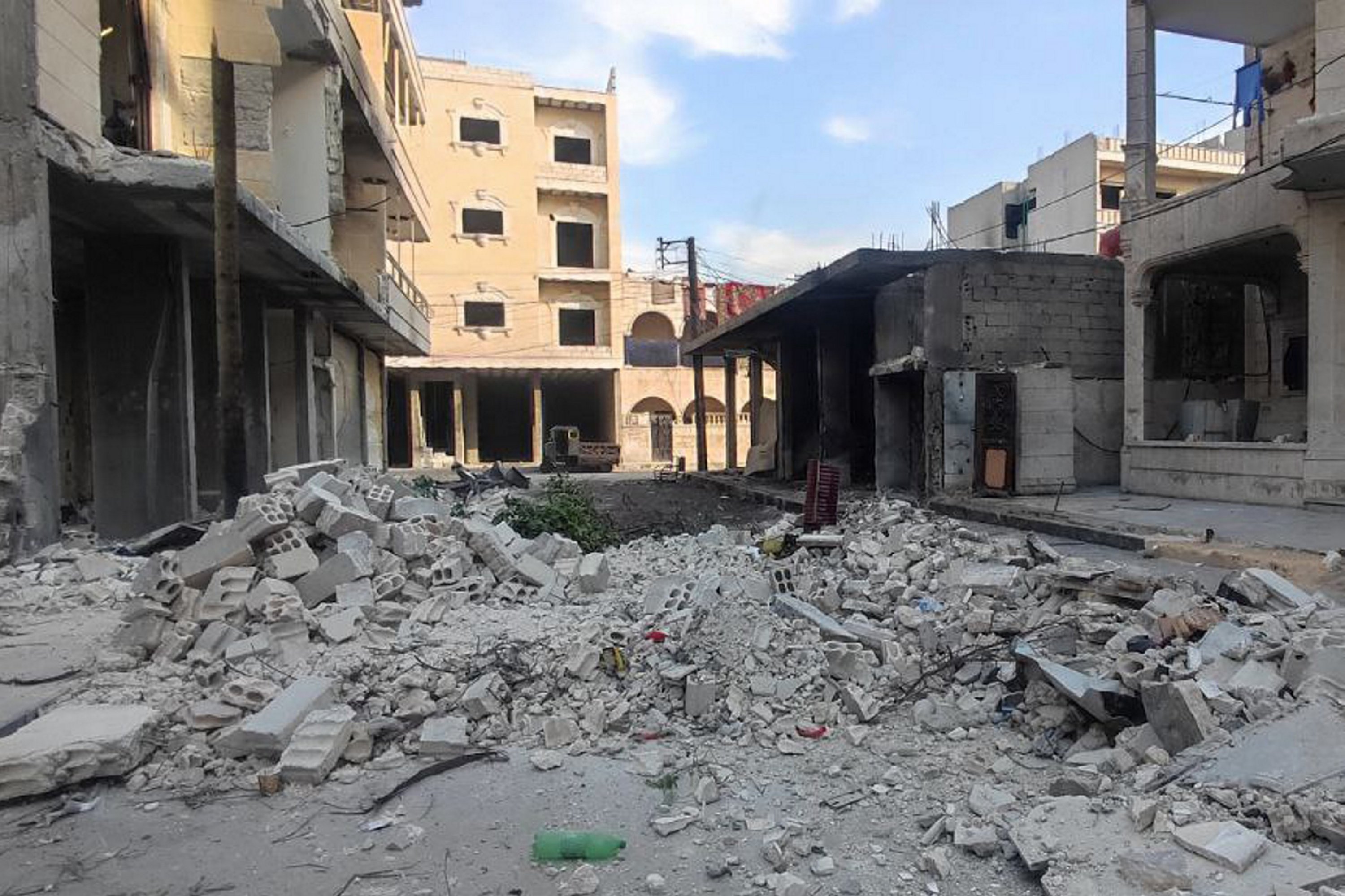
Terrorist attacks have killed at least 28 civilians, including women and children, and injured 45 others in Syria’s Manbij since late December, following the Syrian National Army’s (SNA) victory over the U.S.-backed terrorist group YPG there and in the city of Tal Rifaat.
Although Operation Dawn of Freedom by the SNA was deemed a success, Manbij remains a target of terrorists. Civilians, primarily women and children, have been among the casualties. Civilian areas, including kindergartens and shops, were targeted in eight attacks.
The first attack came on Dec. 24 when a bomb-laden vehicle exploded, killing two people and injuring two others. Three days later, another car bombing struck near the Grand Mosque, but no casualty figures were released. On Dec. 31, a mortar attack targeted a village near the Tishrin Dam on the Euphrates River, killing a woman and a child. The same day, a land mine planted by YPG terrorists exploded near the dam, killing a driver. A rocket attack on Jan. 21 hit a residential area in Tal Arsh village, killing two civilians and injuring five others. Local sources attributed the attack to YPG terrorists positioned near the Tishrin Dam. Two days later, on Jan. 23, another car bombing in Manbij's southern countryside killed one civilian and injured seven others. On Feb. 1, a bomb-laden vehicle exploded near a kindergarten in Al-Rabita Street, killing three civilians and wounding 15 others. No group claimed responsibility, but local security forces suspected PKK/YPG terrorists. A Feb. 3 attack, the deadliest so far, killed 17 civilians and injured 16 others when another car bomb exploded. Many of the victims were children and female agricultural workers.
Khalid Denkez, a local resident, said: "Civilians are constantly being killed. The civilian population is suffering. They keep sending car bombs. They have no fear of God."
Speaking to Anadolu Agency (AA), Muhammed Assaf, another resident, recalled the Feb. 1 attack, pointing to drawings on a kindergarten's walls. "These pictures were meant to bring joy to children. Now, they have become images of sorrow," he said.
Assaf said Manbij residents are trying to leave. "We have no safe place left. Where can people go safely? They are taking their belongings and leaving."
Calling for international intervention, Assaf urged the U.N. and the global community to help Manbij. "Are we forgotten, ignored people?" he asked.
Since the fall of the Assad regime in Syria last December, the YPG has attempted to exploit regional instability to create a "terror corridor" along the border with Türkiye.
With U.S. support, the YPG claimed victory against the Daesh terrorist group in Syria in 2019. Both Türkiye and the U.S. have designated the YPG’s umbrella group, the PKK, as a terrorist group and Ankara often complains that Washington ignores this fact, though Türkiye and the U.S. are key NATO allies for counterterrorism.
Syria's new rulers have called on the YPG to hand over their weapons, rejecting demands for any self-rule in Syria’s northeast, where YPG controls a so-called autonomous region.
Last month, Foreign Minister Hakan Fidan said that they might launch a military operation against the YPG unless they accepted Ankara’s ultimatum for a bloodless transition in post-Assad Syria. "We will do what's necessary," Fidan said. He asked what that might entail, "A military operation." Assad's ouster raised the prospect of Türkiye intervening directly in the country against the YPG, which was behind a string of terrorist attacks targeting Turkish cities and civilians in recent years.