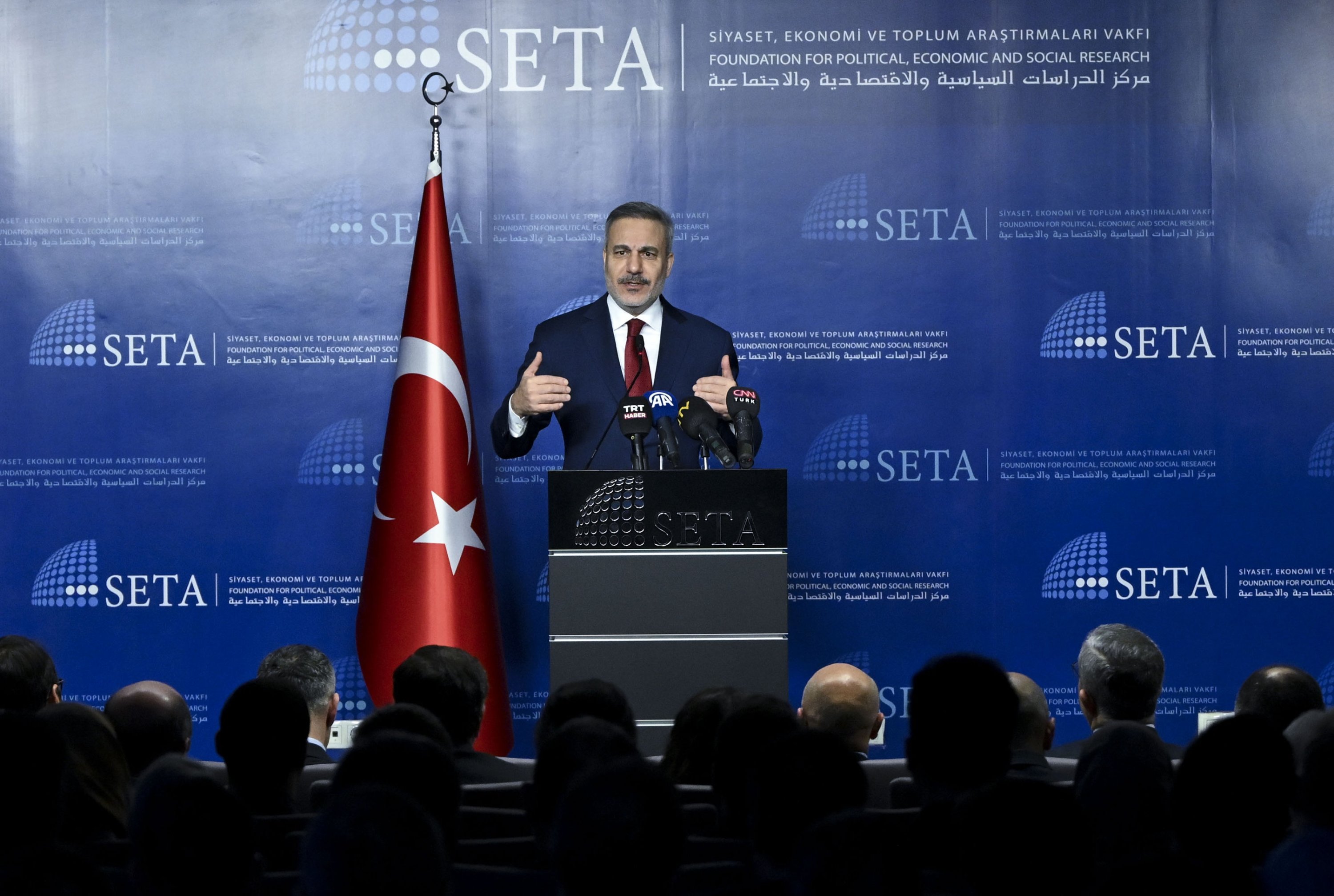
Foreign Minister Hakan Fidan warned that Israel’s operations in Syria are influencing the behavior of the YPG/PKK-led Syrian Democratic Forces (SDF), complicating efforts to implement a March 10 agreement aimed at unifying armed groups under the Syrian state. Speaking to Al Jazeera Arabic, Fidan said the SDF’s reluctance to move forward with the deal correlates with increased Israeli activity in Syria.
“There is a relationship, a proportion, between Israel’s movement in Syria and the SDF’s unwillingness. This is not a decision the YPG took on its own,” Fidan said, urging dialogue between Damascus and the YPG/PKK. He expressed hope that an eventual agreement would bring relief to both Kurds and Arabs in Syria.
When asked whether there is coordination between Israel and the SDF, Fidan responded, “The day Israel reaches a certain understanding with Syria, you will see the YPG follow.”
Fidan said a renewed conflict between Damascus and the SDF would harm civilians and called on the YPG/PKK to accept its responsibility under the plan to gather all armed elements under a single national military structure. “I hope we do not see another war,” he said.
Addressing claims of a Türkiye–Israel rivalry in Syria, Fidan stressed that Türkiye seeks stability, not influence. “We do not see ourselves in the same league or position as Israel,” he said, emphasizing Türkiye’s commitment to Syria’s unity and territorial integrity.
On Gaza, Fidan noted that although humanitarian aid is entering “in limited amounts,” many provisions of the U.S.-backed cease-fire plan remain unimplemented. He underscored that the second phase of the plan requires steps outlined in a new U.N. Security Council resolution, which now must be carried out.
Fidan said President Recep Tayyip Erdoğan is prepared to assume “any responsibility” to help ensure peace in Gaza, including contributing forces to an international stabilization mission if needed. “If sending troops is required for peace, we are ready,” he said.
He added that Israel opposes Türkiye’s participation in such a mission, but said Israel does not have sole authority over the process. “If the U.S. and regional actors reach an understanding, that is what matters,” he said.
Fidan reiterated that any long-term arrangement in Gaza will ultimately require Palestinian security forces to manage the territory. “At a certain point, there must be no armed groups,” he said, adding that stability mechanisms, including an international force and a peace council, would support this transition.
Turning to regional tensions, Fidan said that all nations must respect internationally recognized borders. “Relying on temporary power leads only to future retaliation,” he warned, urging adherence to international agreements.
Fidan also spoke about Ukraine, noting that the conflict has reached a critical stage and that new proposals are being exchanged among Kyiv, Moscow, Washington and European capitals. He said Europe must help Ukraine navigate “difficult choices” to prevent further losses, especially regarding territorial questions.
Türkiye, he said, continues to facilitate dialogue and is ready to resume hosting negotiations in Istanbul. He warned that the war is expanding, pointing to recent attacks on commercial vessels in the Black Sea. “If the war continues, it will spread further. It must stop,” he said.