Foreign Minister Hakan Fidan resumed his phone diplomacy on Saturday. The Foreign Ministry said Fidan held separate phone calls with his Iranian and Pakistani counterparts on Saturday.
The talks between Hakan Fidan, Abbas Araghchi and Ishaq Dar focused on the latest developments in the negotiation process between Iran and the U.S., according to the ministry.
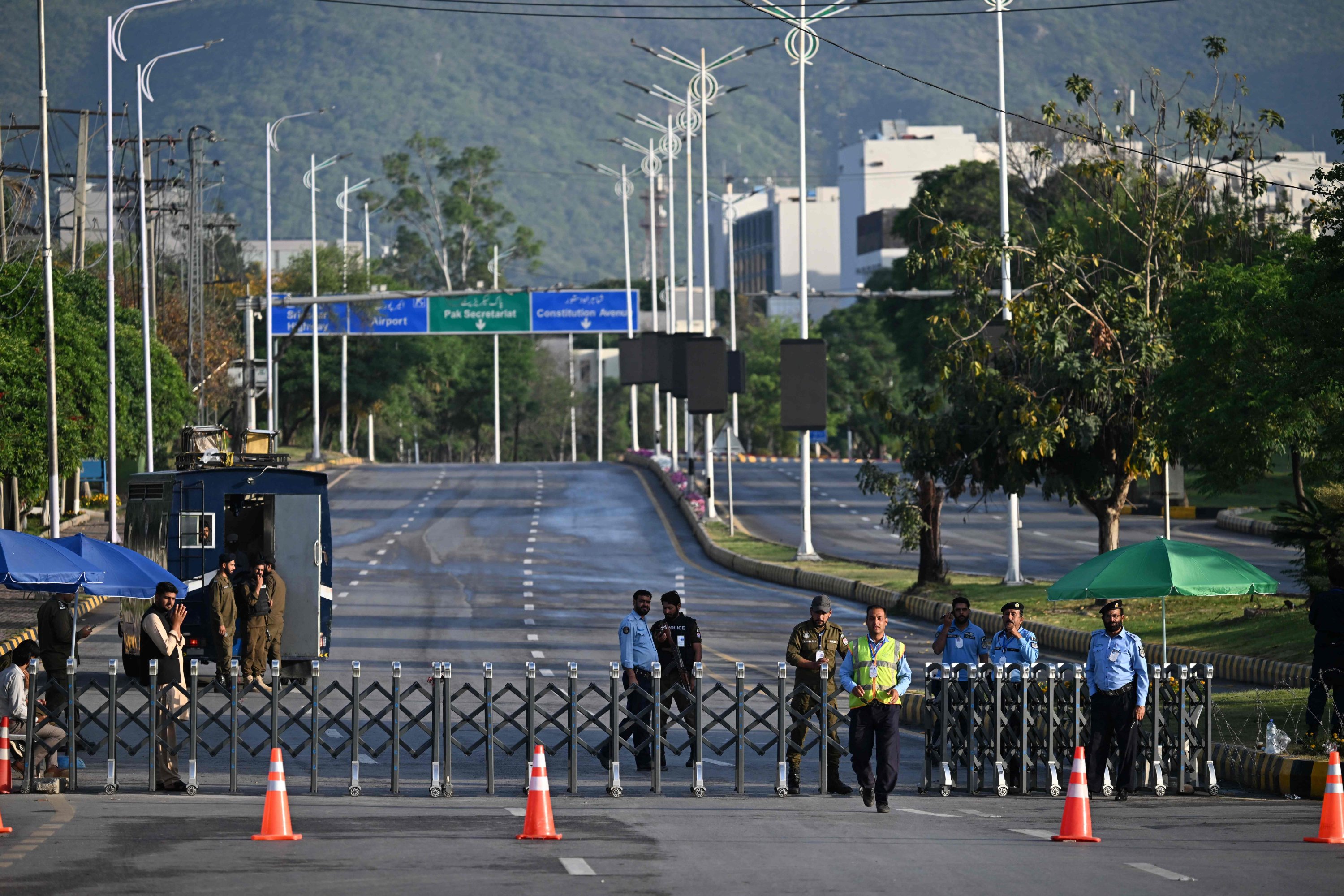
The first round of talks between the U.S. and Iran was held in Islamabad two weeks ago but failed to produce an agreement to end the conflict that began on Feb. 28 and spread across the Middle East. The talks followed a two-week cease-fire brokered by Pakistan on April 8, which was later extended by Trump.
On Sunday, the ministry announced that Fidan held a phone call with U.S. negotiators. Sources from the Foreign Ministry said Fidan exchanged views with the U.S. interlocutors on the latest developments in negotiations between the U.S. and Iran.
Araghchi met Pakistan's Prime Minister Shehbaz Sharif and army chief Field Marshal Asim Munir in Islamabad on Saturday, while the visit of U.S. envoys Steve Witkoff and Jared Kushner to the Pakistani capital was cancelled.
The sticking points between the two sides are said to be the opening of the Strait of Hormuz, a global shipping chokepoint which Iran has effectively closed since it was attacked by the U.S. and Israel on Feb. 28, the U.S. blockade of Iranian ports, and the fate of enriched uranium Tehran has.
Türkiye could consider taking part in multinational demining operations in the Strait of Hormuz after a possible peace agreement between the U.S. and Iran, Fidan said late Friday. Speaking to reporters in London, Fidan said Türkiye "would be open to" participating in a coalition tasked with clearing naval mines in the strait once a deal is reached, describing such work as a "humanitarian" effort.
However, Fidan underscored that Ankara would not take part in operations that risk positioning Türkiye as a party to renewed conflict. Ankara would avoid any role implying alignment if conflict resumes, Fidan said.
Fidan said Türkiye could foresee a comprehensive deal resulting in a negotiated return to the status quo, ensuring open, toll-free passage through the Strait of Hormuz. Otherwise, both sides would have to explore new ways to find a resolution, according to the minister.
Ankara has been at the forefront of efforts to mend ties between the United States and Iran. Before the conflict began in February with U.S. and Israeli attacks, Türkiye was among the countries considered as a venue for negotiations between the U.S. and Iran. After the conflict began and spread across the region, Türkiye itself faced the risk, with at least five missiles intercepted over its airspace. Still, it adhered to its neutral stand and sought to bring the sides to the negotiation table, especially through Fidan’s diplomatic blitz by phone and visits to the regional countries affected by the conflict.
Earlier this month, Fidan hailed the "sincerity" of the United States and Iran on achieving a cease-fire. However, he warned that Israel may disrupt the process. Fidan also pointed out Israel's emerging "state strategy" of finding "new enemies" in the region, such as Türkiye.
Speaking to Anadolu Agency (AA) on April 13, Fidan said: "The whole world wants free international passage through the Strait of Hormuz. Hormuz should remain open through peace; using an international armed force is a challenge,” he said. He stated that the Strait of Hormuz issue demonstrated that the war is not merely "regional" but a conflict with global repercussions. He highlighted that the Strait was where up to 25% of natural gas and oil shipments went through. "We are facing a situation where a great logistics chain, production and industrial infrastructure is affected," he added. "The question now is how the strait is going to be run."
Fidan emphasized the importance of keeping international shipping routes open amid rising tensions in the Gulf. "What the entire world wants is that international transit remain free and not be obstructed," he said. He warned that stability in the waterway cannot be achieved through forceful measures. "Our position is to reopen it through peace. There are many difficulties in intervening here with an international armed peace force," he said.
He also noted that there was a thin line between being party to the conflict targeting Iran and keeping the Strait of Hormuz open. "But no country wants to be part of this war, Europeans in particular openly expressed this," he stated.
On Türkiye's stand, Fidan pointed out the stance adopted by President Recep Tayyip Erdoğan since the beginning of the war, and this was "the policy of keeping Türkiye out of war." He said the situation in Hormuz had a significant impact on the global markets and Türkiye made every contribution to resolve the issue. The minister, however, added that Türkiye was not "very much dependent on Strait of Hormuz in terms of energy security, energy supplies." "The share of natural gas in electricity production dropped and share of renewable energy sources dramatically increased in the past two decades. But we feel the indirect impact of the situation, especially on pricing. Energy supplies are delivered smoothly but pricing poses a problem. This may be a burden on the economy in the long run," he warned.