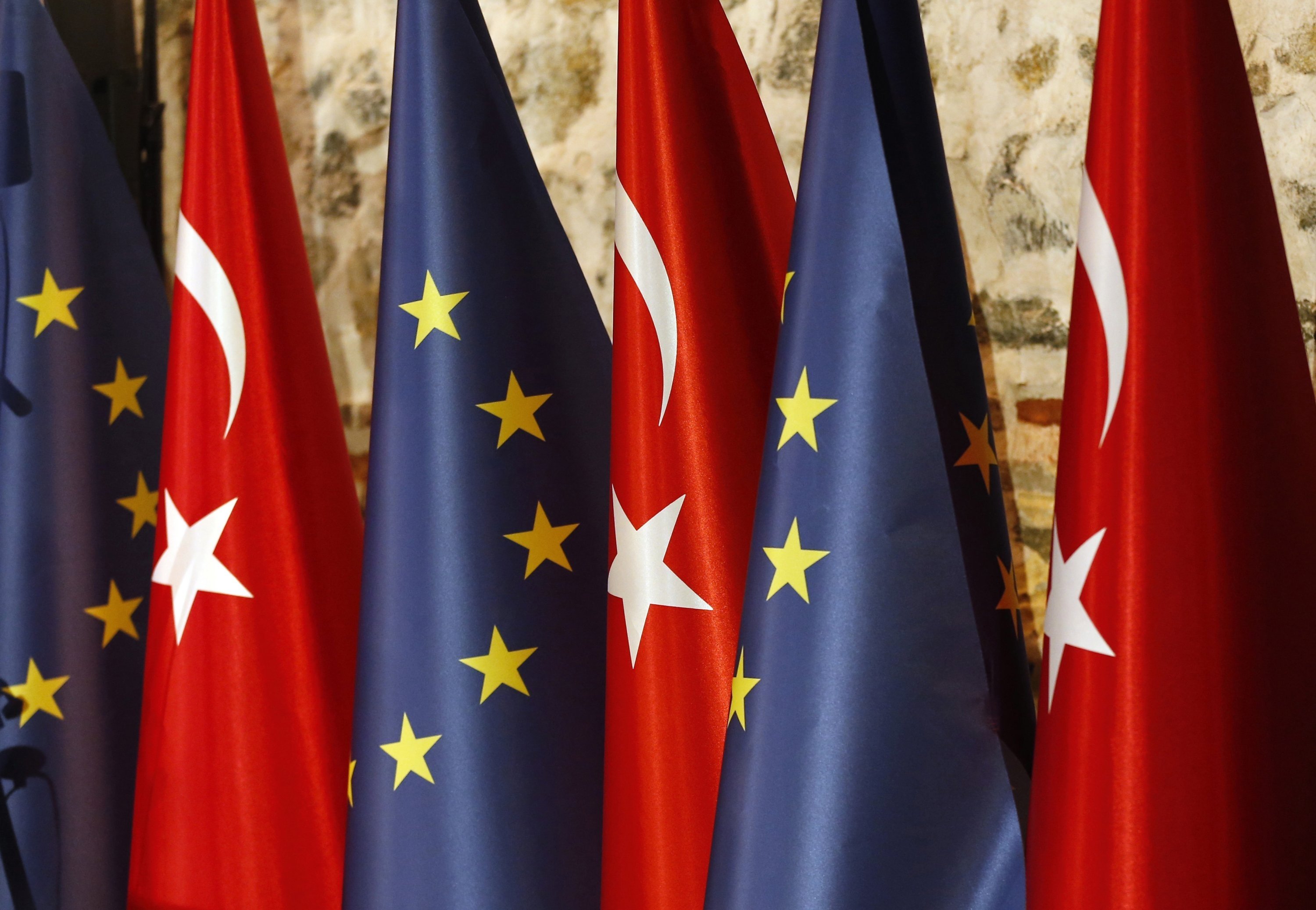
A dispute has emerged inside the European Union over language on Türkiye in the bloc’s annual enlargement conclusions, with Germany and the Greek Cypriot administration at odds, according to Greek Cypriot media reports.
Kathimerini reported that tensions rose after the Greek Cypriot administration sought to alter the section concerning Türkiye in the draft text circulated by Denmark, the current EU presidency, ahead of approval by member states. Citing unnamed diplomatic sources, the paper said Germany objected to the Greek Cypriot administration’s push to harden the wording.
During recent meetings of the EU Committee of Permanent Representatives (COREPER), Germany reportedly requested that positive references to Türkiye be added, pointing to what it described as Ankara’s “cessation of drilling activities in the Eastern Mediterranean.” Hungary supported Berlin’s position, the report said.
The Greek Cypriot administration reacted sharply, insisting Türkiye continued to “violate its airspace and pose threats” to both Greece and the Greek Cypriot side. Kathimerini wrote that the Greek Cypriot administration warned it would refuse to endorse the final document if Germany’s amendment prevailed.
Such a move would escalate the disagreement to the political level, the paper noted, adding that the Greek Cypriot administration has already expressed dissatisfaction with parts of the draft and has demanded changes to the paragraph addressing the Cyprus issue.
According to the report, Germany rejected any alteration to the Cyprus-related language, signaling it would not accept a revision of the text. The stance was described as a direct response to Greek Cypriot administration’s attempts to “improve” the draft.
Kathimerini said Germany blocked the Greek Cypriot request at COREPER and that a German diplomat insisted Türkiye’s constructive steps be reflected in the final enlargement conclusions, expected to be released on Dec. 16.
Greece also objected to the draft, arguing that references to Türkiye’s geopolitical role disrupted what it considered the necessary balance in the text, the report concluded.
Relations between Türkiye and the Greek Cypriot administration remain tense, with Ankara accusing both Greece and the Greek Cypriot side of pushing “unlawful” and “maximalist demands” in the Eastern Mediterranean and inside EU institutions.
The Greek Cypriot administration, which Ankara does not recognize, frequently seeks to harden EU language on Türkiye and block initiatives such as customs union modernization, visa liberalization, and other elements of the bloc’s “positive agenda.”
Cyprus has been mired in a decades-long dispute between Greek and Turkish Cypriots, despite a series of diplomatic efforts by the U.N. to achieve a comprehensive settlement. The Greek Cyprots have sought a federal solution while Türkiye and the Turkish Republic of Northern Cyprus (TRNC) push for a two-state solution.
The issue has long loomed over Türkiye’s EU membership talks, which have stalled since 2016 over what Ankara says is the bloc’s “insistence on politicizing the issue.”