Although it reportedly pursues better ties with former foe Türkiye, Greece insists that its neighbor should be left out of Europe's defense. On Monday, it reaffirmed its opposition to Türkiye’s participation in the EU defense scheme Security Action for Europe (SAFE).
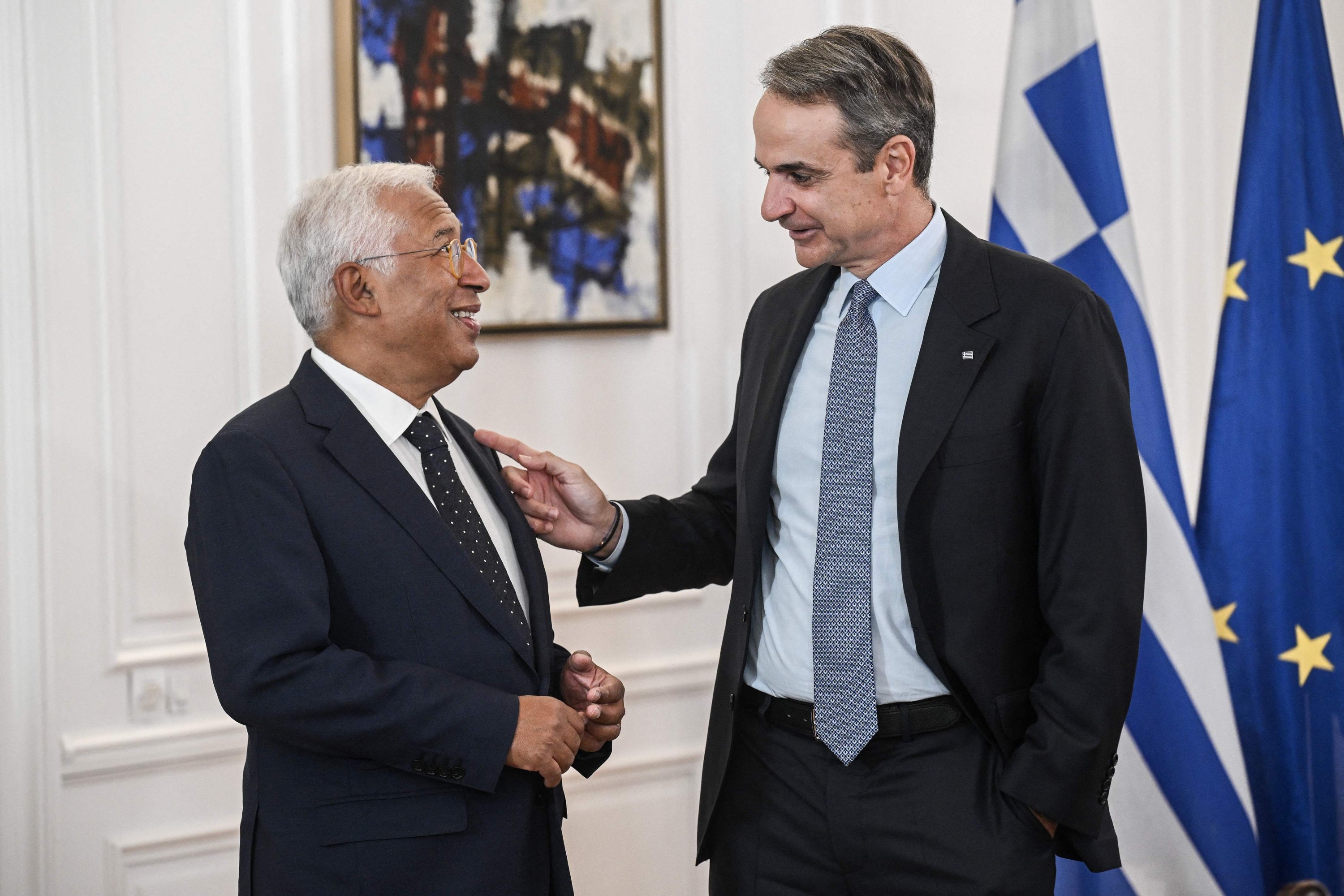
Speaking at a joint press statement following his meeting with visiting European Council President Antonio Costa, Greek Premier Kyriakos Mitsotakis said that "third countries which threaten EU members (with) war” cannot participate in the scheme, in reference to the Turkish Parliament’s resolution in 1995, warning Greece against unilateral actions on the Aegean Sea. "I believe it is up to them to build good relations with Europe, but this also requires respect for its principles,” he said.
SAFE, adopted by EU leaders in May, will provide competitively priced, long-term loans to accelerate urgent defense procurement. It forms part of the European Commission's ReArm Europe Plan/Readiness 2030, aiming to mobilize over 800 billion euros in defense spending. While the loans will only be available to EU member states, Ukraine and EEA-EFTA countries will also be eligible to participate in joint procurement under the scheme.
Greece is increasingly disturbed by its historical archrival Türkiye’s growing influence in Europe and the EU’s ambitious plans to strengthen its security mechanism.
Although Türkiye and Greece seek rapprochement in their formerly hostile relations, Athens also works to bolster its defenses by new acquisitions, while Türkiye’s flourishing defense industry raises its profile, especially with sales of uncrewed aerial vehicles (UCAVs) to other countries and boosting its military arsenal with locally-made products.
Two countries are particularly at odds on their maritime borders in the Aegean Sea, which has been the venue for dogfights between Turkish and Greek fighter jets in the past.
In an interview last June, Greece’s Defense Minister Nikos Dendias made pointed remarks about Türkiye’s pursuit to join the EU’s Security Action for Europe (SAFE) program. “The partners must decide what kind of Europe they want. No, Europe is without principles, values and respect for the rules of international law. It is also unthinkable that countries that threaten EU member states or do not recognize EU members should indiscriminately participate in the project of rearming Europe,” Dendias told reporters.
Europe aims to reinforce its defenses as the United States reconsiders its generous support to the continent’s defense since World War II. Türkiye is eager to contribute to Europe’s security architecture, although the bloc stalled its accession for years.
Last Thursday, Greece announced plans to attract international defense and heavy industry investment to the country with an ambitious tax initiative. Investments in the defense industry made in 2026, 2027 and 2028 are to be completely exempt from income tax, Mitsotakis has announced. As well as traditional defense products such as tanks, drones or weapon systems, related industrial sectors – such as vehicle construction, aviation technology, suppliers and the production of components and even tyres – will also fall under the tax exemption, according to the Finance Ministry. Investment costs will be credited twice, which in practice amounts to a complete exemption from the tax burden, Finance Minister Kyriakos Pierrakakis said during a news conference. Similar incentives also apply to investments in aviation systems, aircraft parts and microsatellites, he said.
Athens is strategically positioning itself as an investment location as European countries launch a joint strategy to rearm their militaries massively. Greece has been granted an initial allocation of around 787 million euros as part of EU defense boosts. The Greek government announced in April that it would invest 25 billion euros in defense over the next 12 years.