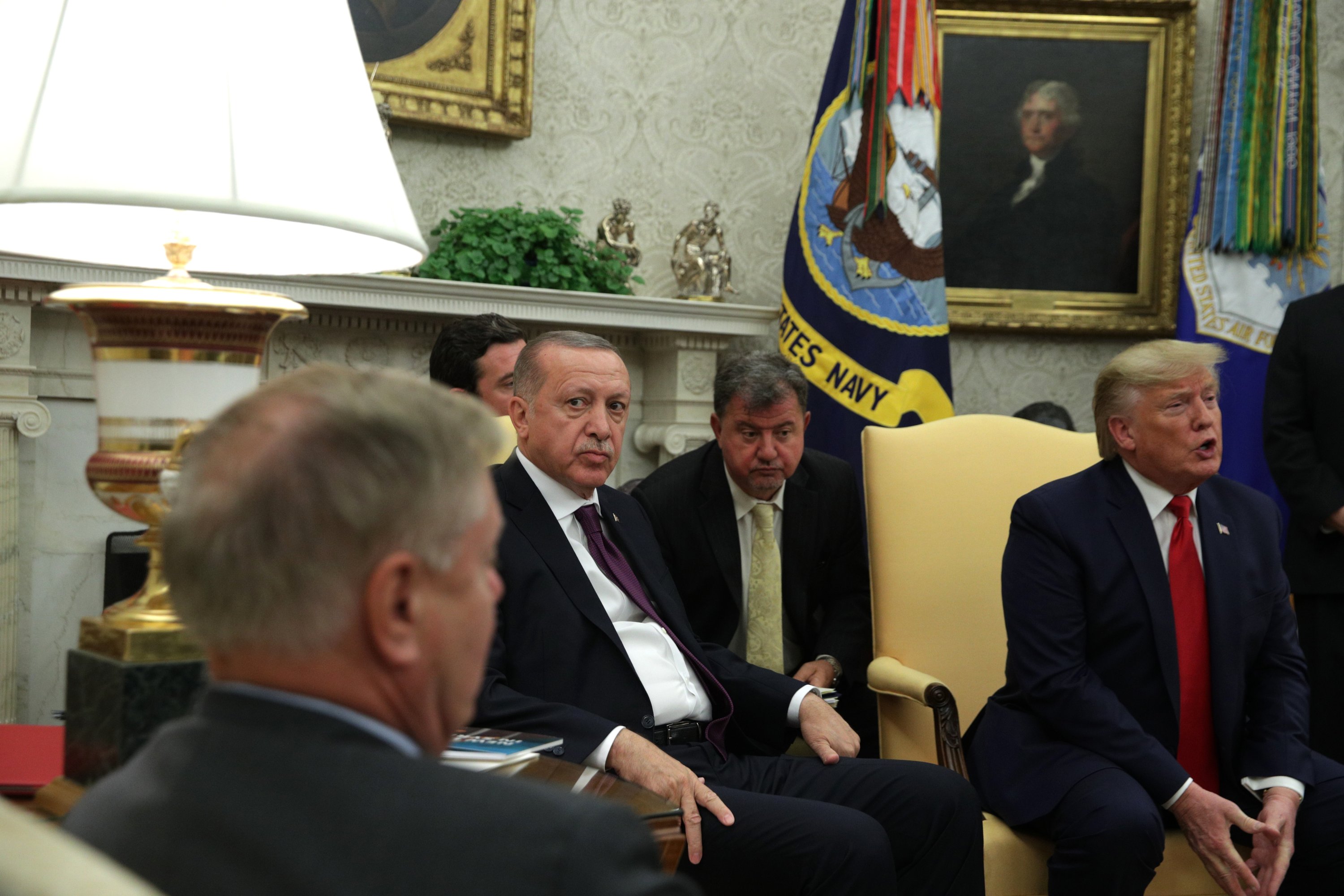
A neocon turned staunch supporter of U.S. President Donald Trump, Lindsey Graham was known for his hawkish stance on relations with Türkiye, his country’s main ally in NATO. This stand changed at times, but the veteran U.S. senator who passed away on Saturday after a brief, sudden illness, according to a statement by his office, will be remembered for his rhetoric opposing Türkiye’s interests at every turn.
Some hardline Turkish media outlets reported his death as the demise of “an enemy of Turks,” while others were more restrained, though they reminded readers of Graham’s checkered past when it came to U.S. foreign policy on Türkiye.
Being on good terms with Israeli Prime Minister Benjamin Netanyahu (who described him as the greatest friend of Israel) could be sufficient for Türkiye to doubt his apparently softening stance toward the country in his last days. Netanyahu is among the most unloved figures in Türkiye nowadays due to his genocidal campaign against Palestinians. Still, Graham had multiple opportunities to meet Turkish officials, including President Recep Tayyip Erdoğan, during his four tenures in Washington, D.C. Indeed, his last overseas visit was to Ankara for the NATO summit, which also marked Trump’s inaugural presidential visit to the Turkish capital.
The South Carolina senator was an influential political figure, and at one point, Türkiye tried to change his mind about the country, especially after he championed sanctions against Ankara. In 2019, President Recep Tayyip Erdoğan even had Graham seated next to him as they attended a classical music concert in Ankara in January 2019. The two men met again in 2022 when Erdoğan visited New York to attend the U.N. General Assembly. In his remarks to reporters on the sidelines of the NATO summit, where he accompanied Trump, Graham demonstrated that he had changed his mind regarding the sale of F-35 fighter jets to the country and said he hoped the Senate would approve it while he branded Türkiye as an important ally.
Before this apparent U-turn, Graham remained a steadfast opponent of Türkiye in Congress, particularly regarding Türkiye’s cross-border operations in neighboring Syria in the Assad era. Graham’s main concern was protecting “Kurds” in Syria, a definition he broadly used for the terrorist group YPG. When Türkiye launched operations against terrorists who threatened Turkish border towns with attacks, Graham stepped up his anti-Turkish rhetoric. Last January, Graham was also behind the Save the Kurds Act, which he introduced against what he called “attacks” on the YPG by the new Syrian administration. Graham also long stood for his opposition to Türkiye’s acquisition of S-400 air defense systems from Russia and repeatedly warned against the sale of U.S. weapons to Türkiye.
Graham threatened sanctions against Türkiye and, at one point, even called for Ankara’s suspension from NATO if it continues targeting the YPG and co-sponsored legislation for sanctions on Turkish officials.
When Türkiye turned to the acquisition of the S-400 missile defense system from Russia amid a lack of U.S. military support, Graham voiced opposition and in 2019, suggested the White House immediately implement sanctions if the S-400 deployment proceeds. His proposal evolved into the implementation of the Countering America’s Adversaries Through Sanctions Act (CAATSA) and Türkiye’s removal from the multinational F-35 program. It took seven years to undo the damage this left on Türkiye, and even so, this was partial. U.S. President Donald Trump was enthusiastic about relations with Türkiye, as his remarks in Ankara before and after the NATO summit indicated, and pledged to work to reverse the sanctions, as well as to approve the sale of fighter jets. The progress is expected to also facilitate the sale of engines for Türkiye’s locally made Kaan fighter jet. All this happened before the very eyes of Graham at the heart of Ankara as the senator who long stood his ground against Türkiye appeared to finally relent to Trump’s decision to improve ties with Türkiye, which had deteriorated during his first tenure and the entire tenure of Joe Biden.