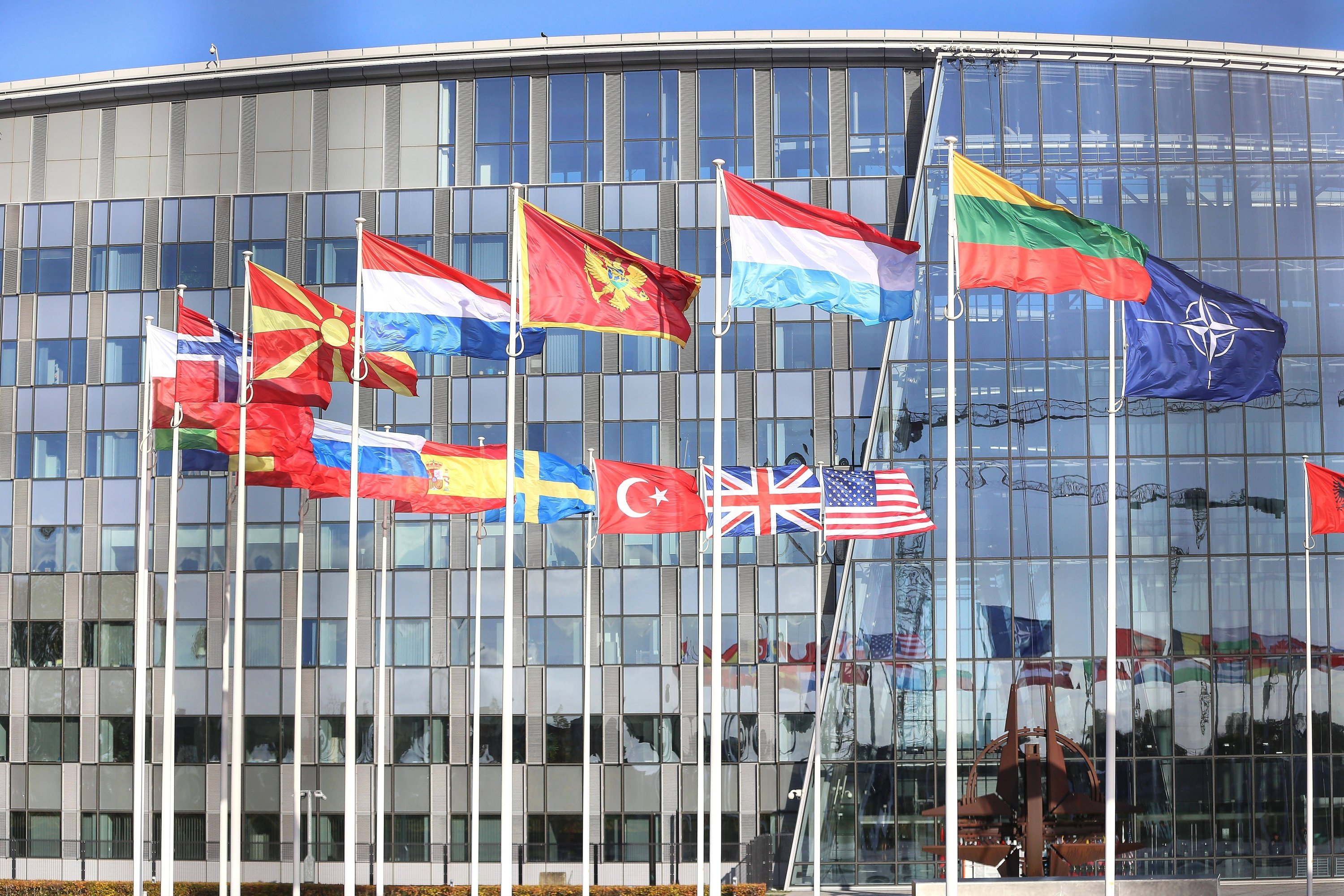
NATO allies have stepped up the alliance's ballistic missile defense posture after intercepting a missile launched from Iran toward Türkiye’s airspace, the alliance's military headquarters said Thursday.
The posture will remain at the heightened level until the threat from Iran's "continued, indiscriminate attacks across the region subsides," Colonel Martin O'Donnell, spokesperson for the Supreme Headquarters Allied Powers Europe, said in a post on the social media platform X.
Türkiye's Ministry of National Defense said Wednesday that a ballistic munition launched from Iran and directed toward Turkish airspace was detected after crossing Iraqi and Syrian airspace.
The projectile was intercepted and neutralized by NATO air and missile defense units deployed in the Eastern Mediterranean.
Türkiye summoned Iran's ambassador to Ankara to convey a formal protest and expressed deep concern over the incident. Officials stressed any steps that could expand ongoing conflicts or further destabilize the region must be avoided.
Iran's armed forces on Thursday denied claims that a missile had been launched toward Türkiye, saying they respect the country's sovereignty and had not fired any missiles at Turkish territory.
O'Donnell said NATO had "perfectly executed" its missile defense in Türkiye on Wednesday.
"In less than 10 minutes, NATO service members identified a threat to allies, a ballistic missile, confirmed its trajectory, alerted land- and sea-based missile defence systems and launched an interceptor to defeat the threat and protect our territory and its people," he said.
Türkiye, Iran's neighbor that had sought to mediate U.S.-Iran talks before the air war that began at the weekend, warned "all parties to refrain from actions that would lead to further escalation," suggesting it was not poised to call upon the trans-Atlantic defence bloc for support.
NATO Secretary-General Mark Rutte earlier on Thursday said the alliance does not plan to trigger its Article 5 mutual defense clause over the attack.
Rutte did not go into detail when asked about an increased defence posture in the alliance.
Later on Thursday, President Recep Tayyip Erdoğan said Ankara showed its "sensitivity," and issued the "necessary warnings" to prevent a similar incident from reoccurring.
"Should a threat to our country's security arise, we will take all necessary measures with the utmost care in coordination with our allies," he said.
Erdoğan warned that the Middle East war had taken tensions in the region to a "terrifying level" that could spread further.
U.S. and Israel launched airstrikes on Iran starting Feb. 28, killing over 900 people, including Iran's Supreme Leader Ali Khamenei and more than 165 elementary schoolgirls, according to Iranian authorities.
Iran has retaliated with drone and missile attacks targeting Israel and U.S.-linked sites in Gulf countries, disrupting energy routes.