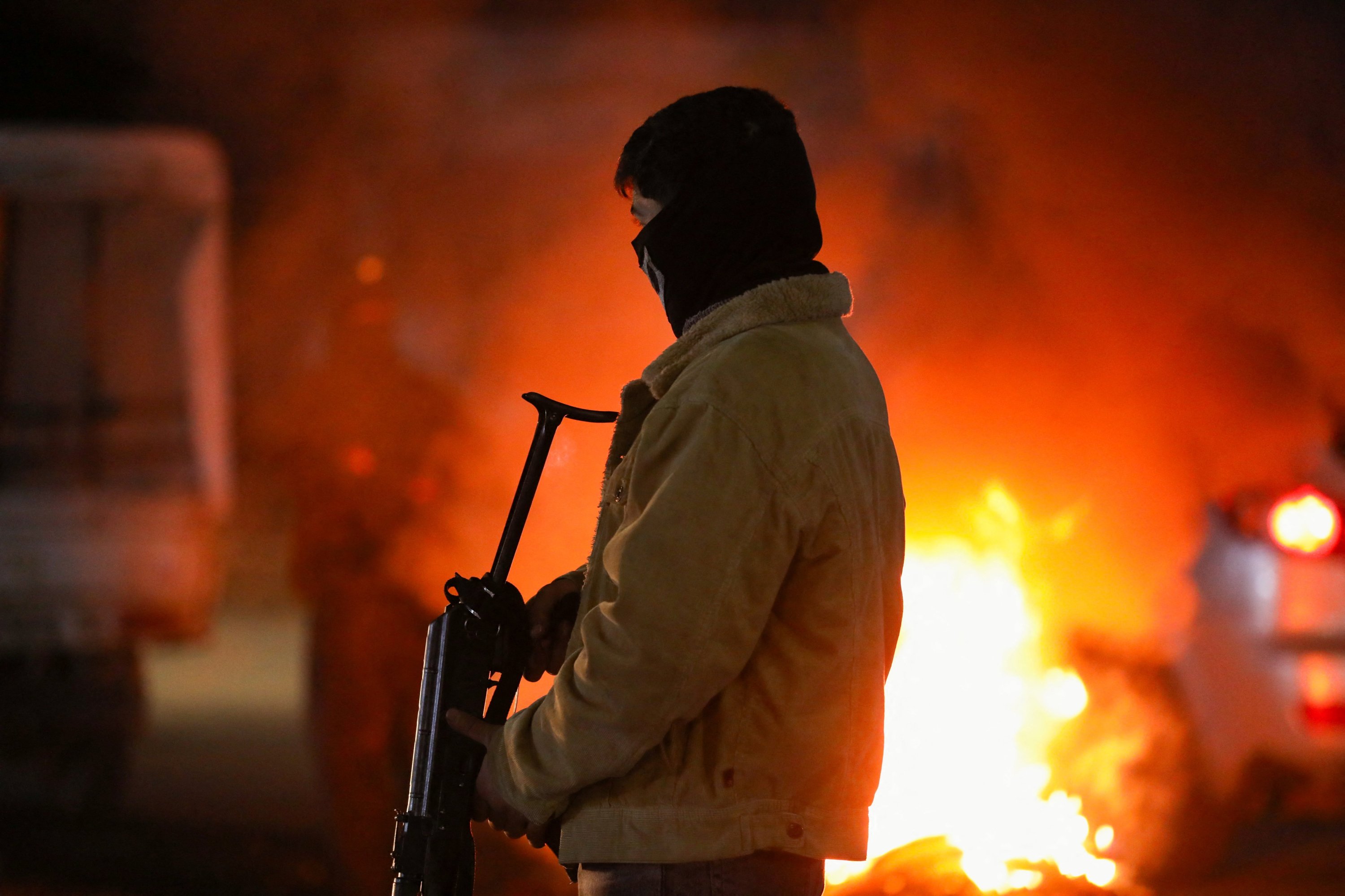
The YPG terrorist group imposed daytime curfews in the northeastern Syrian cities of Hassakeh and Qamishli from 6 a.m. to 6 p.m. local time, according to a statement issued on Sunday.
In a notice published on Facebook by its so-called security unit, the YPG said a curfew would be enforced in Hassakeh on Feb. 2 and in Qamishli on Feb. 3.
The group said the measures were taken to maintain “security, stability and public order,” warning that legal action would be taken against anyone violating the restrictions.
No immediate comment was available from the Syrian government.
The curfews come as Syrian government forces are expected to begin deploying to Hassakeh and Qamishli under an agreement aimed at transferring administrative and security responsibilities to state institutions starting Monday, according to local sources.
In recent days, residents in towns and villages recaptured by Syrian forces from YPG control have held public celebrations, waving the three-star Syrian flag and playing patriotic songs.
Separately, Aleppo police chief Mohammed Abdul Ghani said he recently visited the town of Ayn al-Arab, also known as Kobani, under a cease-fire and gradual integration arrangement between Damascus and the YPG.
Speaking at a news conference in the town, Abdul Ghani said visits and field work demonstrated the authorities’ commitment to fully implementing the deal, adding that public expectations for an end to fighting and greater state stability had generated satisfaction among residents.
Addressing a question on deployments to Jazira, Hassakeh and Qamishli, Abdul Ghani said various agreements had been reached, but delays in implementation had negatively affected the overall situation, adding that authorities were now seeking to move to the field promptly, with planning and preparations continuing.
“It is clear that everyone must unite under the umbrella of the Syrian state. The provisions of the agreement were determined in line with this,” he underlined.
Abdul Ghani said efforts were underway to restore public order and reorganize security institutions in the area.