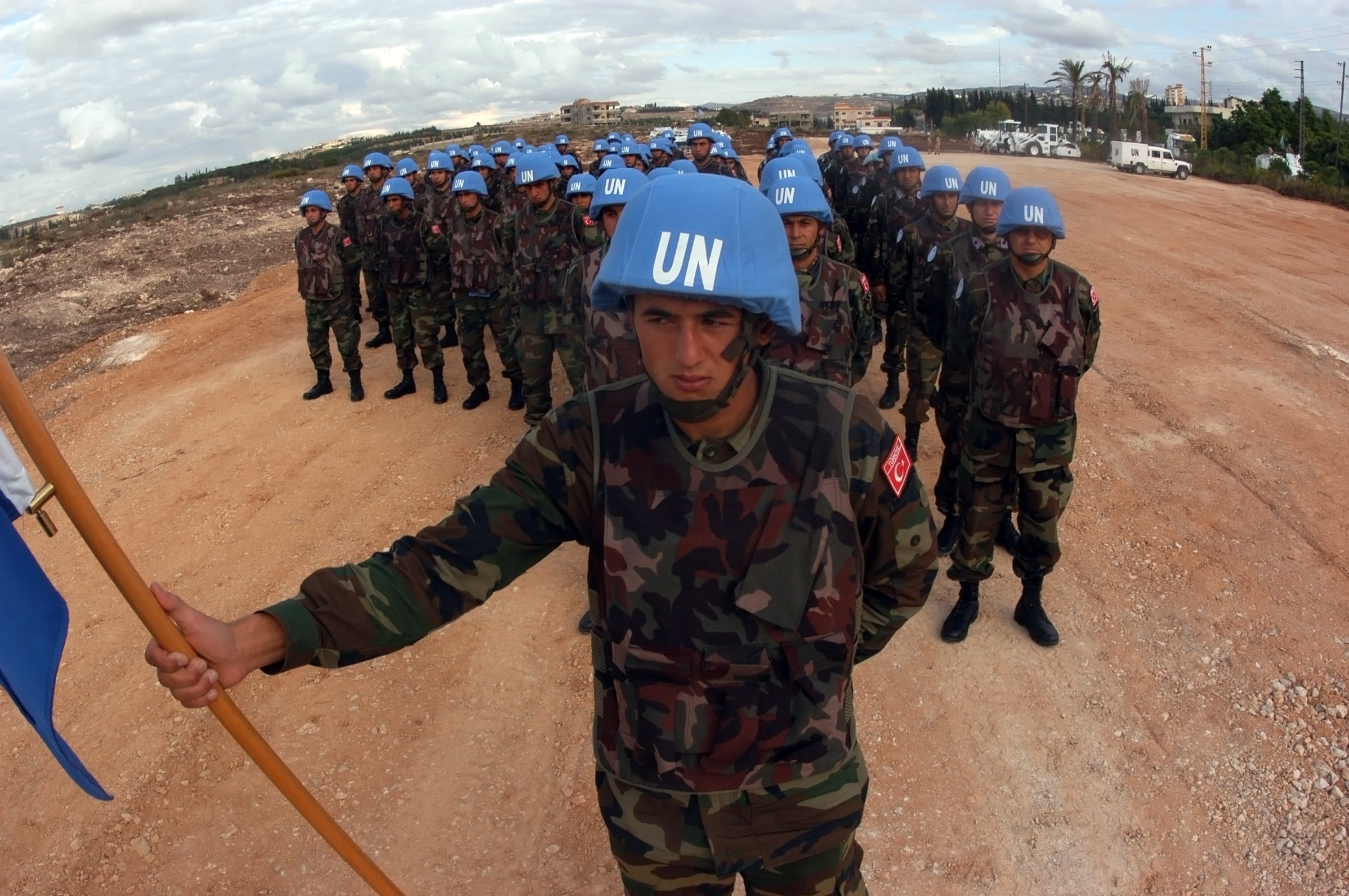
Türkiye's military power and achievements in peacekeeping missions stand out in the world. U.N. Under-Secretary-General for Peace Operations Jean-Pierre Lacroix said that they were eager not only to maintain but also to increase Türkiye’s participation in peacekeeping missions.
Lacroix, who visited Türkiye as part of international peacekeeping efforts, spoke to Anadolu Agency (AA) about his visit and the country’s contributions to global peace initiatives.
He said the U.N. and Türkiye have strong cooperation across many areas, recalling Secretary-General Antonio Guterres’ recent visit to the country as another sign of this partnership. "We have a very strong and very longstanding cooperation with Türkiye in the field of peacekeeping operations,” Lacroix said.
Referring to his meetings in the capital Ankara, Lacroix said the country’s support for peacekeeping is implemented in various ways, including the presence of personnel, particularly police and officers, in U.N. missions. He also highlighted cooperation in training, saying discussions focused on how to not only maintain but also strengthen collaboration, especially in training and capacity building, which are crucial for U.N. peacekeeping operations.
Lacroix said he frequently visits peacekeeping missions worldwide, including in the Middle East and Africa, where he often encounters Turkish personnel.
"I have met Turkish peacekeepers, both men and women, very frequently in different missions, especially in Africa,” he said. He praised their performance, commitment and professionalism as "remarkable,” adding that this provides a strong basis for increasing Türkiye’s presence in peacekeeping.
Despite financial constraints faced by the U.N., Lacroix said they hope conditions will improve and reiterated their willingness to expand Türkiye’s role. "We very much look forward to not only continuing but increasing our cooperation with Türkiye,” he said.
During his visit, the peacekeeping chief also toured the Turkish Police Academy, describing it as an institution providing extensive peacekeeping training with potential for further cooperation. He said Türkiye has significant expertise in areas critical to U.N. operations, including training and equipping peacekeepers, using digital technologies effectively and combating disinformation. "We will continue from our point of view to make every effort to increase further the safety and security,” he said, emphasizing the importance of cooperation with member states like Türkiye through training, lessons learned and sharing best practices.
Lacroix underlined their strong willingness to work with partner countries such as Türkiye that have the capacity to contribute to addressing emerging challenges and adapting to evolving technologies.
Speaking about Türkiye’s role in Kosovo, Lacroix said there is "excellent interaction” with the NATO-led Kosovo Force (KFOR) as well as cooperation with the U.N. Interim Administration Mission in Kosovo (UNMIK), which works to bring different communities together. He said this reflects the U.N.’s broader approach to peacebuilding, which includes not only political leadership but also efforts to unite societies. "We need to provide better security with our military and police, prevent cease-fires from collapsing, and bring together all these dimensions,” he said. He stressed that integrating and coordinating different aspects of peace efforts is essential for achieving success or increasing the chances of reaching desired outcomes.
Addressing recent tensions involving Israeli attacks on Lebanon, Hezbollah's response and incidents targeting peacekeepers, Lacroix said six peacekeepers had been killed in recent weeks, and investigations are ongoing.
He stressed that protecting peacekeepers is primarily the responsibility of parties to a conflict. "The responsibility for protecting the safety and security of peacekeepers is a responsibility of the parties to a conflict, and those obligations have to be reaffirmed, as well as the fact that crimes against peacekeepers may also constitute war crimes,” he warned.
Lacroix highlighted that the U.N. Interim Force in Lebanon (UNIFIL) has long operated in a dangerous environment and that peacekeepers continue to take measures to protect themselves. He also explained the distinction between peacekeeping and warfare. "Peacekeepers are peacekeepers. Yes, they can use force to defend themselves. They can use force to defend their mandate, but it’s different,” he said. "Peacekeeping is different from war, and I think that has to be understood by all.”
Lacroix said the U.N. will continue efforts to enhance the safety and security of peacekeeping personnel.
He argued that cooperation with countries like Türkiye is essential in this regard. "We are operating in a polarized environment, under increasingly dangerous conditions and financial constraints,” he said. "But I think the key message is that our peacekeepers, including Turkish peacekeepers, every single day make a huge difference. They protect hundreds of thousands of civilians, help maintain cease-fires and support states in building capacity and the rule of law.”
Lacroix thanked the Turkish personnel serving in peacekeeping missions, saying their contributions in challenging conditions are invaluable.