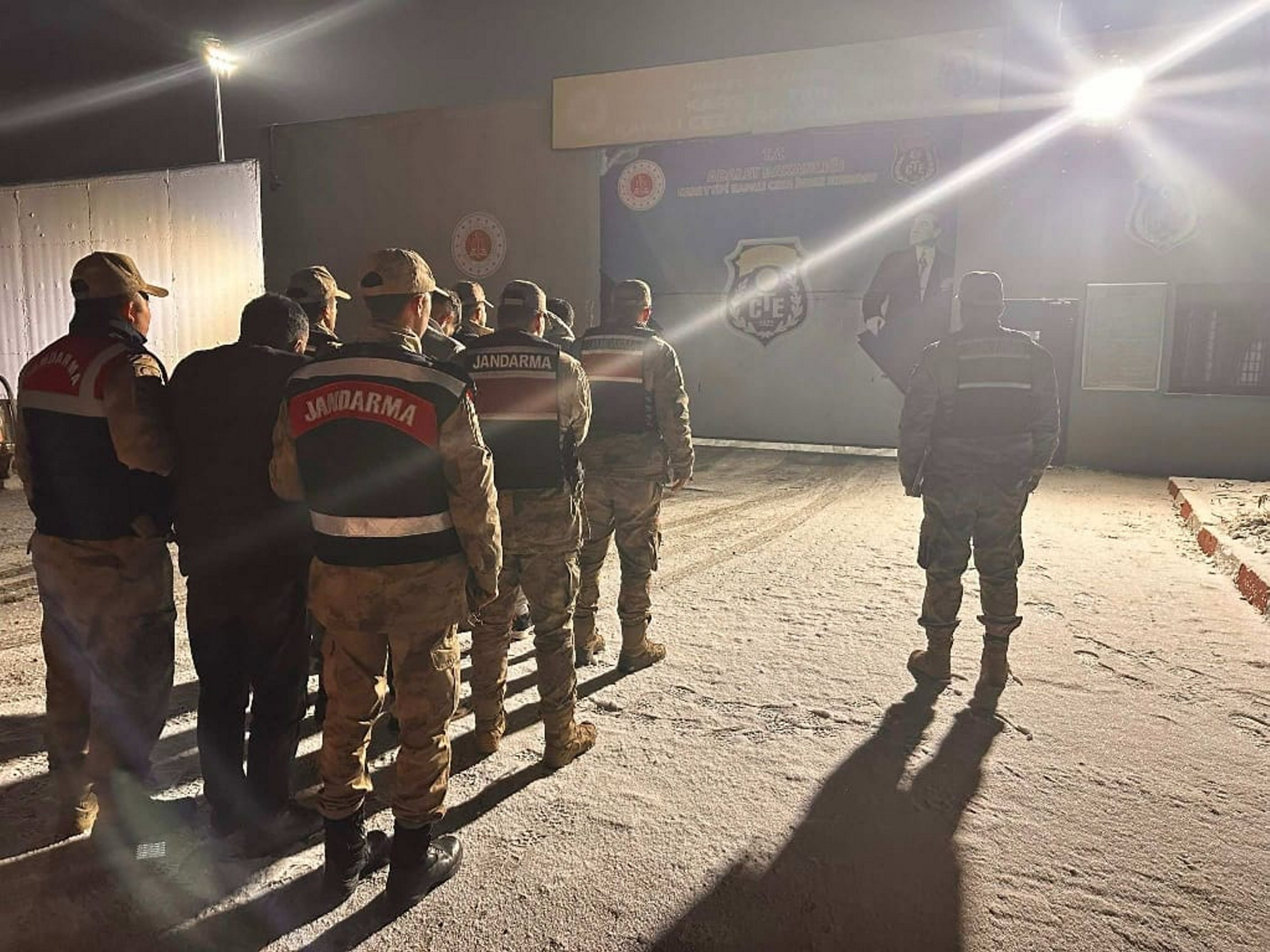
Turkish gendarmerie forces have dismantled a large-scale migrant smuggling network in coordinated operations carried out across 14 provinces over the past two weeks, Interior Minister Ali Yerlikaya said Sunday.
In a statement shared on his official social media account, Yerlikaya said security forces detained 156 suspected migrant smuggling organizers during the nationwide operations. Of those apprehended, 112 were formally arrested, while 44 others were released under judicial supervision.
The operations targeted an extensive smuggling network stretching from major metropolitan centers to Türkiye’s coastal provinces, where irregular migrants are often transported in preparation for dangerous sea crossings toward Europe, Yerlikaya said.
Security forces seized 120 vehicles and 13 boats used in smuggling activities during the raids, according to the statement.
The operations were coordinated by the Gendarmerie General Command’s Department for Combating Migrant Smuggling and Human Trafficking and were carried out simultaneously in Edirne, Muğla, Aydın, Balıkesir, Izmir, Çanakkale, Tekirdağ, Antalya, Mersin, Van, Şanlıurfa, Erzurum, Hatay and Gaziantep.
Authorities conducted intensive inspections both on the ground and from the air, deploying unmanned aerial vehicles alongside provincial gendarmerie units to track suspects and disrupt smuggling routes, Yerlikaya said.
Emphasizing the security dimension of migration management, Yerlikaya stressed that Türkiye continues to fight human trafficking, irregular migration and migrant smuggling in line with the principles of the rule of law and respect for human rights.
He said border security has been strengthened through advanced technology and enhanced surveillance systems, adding that authorities are taking strong and deterrent measures both in the field and through legal channels against criminal groups organizing illegal migration.
Türkiye has intensified its crackdown on migrant smuggling networks that exploit vulnerable migrants, often charging thousands of euros or dollars per person to facilitate illegal journeys toward Europe.
Many migrants attempt perilous crossings by land or sea with the help of smugglers, who frequently abandon them, particularly during maritime journeys, after collecting large sums of money. Others are intercepted by Turkish security forces before they reach European borders.
Türkiye has long been a key transit country for irregular migrants seeking to enter Europe, especially following the outbreak of the Syrian civil war in 2011. The conflict triggered one of the largest displacement crises in modern history, sending millions fleeing violence and instability. The recent fall of Bashar Assad has contributed to a relative decline in migration pressure on Türkiye, officials say.
Each year, hundreds of thousands of people flee war, persecution or economic hardship in their home countries in hopes of reaching Europe and starting new lives.
Meanwhile, neighboring Greece has faced repeated accusations of forcibly pushing back migrants – a controversial and illegal practice under international law. Human rights organizations monitoring migrant movements in the Aegean Sea have reported that Greek coast guard vessels frequently intercept and drive migrant boats away from Greek islands, a practice known as “pushbacks,” which has intensified over the past decade despite repeated denials by Greek authorities.