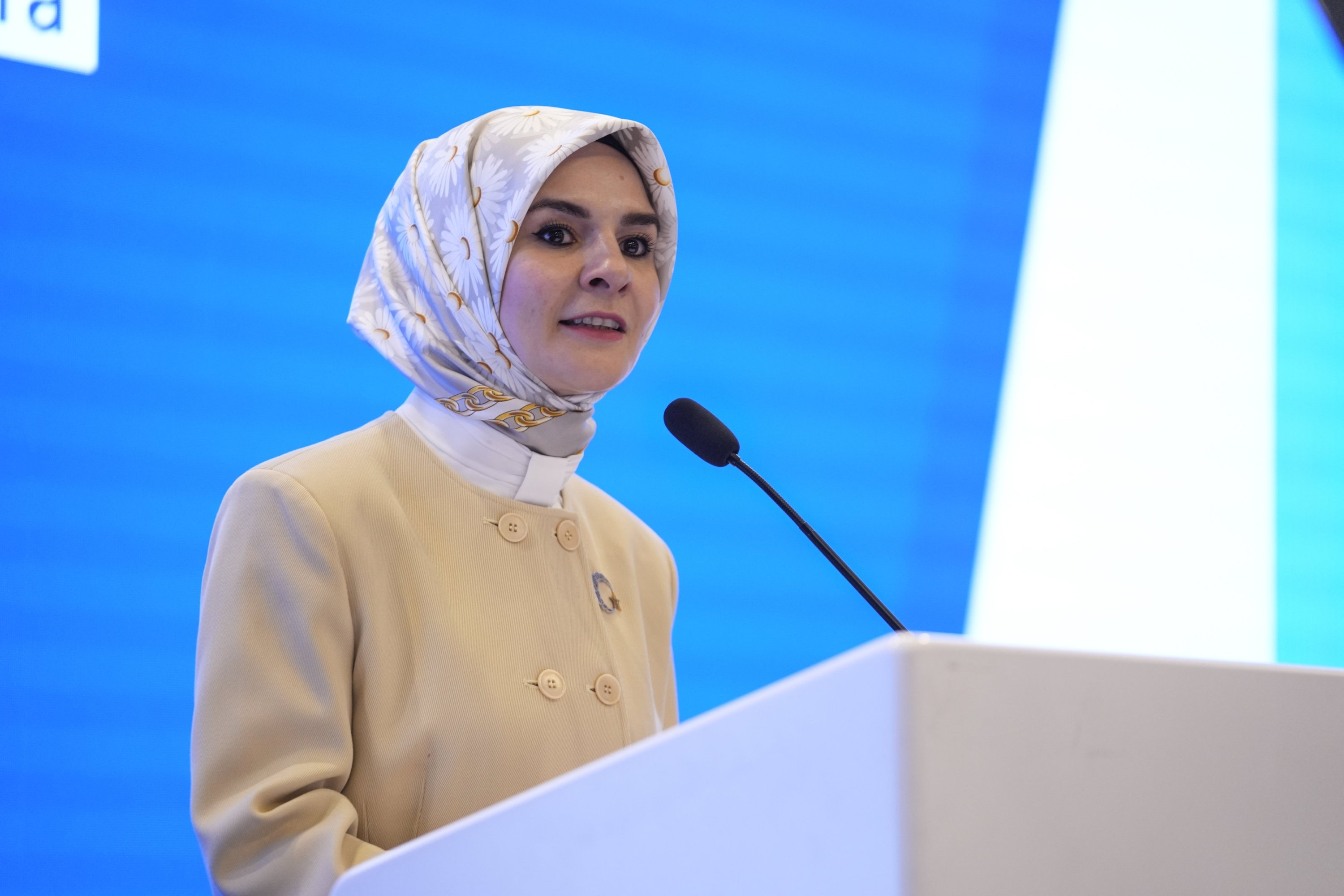
Türkiye will introduce a new system requiring age verification through its national e-Government platform and bar children under 15 from accessing social media, Family and Social Services Minister Mahinur Özdemir Göktaş said Sunday.
Speaking on a live broadcast of AHaber, Göktaş outlined recently approved regulations aimed at making digital spaces safer for children, citing growing concerns over online risks, including cyberbullying, exploitation and exposure to inappropriate content.
Under the new rules, social media platforms will be required to implement stricter oversight for users under 15 and provide differentiated content for those aged 15 to 18.
Companies with more than 1 million users in Türkiye will also be required to appoint a local representative, while gaming platforms with over 100,000 users will face similar obligations.
Göktaş noted that the government would roll out a Türkiye-specific age verification model using credentials from the country’s e-Government system, commonly known as e-Devlet. Authorities will also introduce an effective complaint mechanism requiring platforms to respond to harmful content within one hour.
“Our goal is to provide children with a safer digital environment,” Göktaş said, adding that children under 15 “will no longer be able to access social media.”
The measures are part of the government’s 2024-2028 Family Protection and Strengthening Action Plan, which aims to address the impact of rapid digitalization on families and children.
The minister also remarked that studies show children’s attention spans have declined by around 30% over the past decade, with the average focus duration dropping to about eight seconds. She also noted that the age at which children begin using social media has fallen to as young as 6.
According to her, 63% of children spend significant time online, a trend she described as “digital addiction.” She said children often mirror digital habits observed within their families, underscoring the need for broader awareness and intervention.
The regulations follow increasing public concern and align with global efforts to regulate online platforms and protect minors. Göktaş said the government had taken into account both domestic demands and international developments in shaping the policy.
Separately, the minister also addressed a recent incident in the southern province of Kahramanmaraş, saying it highlighted the need for stronger preventive measures to protect children from various risks. She said authorities had deployed 256 personnel, visiting more than 6,000 households and directly engaging with over 3,100 families.
Psychosocial support efforts are ongoing, including grief counseling for families affected by loss. Göktaş noted that 72 children who had previously lost parents in the 2023 earthquakes and were also impacted by the recent incident are receiving targeted support from dedicated teams.
She added that a “Social Risk Map” project, developed in coordination with the education, interior and health ministries, has been completed to help identify potential risks before they escalate.