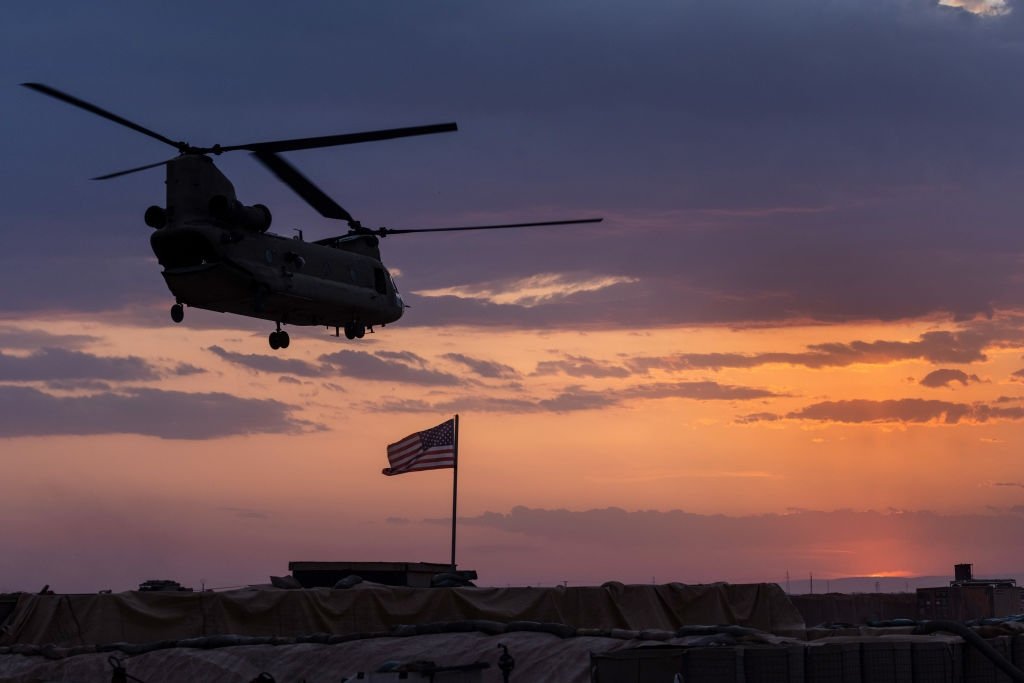
U.S. bases in Syria where the country cooperates with the PKK terrorist group's Syrian wing YPG received reinforcements on Sunday.
According to information obtained by Anadolu Agency (AA), in the last two days, a convoy belonging to U.S. forces entered Hassakeh through the al-Waleed border crossing between Iraq and Syria.
The convoy, made up of about 15 vehicles carrying medical supplies and equipment, reached U.S. bases in areas under the occupation of the PKK/YPG in rural Deir el-Zour, including the Omar oil fields. Late Saturday, two cargo planes belonging to the U.S. also landed at the Harab Cir bases in Hassakeh. The moves marked the U.S.’ first reinforcements this year to its bases in Deir el-Zour and Hassakeh.
In October 2019, when Türkiye launched Operation Peace Spring across its southern border against the YPG terrorist occupation in northern Syria, the U.S. prioritized establishing bases around oil fields as it evacuated its bases in the operation zone. U.S. forces, continuing their support for the terrorist group, currently have a presence in numerous bases and military points in areas under the group’s occupation in the provinces of Hassakeh, Raqqa, and Deir el-Zour. Washington consistently sends reinforcements to its military bases and points located in oil fields under the occupation of PKK/YPG terrorists.
The U.S. claims that it uses YPG forces as allies in the fight against Daesh. Turkish officials have long pointed to the contradiction in this approach, saying that using one terrorist group to fight another makes no sense. It also fiercely objects to the U.S. training and supporting with arms and other supplies a terrorist group that poses a threat to Türkiye’s borders as well as local residents of northern Syria, who have suffered under terrorist oppression and attacks.
In its more than 40-year terror campaign against Türkiye, the PKK – listed as a terrorist organization by Türkiye, the U.S. and the EU – has been responsible for the deaths of more than 40,000 people, including women, children and infants.