The terror-free Türkiye initiative will take a critical turn on Friday when the first batch of PKK terrorists will abandon their arms. President Recep Tayyip Erdoğan is expected to address the nation on Saturday on the matter.
Ömer Çelik, spokesperson for the ruling Justice and Development Party (AK Party), said on Wednesday that Erdoğan’s speech would be “historic” and called on the public to tune into their TVs for the speech.
It is unclear what Erdoğan will announce, but the anticipation is high as the initiative is expected to resolve the longstanding terrorism problem that has claimed thousands of lives since 1980s.
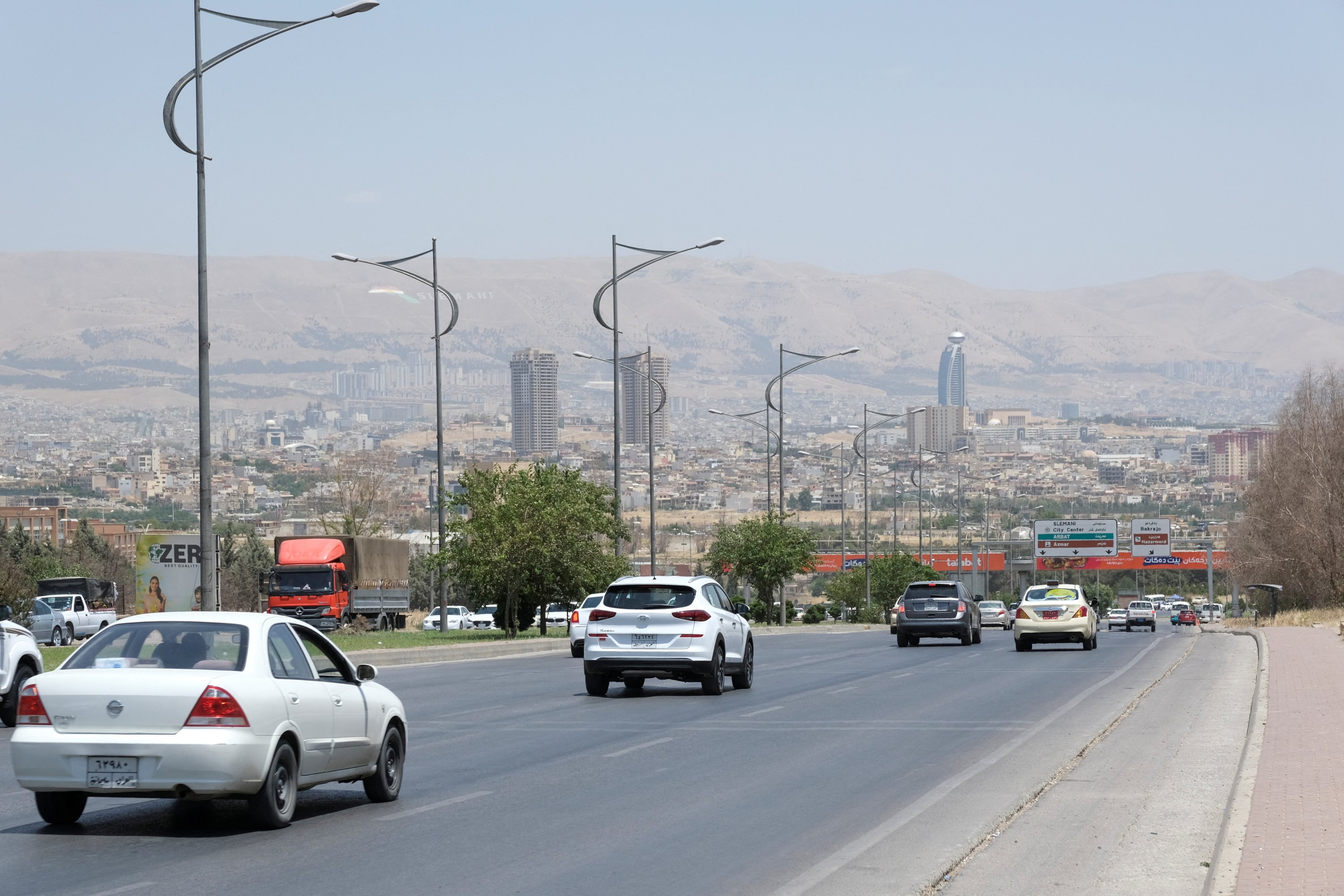
The initiative began last year when Devlet Bahçeli, head of government ally Nationalist Movement Party (MHP), called on PKK jailed leader Abdullah Öcalan to order the group to lay down arms. After talks back and forth with a delegation of lawmakers from a party affiliated with the PKK, Öcalan agreed and made his historic call to the terrorist group in February. In May, the PKK responded and pledged to dissolve itself. The process accelerated this month with news of an imminent disarmament and finally on Thursday, the pro-PKK Peoples’ Equality and Democracy Party (DEM Party) announced the disarmament would begin in northern Iraqi city of Sulaymaniyah.
Thus, efforts by the AK Party under the leadership of Erdoğan to eradicate PKK terrorism have come full circle. Erdoğan was prime minister when he made another historic speech on Aug. 12, 2005 to address the terrorism problem. In Diyarbakır, a southeastern province with a large Kurdish population, Erdoğan acknowledged that the state “made mistakes” in the past and also acknowledged that terrorism was a problem Ankara needed to solve. Back then, Erdoğan promised a resolution of the issue within constitutional order, “with more democracy and rights,” hinting that they would weigh alternative options instead of military offensives against the PKK. In the following years, he launched a “reconciliation process” to grant more rights to the Kurdish community exploited by the PKK, which claims to fight for a Kurdish self-rule. Yet, the process ultimately failed when the PKK ended a so-called, unilateral truce.
This time, Türkiye has a chance to resolve the matter permanently, with an emphasis on Turkish-Kurdish brotherhood and without any concessions. It is largely a conclusion of an intense period of counterterrorism operations from southeastern Türkiye to northern Iraq that significantly weakened the PKK. Since the failure of the reconciliation process, Türkiye has strengthened and diversified its counterterrorism efforts, from better cooperation with Iraq where the PKK’s senior cadres are in hiding to improving its local defense industry, effectively utilizing unmanned drones to strike PKK targets. Developments in the region, such as Israel’s violent expansionism that spilled over into Lebanon and Syria also motivated Ankara more to move faster in resolving the issue.
Çelik told broadcaster NTV that ongoing developments indicated that the atmosphere was feasible for dissolution of the PKK. He noted that fighting the PKK also meant fighting “foreign powers” using the group as its “puppet.”
He said the disarmament process was proceeding “as expected,” and Türkiye examined similar disarmament processes across the world to create “its own model” for the process.
Responding to a question about what will happen to the members of the terrorist group who lay down their weapons, Çelik explained: "There will be a distinction between those involved in crimes and those who are not. As our current laws stipulate, when someone surrenders and hasn’t committed any crimes, nothing happens to them. If this is not case, there are various regulations in place,” he said, referring to counterterrorism laws carrying hefty prison terms.
He said that a committee would be established at the Turkish Parliament to discuss the details of the disarmament process. He stated that criticisms of the process are being closely monitored but rejected claims that "concessions are being made" or "the country is being divided," calling those statements incorrect.
"We are carrying out this process with the principle of 'One homeland, one nation, one state, one flag.' There is no bargaining or negotiation regarding the fundamental characteristics of the state or the values of the nation," he emphasized, underlining that the effort is focused on a clear objective. The PKK is alternately called a “separatist group” for its ambitions to carve out autonomy for itself in southeastern Türkiye.
In response to a question about whether the initiative resonates with the public, Çelik replied: "There is extraordinary trust in our president and in Mr. Bahçeli. There is already a firm belief that neither our president nor Mr. Bahçeli would ever act against the people or the state."
Çelik added that certain networks and intelligence agencies have been working against Türkiye to undermine the initiative but assured that the government agencies were actively combating these efforts.
“We are focused on the outcome and using the right tools. We do not use illegitimate methods for the result, and our citizens can rest assured that everything is happening in an open way,” he said.