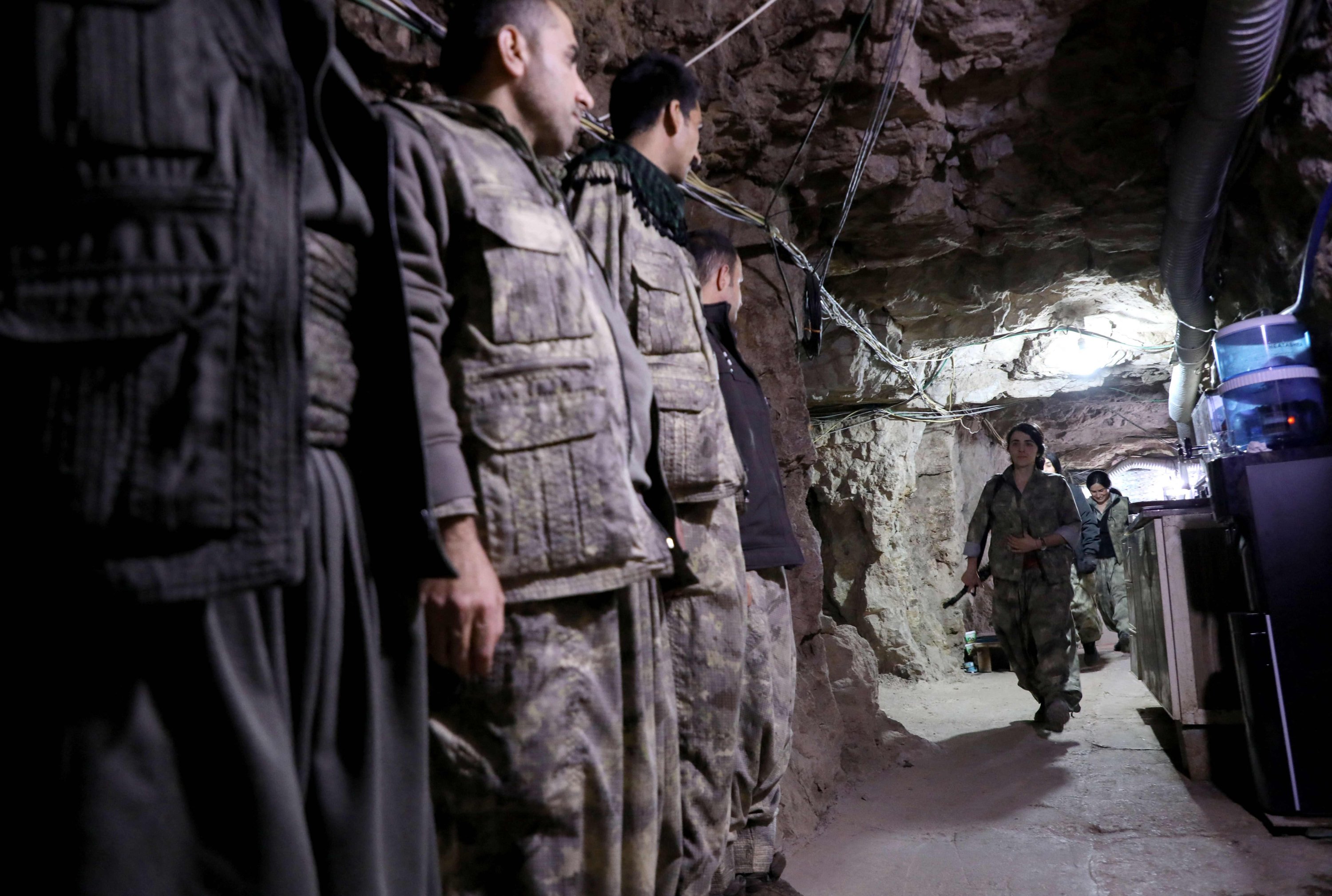
The Nationalist Movement Party (MHP) recently presented a three-point plan to Parliament for the success of the terror-free Türkiye initiative.
Details of the plan included in a 120-page report to propose judiciary supervision over the state of members of the PKK terrorist group who surrendered.
The government ally’s leader, Devlet Bahçeli, was the first to suggest a new process to disarm the PKK, which has killed tens of thousands of people since the 1980s in terrorist attacks. Bahçeli last year urged the PKK to lay down arms and turned to the group’s jailed ringleader, Abdullah Öcalan, to facilitate this new process. Öcalan agreed and made a call to the group in February. The PKK announced last summer that it began abandoning arms in a landmark development.
The initiative has been unilateral so far, while Parliament established the National Solidarity, Brotherhood and Democracy Committee to tackle the initiative. The MHP was part of the committee along with its ally, the Justice and Development Party (AK Party), and some opposition parties. The committee is expected to prepare a road map for Parliament for legal steps for the full dissolution of the PKK.
Earlier this week, the MHP announced that it had joined other parties presenting their reports to Parliament for advancing the initiative. Media outlets shed light on contents of the report over the weekend. The report involves a three-stage plan, namely, full disarmament of the PKK, surrender of the terrorist group’s members and their rehabilitation. The report underlines that all members of the group, including those abroad and the PKK’s affiliates, should join the disarmament campaign.
According to the media reports, the report proposes lifting punishment for members of the terrorist group not involved in any crimes and surrender to Turkish security forces. It says that PKK members who agree to collaborate with Turkish authorities should be subject to a one-year probation that may be extended to three years under existing laws.
It conditions that legal regulations for PKK members should be strictly linked to the disarmament of the terrorist group. It says security authorities should first confirm that all weapons were handed over or destroyed and members of the terrorist group should surrender and be subjected to a judiciary process in a way that would “not harm legal norms.”
The report also touches upon the “right of hope” first voiced for Öcalan by Bahçeli, in return for disarmament. It underlines that the said right did not mean the release of convicts and it was merely a review of incarceration conditions of the convicts. It also highlights that those involved in terrorism and sentenced to aggravated life imprisonment cannot benefit from parole.
The MHP recently joined a delegation from the National Solidarity, Brotherhood and Democracy Committee, which visited Öcalan in prison. The report includes details on this meeting and says Öcalan expressed commitment to the initiative and confirmed that the PKK’s dissolution was not on the condition of granting autonomy or similar conditions for the terrorist group.
Fearing it may collapse, authorities proceed with caution about the initiative. PKK terrorism is a sensitive issue for the country, which has suffered heavily from attacks, especially for the victims of terrorism. It also bears the potential of hurting the unity between Turks and Kurds. The PKK managed to manipulate some members of the Kurdish community to join its cause to carve out a so-called “Kurdistan” in southeastern Türkiye. Proponents of the initiative advocate that reinforcing Turkish-Kurdish unity may eliminate the PKK’s raison d’etre, something that has been difficult to achieve so far.
President Recep Tayyip Erdoğan recently underscored that the process must advance “without betraying the memory of martyrs.”
“Together, we will reach the goal of a terror-free Türkiye with patience and hope,” he said at an event where he met families of terror victims and veterans of counterterrorism efforts.