The Justice and Development Party (AK Party) recently launched a nationwide campaign to explain the "terror-free Türkiye" initiative to the public. The process, which has been largely secretive so far due to its sensitive nature, aims at the complete disarmament of the terrorist group PKK. Initially cautious, the public appears to be fully supportive of the initiative, according to reports by AK Party members. However, one big question remains: What will happen to Abdullah Öcalan?
The government has repeatedly assured that the jailed ringleader of the terrorist group would not be pardoned or released, but opponents of the initiative claim authorities negotiated with the government in exchange for laying down arms. This claim is also repeatedly denied by authorities, including, most recently, by Parliament Speaker Numan Kurtulmuş, who also chairs a parliamentary committee tasked with determining the next steps in the initiative.
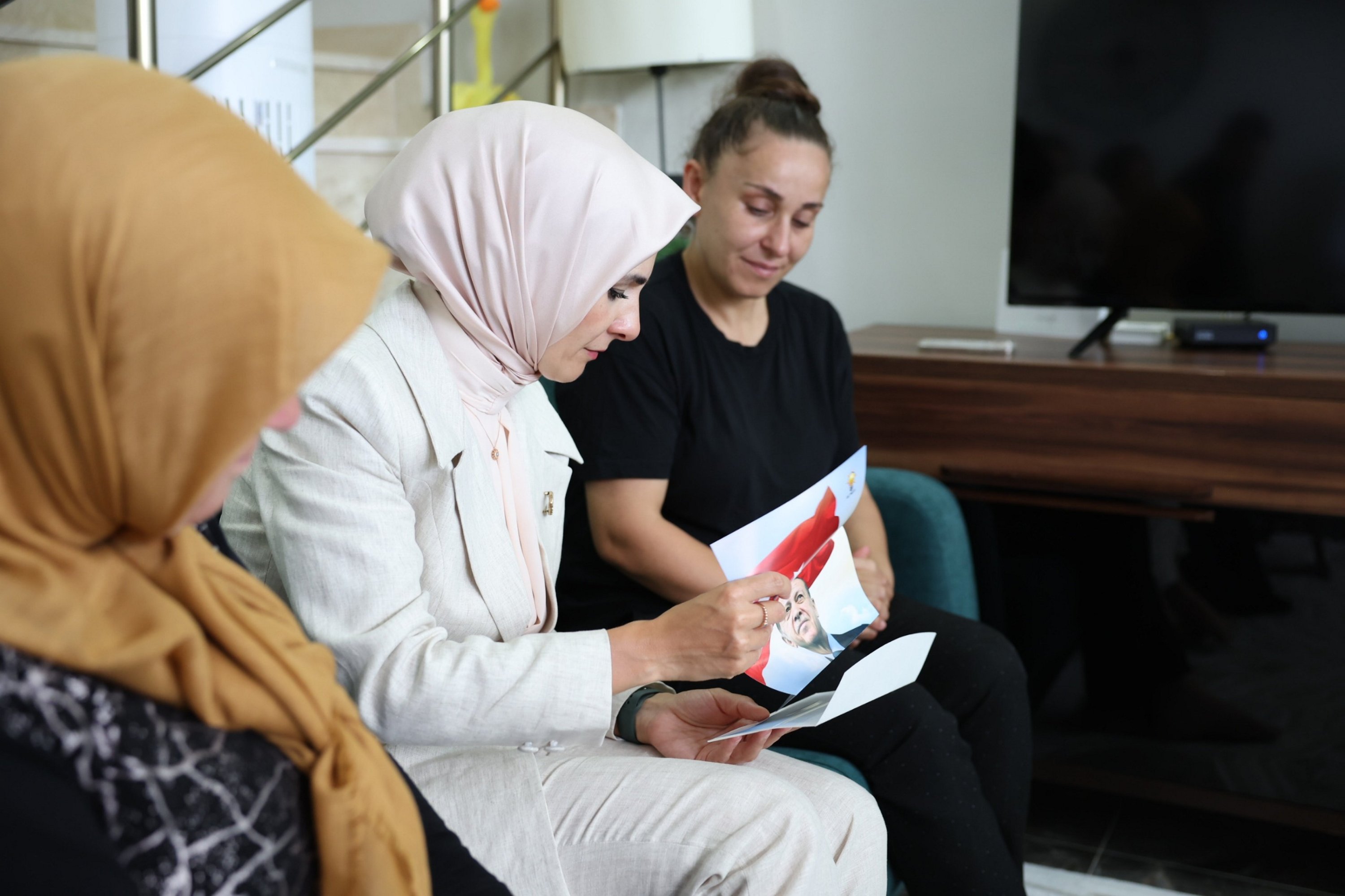
AK Party lawmakers and staff at provincial branches stepped up their work after Parliament went into recess to reach out to the wider public on the initiative. Every day, they hold public events in several provinces and discuss the initiative with citizens, particularly veterans and families of martyrs slain by the PKK. So far, such meetings have been held in 22 provinces and 201 districts and attended by 12 ministers, 112 lawmakers, and senior members of the AK Party. The government ally, the Nationalist Movement Party (MHP), also holds similar meetings.
The terror-free Türkiye initiative is the brainchild of MHP leader Devlet Bahçeli, who sought to convince Abdullah Öcalan's group to lay down arms with a historic speech last year. After Bahçeli’s call, the initiative took further shape with the intervention of President Recep Tayyip Erdoğan and further evolved when Öcalan responded affirmatively to Bahçeli’s call. In July, the PKK started laying down arms in northern Iraq, a process authorities hope to wrap up by the end of 2025.
For decades, the PKK has been the primary security risk for Türkiye, and its violent campaign since the 1980s has cost thousands of lives. Thriving on the exploitation of Kurds for its separatist goal, the PKK earned the hatred of millions in the country. A peaceful settlement of the PKK problem has been a wild dream for previous governments, which mostly preferred strong-arm tactics, at times a shady counterterrorism campaign, which reached its height in the 1990s. After the AK Party came to power in the early 2000s, governments sought an alternative solution to the matter, including through a “reconciliation process” that would restore the rights of underprivileged Kurds and leave no room for PKK propaganda to incite them in turn. The process collapsed after the PKK ended a brief lull in violence. A strict counterterrorism campaign followed and significantly weakened the PKK. This development encouraged authorities to pursue another solution process, which apparently paid off this time.
The AK Party’s observations in the field indicate that the staunch support for the initiative by Erdoğan and Bahçeli, a hard-line nationalist who once proposed the execution of Öcalan, instilled a sense of public trust in the initiative. A large majority of people want weapons to “go silent” and for the resumption of peace and brotherhood in the country, according to AK Party sources. The PKK’s so-called Kurdish separatism drove a wedge between ethnic Turks and Kurds at times, although both suffered significant losses. Supporters of the initiative advocate a unity that will not be overshadowed by the PKK threat, especially at a time of brewing conflicts in the immediate region, namely Israel’s attacks and expansionist goals, as well as the volatile situation in neighboring Syria, which strives to maintain unity in the post-Assad era.
The most frequently asked question to lawmakers is about the status of Öcalan. According to party sources, people strongly oppose a pardon for Öcalan. Bahçeli had initially implied that a terrorist leader may be granted a right of hope or a possibility of parole in the future in exchange for the PKK’s disarmament, though he adopted a more hawkish tone later, urging the PKK to either lay down arms or face annihilation. An amnesty for Öcalan was also a precondition for some senior leaders of the PKK in the first days of the initiative, but the group apparently abandoned this idea as it proceeded with burning down its weapons in a symbolic ceremony in Iraq as the first step of disarmament.
Lawmakers explain that a pardon was out of the question, and Öcalan himself was not willing, as his messages conveyed to the public indicated. Öcalan’s concern is the possibility of a murder plot against him if he walks free by “certain intelligence organizations,” pointing to the U.S. and Israel.
Another concern for the AK Party is what they call attempts to undermine the initiative by some opposition parties. Lawmakers seek to reassure the public that disinformation targeting the initiative by groups aligned with several opposition parties will ultimately fail once the process is successfully concluded.