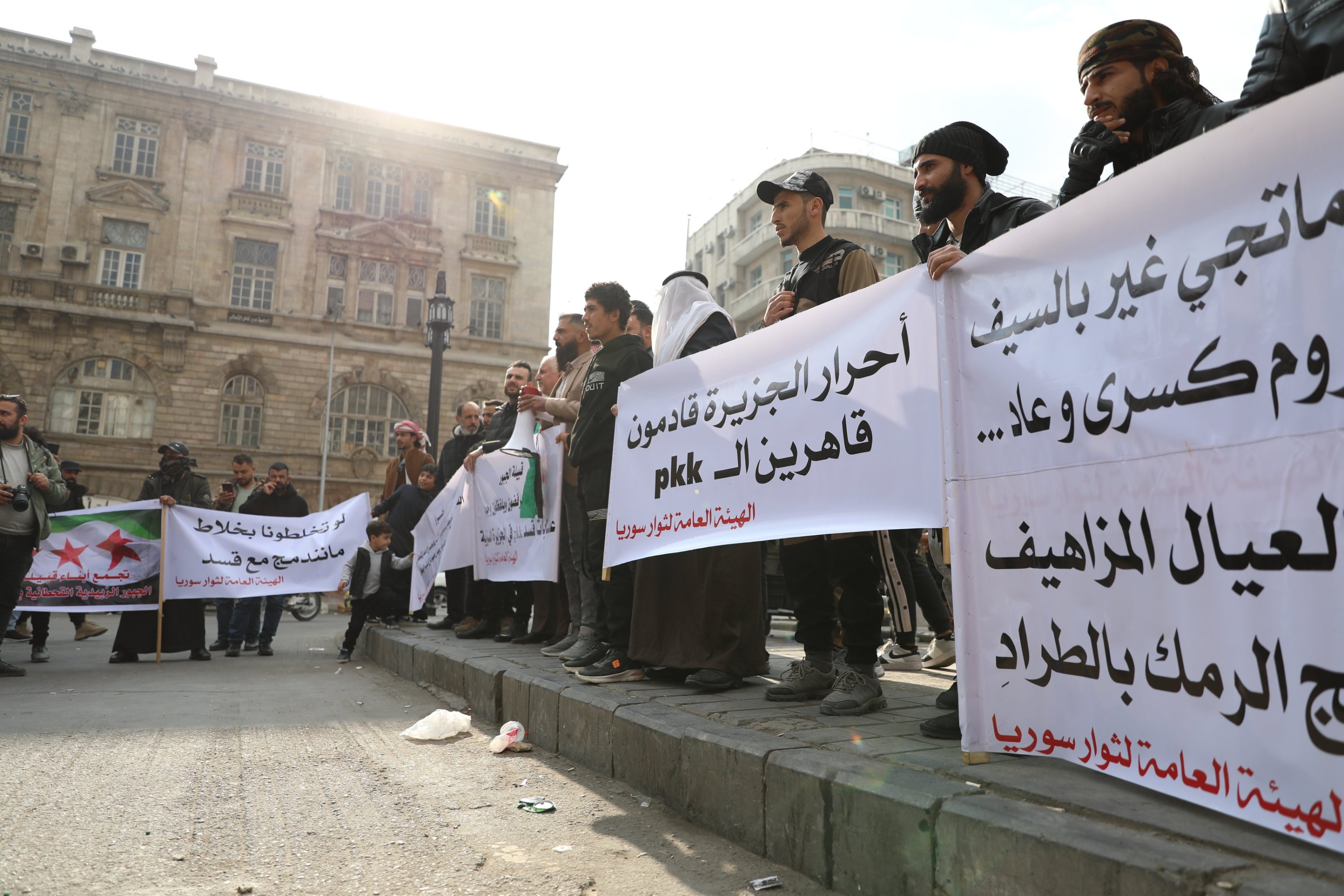
In a lengthy statement regarding the terror-free Türkiye initiative on Sunday, deputy chair of the Nationalist Movement Party (MHP) Semih Yalçın said the U.S.-backed terrorist group YPG in Syria still poses a threat to Türkiye.
Using a well-known Turkish saying that calls for “beating” of those “not listening to the advice,” Yalçın said the YPG would deserve it if it does not comply with a deal it signed with Damascus.
MHP’s leader, Devlet Bahçeli, is credited with proposing the initiative, which involves the disarmament of the PKK, of which the YPG is an offshoot. The PKK agreed to abandon arms earlier this year, but the YPG shunned joining them and still maintains a so-called autonomous region in northeastern Syria. After the fall of the Baathist regime in December 2024, the YPG struck a deal with the new administration in Damascus in March for its integration into nthe ew armed forces. Yet, it has not complied with the agreement since then and adopted a defiant rhetoric that insists on “decentralization” of Syria.
Türkiye, which suffered multiple YPG attacks in the past years, especially on border towns, is on the same page with Damascus for the group’s integration, and has repeatedly warned the terrorist group that it may face military action if it fails to do so.
Yalçın said in his statement that having “internal peace” in Türkiye was not enough and Türkiye should “drain the swamp abroad as well.” “The YPG did not toe the line yet, and the security risk on our southern border remains,” he said.
“Diplomacy is the first option, and the advice to (the YPG) will prevail. But those not heeding the advice will face the beating. Türkiye has the power to deliver this beating. Türkiye is strong enough to eliminate all terrorist groups, be it the YPG, Daesh or FETÖ,” he said.
“Those not willing to accept the diplomacy will eventually disappear,” he warned.
Syria on Friday said talks to integrate the YPG into the state have made no progress, even as the group’s leader insisted efforts are underway to keep the landmark deal with Damascus from collapsing and that failure was unlikely. YPG leader Ferhat Abdi Şahin’s remarks came days after Aleppo saw deadly clashes between the two sides before their respective leaders ordered a cease-fire.
In March, Şahin signed a deal with Syrian President Ahmed al-Sharaa to merge the YPG’s so-called “semi-autonomous administration” into the government by year's end, but differences have held up its implementation. Şahin recently said the YPG remained committed to the deal, adding in a statement that the two sides were working toward "mutual understanding" on military integration and counterterrorism, and pledging further meetings with Damascus. Downplaying the year-end deadline, he said the deal "did not specify a time limit for its ending or for the return to military solutions."
He added that "all efforts are being made to prevent the collapse of this process" and that he considered failure unlikely. Şahin also repeated the YPG’s demand for decentralization, which has been rejected by Syria's new authorities.
The YPG occupies large swathes of the country's oil-rich north and northeast, and enjoys the support of Washington under the pretext of fighting an international coalition against Daesh terrorists. Türkiye, an important ally of Syria's new leaders, sees the presence of the YPG on its border as a security threat. In Damascus last week, Foreign Minister Hakan Fidan stressed the importance of the YPG’s integration, having warned the week before that patience with the YPG "is running out." Meanwhile, Damascus said the negotiations with the YPG have yielded “no concrete results so far.” A Syrian Foreign Ministry source on Friday told Syria’s state-run SANA news agency that the YPG’s statements regarding integration have so far remained “theoretical, with no concrete steps or clear timelines.” The source said that despite the YPG's statements about ongoing dialogue with Damascus, talks have not produced concrete results on the ground, arguing that these statements are mostly used for “media purposes and to reduce political pressure.”