China’s ambitions of football glory may be on the brink of collapse – again – and this time not even robots can save it.
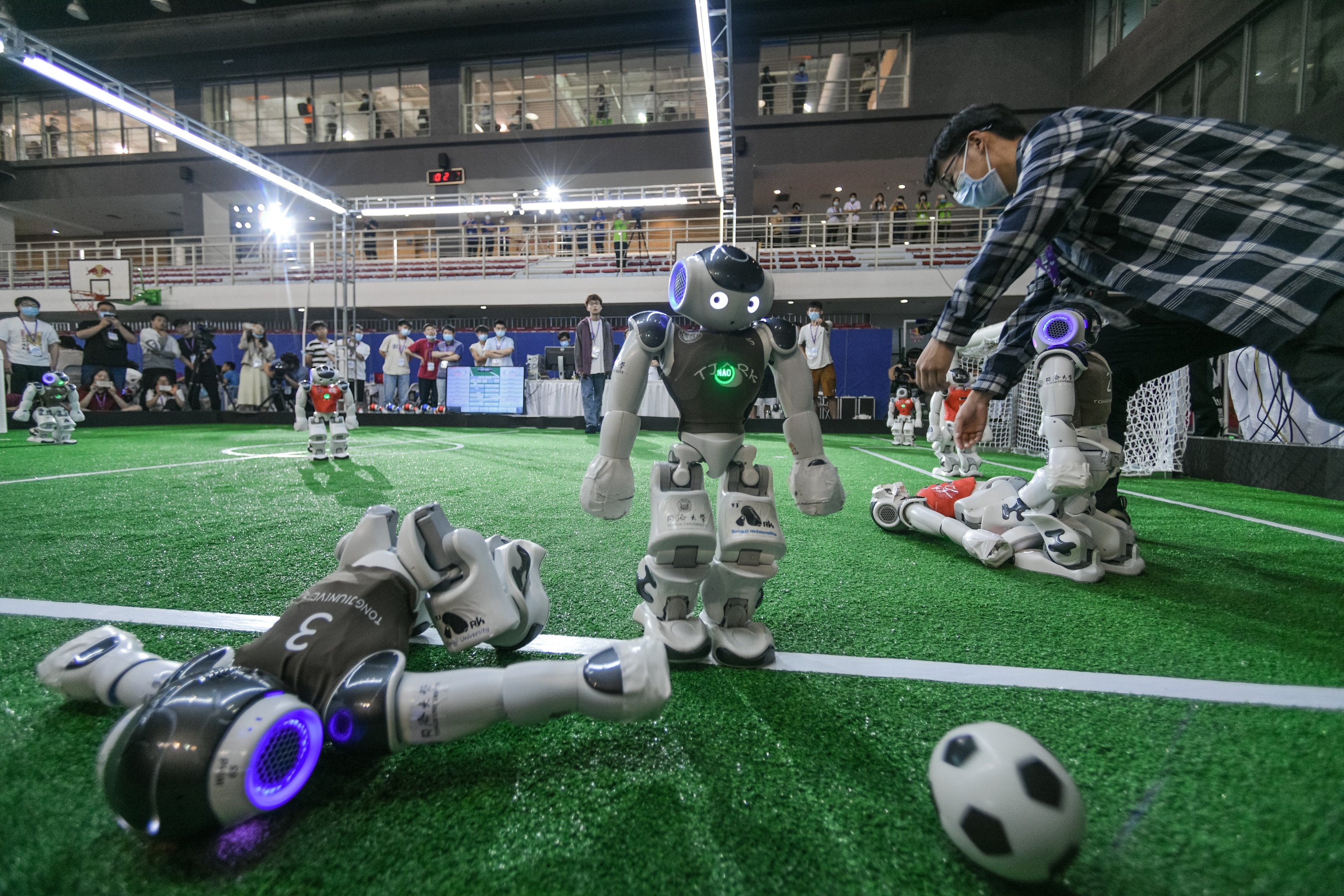
In April, Chinese President Xi Jinping visited a humanoid robotics company and half-joked: “Can we have robots join the team?” The line, meant in jest, cut deep.
China’s men’s football team, once a symbol of national pride in the making, now teeters on the edge of yet another humiliating World Cup exit.
Unless it defeats Indonesia on Thursday and Bahrain days later, China’s 2026 dream dies, despite a population of 1.4 billion and a $17 trillion economy.
So why can’t the world’s most populous nation field 11 elite players?
Analysts point to a simple but stubborn answer: top-down political control is strangling the beautiful game.
“What football reflects is the social and political problems of China,” said Zhang Feng, a Chinese commentator. “It’s not a free society. It doesn’t have the trust on the field that lets players pass the ball without fear.”
Zhang says Xi’s well-documented obsession with football has only made things worse.
The more pressure from the top, the more bureaucrats meddle – and the more corruption festers. When China beat Thailand in 2023, Xi reportedly told the Thai PM, “I feel luck was a big part of it.” Few would argue.
Indeed, the problems start from the ground up. There's a glaring lack of grassroots talent, a rigid education system that sidelines creativity, and intense academic pressure that sidelines sports entirely once kids hit middle school.
“What are we best at? Dogma,” wrote commentator Wang Xiaolei. “But football cannot be dogmatic.”
The results are hard to ignore. China’s FIFA ranking is a dismal 94th, behind Syria, just ahead of Benin. It has reached only one World Cup, in 2002, where it lost all three matches without scoring a single goal.
Last year, Japan thrashed China 7-0, yet few were surprised. Even its best player, Wu Lei, had a brief run in Spain before returning home.
China’s obsession with Olympic success hasn’t helped. Olympic sports like diving and table tennis, which require repetition over creativity, remain prioritised. Football, a team sport with only one medal, gets little love.
Cultural and structural roadblocks keep piling up. “Football needs volunteers, civil society, and club culture,” said Rowan Simons, a British football commentator and author of Bamboo Goalposts. “But those are seen as political risks in China.”
The women’s national team once offered hope, finishing second in the 1999 Women’s World Cup. But it too has faded, hammered 6-1 by England in the 2023 tournament.
Corruption compounds the crisis. Former men’s coach Li Tie is serving 20 years for bribery and match-fixing.
The once-booming Super League, filled with imported talent and state-backed money, has collapsed.
Guangzhou Evergrande, the league’s crown jewel, was disbanded this year amid $300 billion in debts from its parent company.
Businessmen, Zhang says, once used football clubs as political pawns. “They weren’t investing in football – they were investing in favor.”
And now parents are pulling their kids out. “They see the failure, the corruption, and they walk away,” said Simons, who runs a youth club in Beijing. “It’s sad and frustrating.”
With Indonesia looming and a do-or-die showdown with Bahrain next, China’s World Cup dream may soon slip away again – unless the country rewrites not just its football strategy, but its whole playbook.