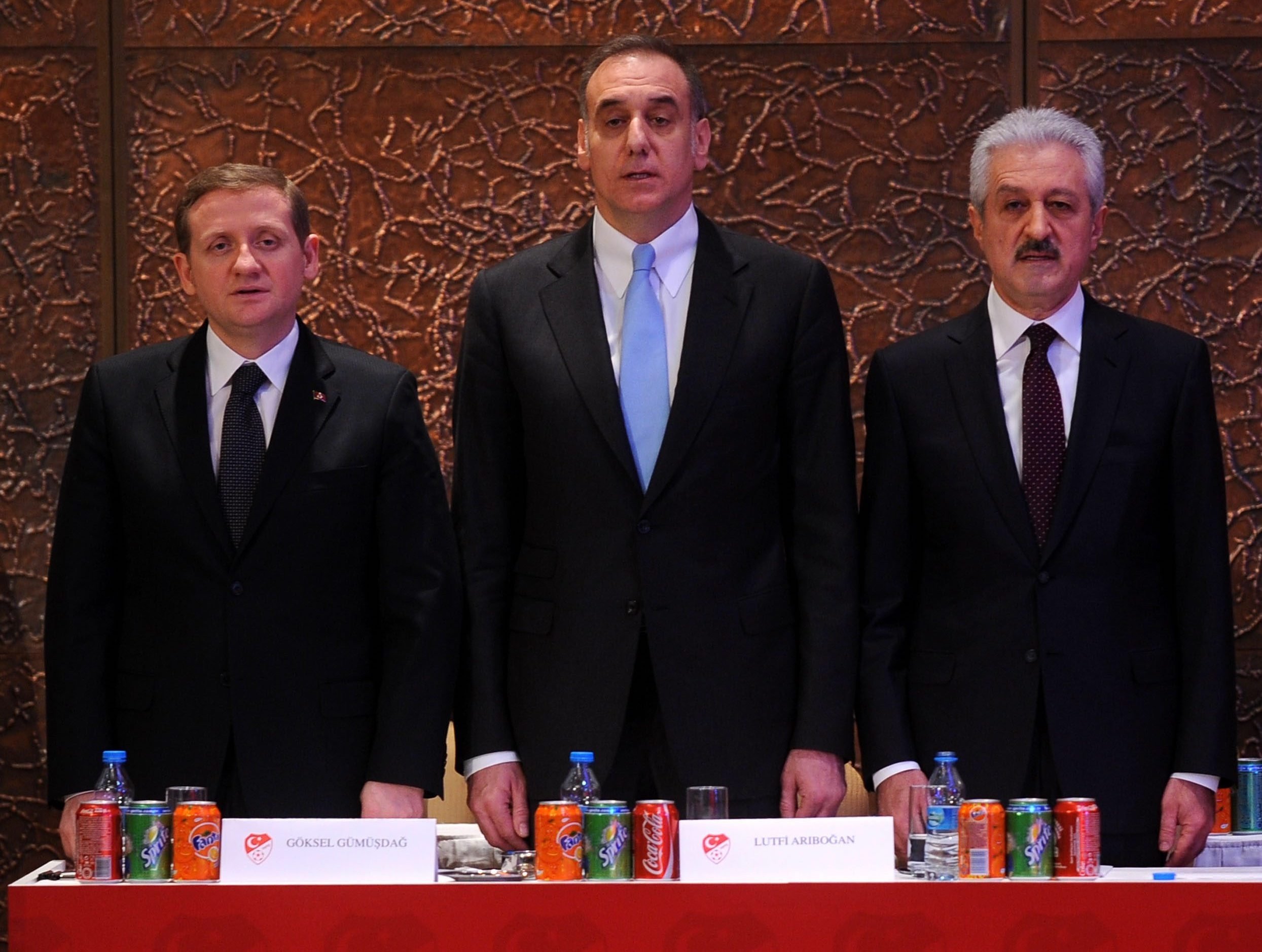
More than a decade after the 2011 match-fixing investigation upended Turkish football, prosecutors have pushed the inquiry into a new and highly sensitive phase, summoning four former senior officials of the Turkish Football Federation (TFF) over alleged ties to the Gülenist Terror Group (FETÖ)-orchestrated operation that later collapsed in court.
The Istanbul Chief Public Prosecutor’s Office confirmed Thursday that Lütfi Arıboğan, a former TFF vice president during the critical 2011 period, along with ex-general secretary Ebru Köksal, former legal adviser Ilhan Helvacı and former executive Ahmet Gülüm, are being questioned as suspects in an investigation examining whether the original case was unlawfully shaped by members of FETÖ.
Turkish media reported that the four were either detained or formally instructed to be brought in for statements, reflecting procedural differences in early reporting.
Prosecutors emphasized that the individuals were summoned to give their defenses at the Istanbul Courthouse as part of an ongoing criminal inquiry.
In its official statement, the prosecutor’s office said the current investigation focuses on the 2011 “Football Match-Fixing Investigation,” which initially targeted former Fenerbahçe president Aziz Yıldırım and numerous figures across Turkish football.
Authorities now argue that the case was unlawfully conducted by public officials affiliated with FETÖ, using fabricated or manipulated evidence to steer judicial outcomes.
Prosecutors allege that Arıboğan, Köksal, Helvacı and Gülüm took part in irregular procedures connected to Mehmet Baransu, a former journalist now imprisoned on multiple FETÖ-related convictions.
The suspects are accused of aiding a terrorist organization and violating investigative secrecy, specifically by facilitating or failing to prevent the circulation of confidential documents during the height of the 2011 process.
Baransu, once a media figure, has been convicted in several cases involving the leaking of classified materials and manipulation of high-profile investigations.
Authorities say his role sits at the center of the alleged information flow that shaped public opinion and judicial pressure during the match-fixing case.
The investigation launched on July 3, 2011, shook the foundation of Turkish sport.
Police raids, mass arrests and sweeping indictments followed, with more than 90 suspects named.
Yıldırım was jailed for nearly a year, and Fenerbahçe were barred from European competition, losing a Champions League place and suffering lasting financial and reputational damage.
In 2012, convictions handed down by a special-authorized court appeared to validate the case, even as critics raised concerns about evidence quality and due process.
UEFA imposed bans on individuals, while the TFF stopped short of relegating Fenerbahçe – a decision that fueled years of debate and division among the public.
The narrative shifted dramatically after Türkiye’s failed coup attempt on July 15, 2016, which was orchestrated by FETÖ.
Judges, prosecutors and police officers tied to major cases of the early 2010s – including the match-fixing probe – were later revealed to be members of the terrorist group.
Subsequent retrials revealed fabricated phone records, manipulated documents and procedural violations.
In 2020 and 2021, higher courts fully acquitted Yıldırım and most other defendants, ruling that no organized match-fixing crime had occurred.
In legal and political discourse, the case has since been labeled a “kumpas”, or conspiracy, aimed at removing influential figures from Turkish football.
The renewed focus on former TFF leadership marks a critical turn.
Investigators are examining whether decisions taken – or not taken – by federation officials during the 2011 process helped legitimize a flawed investigation, amplify its impact or shield unlawful actions from scrutiny.
The case has also gained momentum through renewed legal efforts by Fenerbahçe.
Under President Ali Koç, the club has consistently pushed for full judicial acknowledgment of the events as a FETÖ plot, and current filings list the club and its representatives as complainants.
Since 2016, Türkiye has steadily widened FETÖ probes into sports administration, convicting several former prosecutors and police chiefs linked to the 2011 case.
Thursday’s development goes further, directly placing former federation powerbrokers under investigation.
Questioning is underway or imminent at Istanbul’s Çağlayan Courthouse.
Prosecutors say further charges or arrests remain possible depending on testimony.