FIFA is avoiding a political standoff with President Donald Trump, confirming this week that the U.S. government will determine whether 2026 World Cup host cities meet safety standards.
The football governing body stressed that ensuring public safety is the responsibility of local and federal authorities.
“Safety and security are the top priorities at all FIFA events worldwide. Safety and security are obviously the governments' responsibility, and they decide what is in the best interest of public safety,” a FIFA spokesperson said in a written statement to Field Level Media.
The controversy erupted after Trump suggested World Cup matches in Boston’s Foxborough, home to Gillette Stadium, could be relocated if the city fails to “clean up its act.”
The president cited recent unrest in South Boston, including a police vehicle set ablaze, as evidence the area could be unsafe.
“If somebody is doing a bad job, and if I feel there’s unsafe conditions, I would call Gianni (Infantino), the head of FIFA, and I would say, ‘Let’s move into another location,’ and they would do that,” Trump said Tuesday, referring to the FIFA president, who he has publicly praised as “phenomenal.”
Boston Mayor Michelle Wu, a Democrat, responded firmly Wednesday on the local podcast Java with Jimmy.
Wu argued that the tournament is largely protected by contract and cannot be unilaterally altered by the president.
“There’s no ability to take away the World Cup games,” she said. “Even if they live in the White House currently, no single person can undo it. There’s no real threat when it comes to saying cities are so unsafe that they can’t host the games.” Wu framed Trump’s comments as a political attack on the city’s values, saying, “We are going to continue to be who we are, ten toes down for Boston.”
The United States, along with Mexico and Canada, will host 78 of the tournament’s 104 matches, marking the first 48-team World Cup in history.
Foxborough will host seven games, including five group-stage matches, one round of 32 match, and a quarterfinal on July 9, 2026.
Mike Loynd, head of Boston’s World Cup organizing committee, called the schedule “perfect,” highlighting the later-stage matches as particularly valuable for media exposure and local tourism.
Organizers project the tournament will bring $1.1 billion in local economic impact, create over 5,000 jobs, and generate more than $60 million in tax revenue, while attracting over 2 million visitors to New England during the 39-day tournament.
Gillette Stadium is operated by Robert Kraft, owner of the NFL’s New England Patriots and MLS’s New England Revolution.
Kraft played a key role in bringing the World Cup back to the U.S., serving as honorary chair of the United Bid.
While Kraft has historical ties to Trump – including gifting him a diamond-encrusted Super Bowl ring after the Patriots’ 2016 championship and making a donation to Trump’s inauguration – he has had no contact with the former president since the Jan. 6, 2021, Capitol attack.
Trump’s threats are part of a broader pattern of tension between his administration and Boston.
Officials have repeatedly criticized the city’s sanctuary policies and refusal to fully cooperate with federal immigration authorities.
Legal clashes over these policies have intensified in recent years, with the administration seeking to deploy National Guard troops in various cities over public safety concerns – a move met with resistance in Massachusetts.
Despite the political drama, FIFA has reiterated that its tournament logistics are set.
Changing venues now would pose enormous legal, financial, and logistical challenges less than a year before kickoff.
Victor Montagliani, FIFA vice president, recently reinforced that decisions regarding host cities are firmly within FIFA’s jurisdiction.
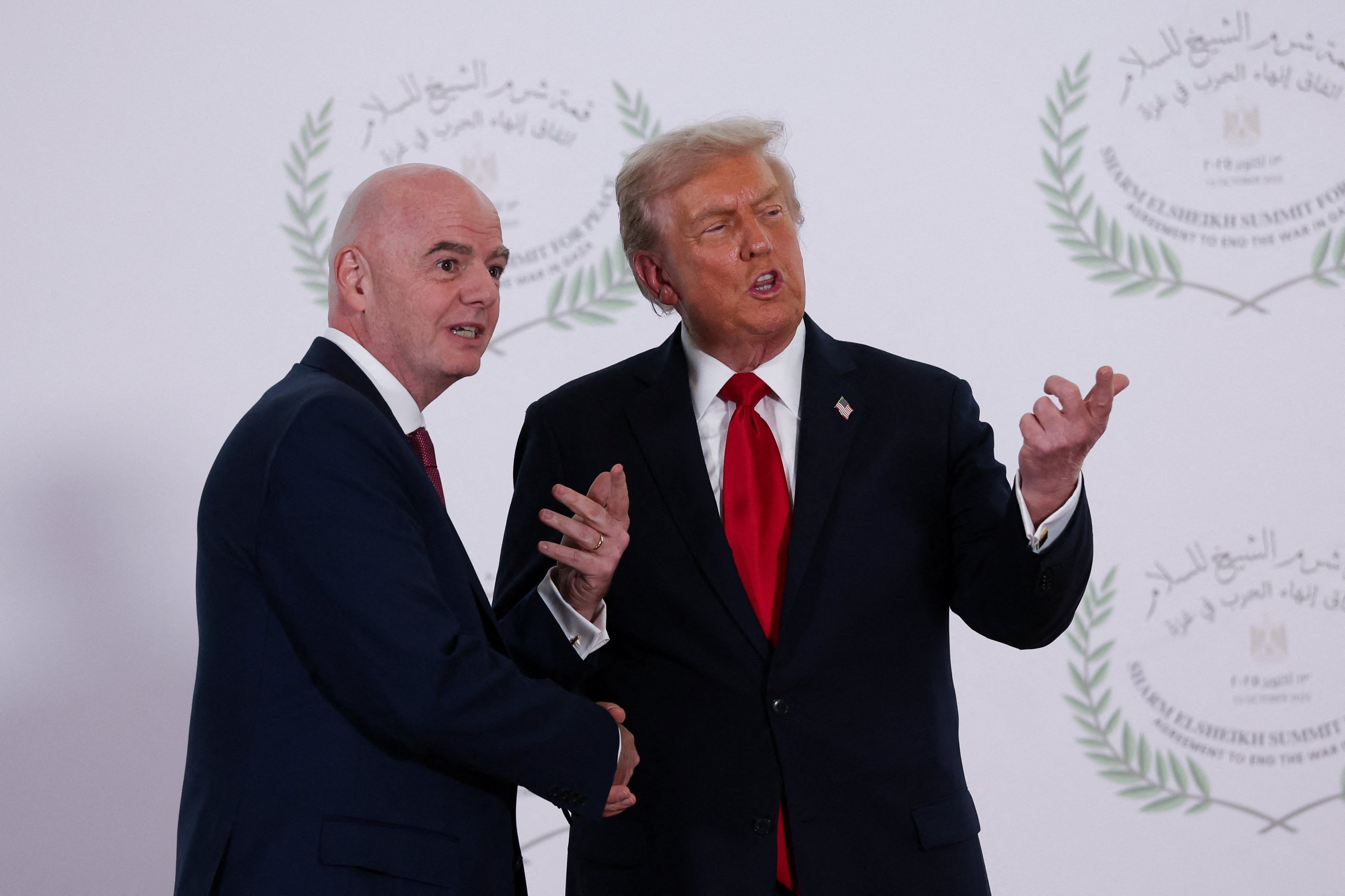
Infantino, who met with Trump earlier this week in Egypt during a diplomatic announcement between Israel and Gaza, remains a close ally of the former president, but FIFA has declined to comment on any cities flagged by Trump.