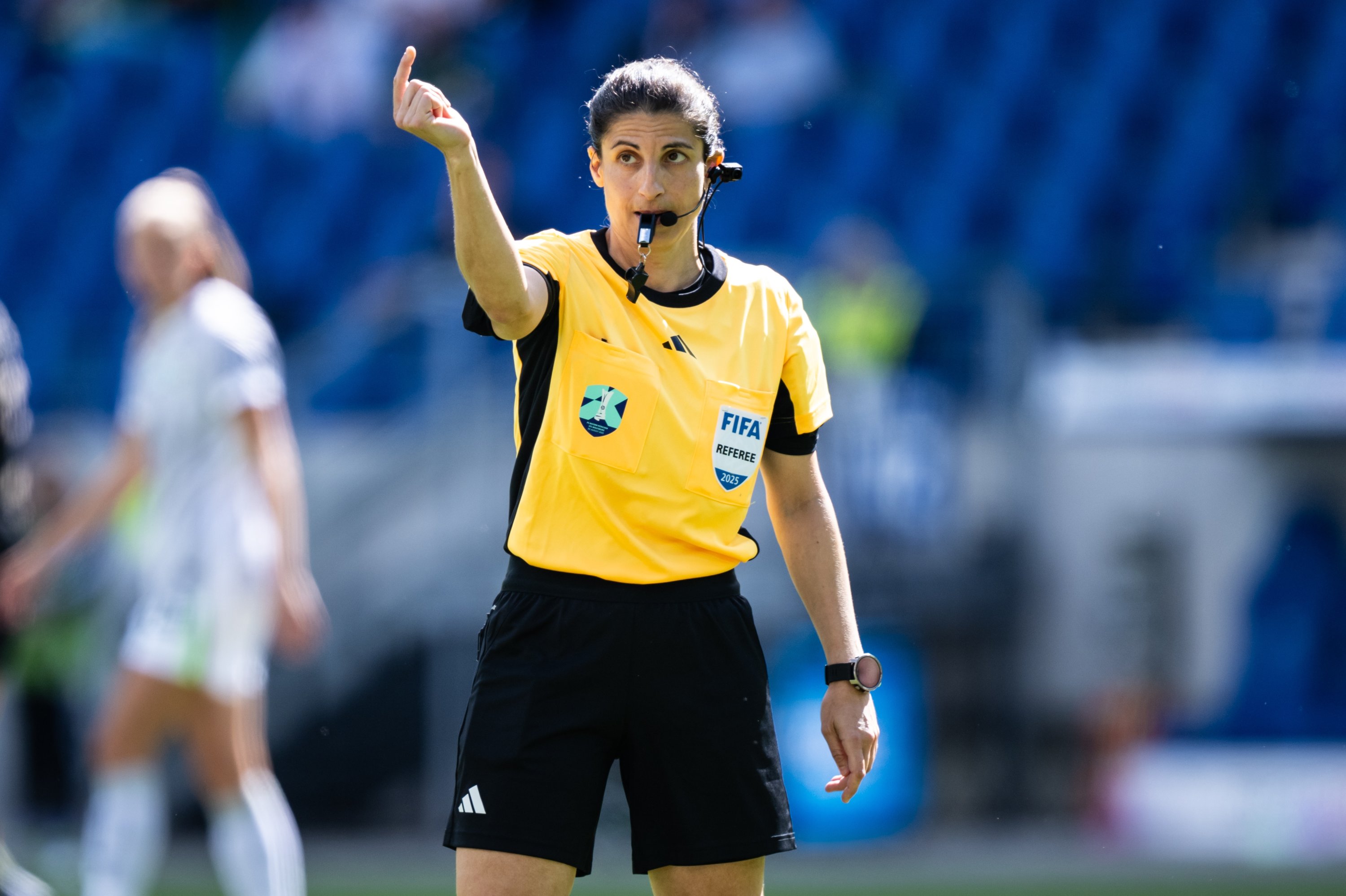
FIFA is considering rolling out new refereeing technologies and stricter timekeeping rules for the 2026 World Cup, building on trials conducted at this year’s Club World Cup in the United States, senior officials said ahead of the World Cup draw.
Johannes Holzmueller, FIFA’s director of innovation, said the governing body is keen to expand the use of referee body cameras and an enhanced version of semi-automated offside technology, both tested during the Club World Cup, pending regulatory approval.
“We want to build on the success of the FIFA Club World Cup this year in the U.S., where we trialed the referee body camera very successfully,” Holzmueller said during a panel discussion Thursday.
The system, branded “referee with you,” feeds footage directly into live television broadcasts and stadium big screens, giving fans a first-hand view of key moments from the referee’s perspective.
“That’s definitely something we want to bring forward,” he said. “But of course, so far it was a trial. We need to get the approvals so we can bring that to the World Cup as well.”
Any rule changes would have to be approved by the International Football Association Board at its meeting in Wales in February.
Holzmueller said FIFA also quietly advanced its semi-automated offside technology at the Club World Cup by sending certain offside alerts directly to assistant referees rather than only to the video assistant referee, or VAR, reducing delays.
“For positional offside, the information was sent via an audio alert directly to the assistant referee, and they could raise the flag,” he said. “So we had virtually no additional delay for positional offside.”
He rejected the idea that technology was creating a new version of the sport, arguing instead that it was restoring the game’s traditional flow.
“For us, it’s always a balance between what we can improve and what is the tradition of our sport,” Holzmueller said. “Technology can help support referees, coaches, medical staff and fans without changing the game.”
Pierluigi Collina, chairman of the FIFA Referees Committee, said changes to how long goalkeepers can hold the ball – announced by IFAB last March – were aimed at speeding up play after FIFA found some keepers were holding it for up to 25 seconds.
“We gave goalkeepers two seconds more,” Collina said. “But they have to be 100% sure that once the eight seconds are finished, the referee will intervene.”
Comparing today’s officiating environment with his own World Cup experiences, Collina said the level of support and accuracy now available to match officials was “night and day.”