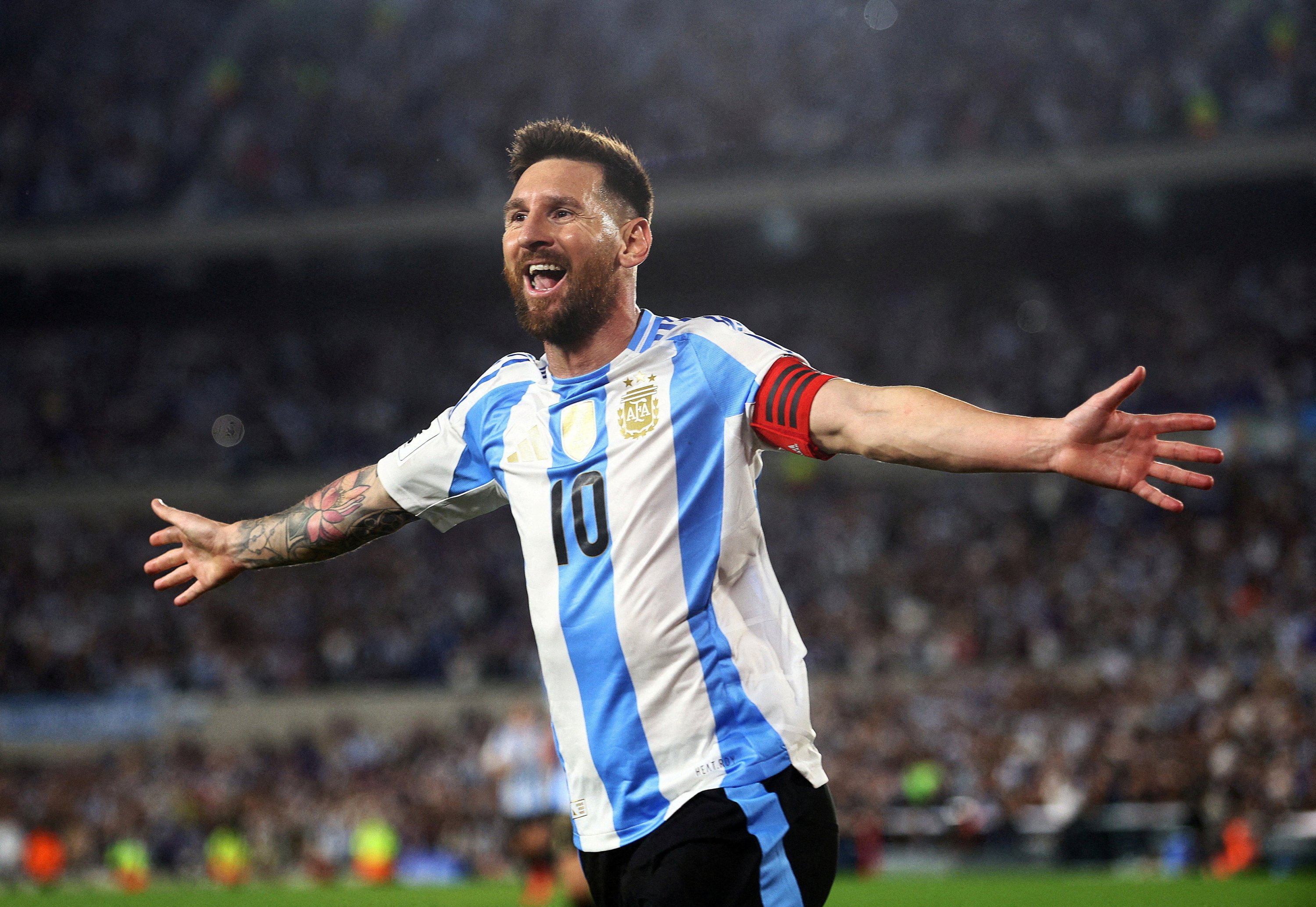
Lionel Messi has spent two decades rewriting what footballers are supposed to look like at 38, yet as he leads Argentina through another dominant qualifying campaign, the world’s most decorated player refuses to commit to one more World Cup.
His uncertainty has become the most compelling question surrounding Argentina’s future: will their captain chase a sixth appearance, or will the 2022 triumph stand as his final act on the global stage?
In an extended interview with ESPN Argentina, Messi said he is approaching the decision with unusual caution, insisting his body – not nostalgia, not pressure, not public expectation – will make the final call. “I’m going to take it one day at a time; being honest and trying to be realistic and feel good,” he said. “This year I felt very good.”
It was a rare admission from a player who once powered through seasons without pausing to consider the long-term cost.
His transition to Inter Miami has reshaped the equation.
Messi has regained fluidity in MLS.
Yet success has also brought relentless travel, packed schedules and the responsibility of carrying a team that depends heavily on his presence.
The physical demands of MLS – with its long distances and rapid turnarounds – have forced Messi to become more deliberate in how he manages himself across a season.
He acknowledged that the American calendar complicates a World Cup run more than any European season ever did.
With Miami beginning preseason in January and playing league matches alongside the CONCACAF Champions League, Messi would enter national-team duty in the middle of one of his most intense periods of the year.
For a player approaching 40, the timing matters as much as form.
Argentina, however, remains firmly in his corner.
Messi said he maintains constant dialogue with head coach Lionel Scaloni, a partnership built on trust and shared success.
The two have navigated Copa América titles and the 2022 World Cup together, and their conversations now center on what Messi can realistically give – not what he once gave.
Scaloni has made clear that Messi’s role can evolve with his physical condition, and the captain echoed that he will never be forced into a decision: “We have a very trusting relationship, and we can talk about everything.”
Records linger in the backdrop, though Messi refuses to let them guide him.
A sixth World Cup would set a new standard for longevity in the men’s game, surpassing legends who stopped at five.
Cristiano Ronaldo’s expected presence for Portugal could add one last chapter to football’s defining rivalry, but Messi has avoided attaching his future to comparisons or milestones.
Instead, his uncertainty reflects the natural tension between heart and body.
He remains the creative engine of Argentina’s attack, a leader whose vision and control still tilt matches.
But he is equally aware of what back-to-back seasons in MLS, plus international travel and tournament intensity, can mean for an athlete who has played nearly 1,100 professional matches.