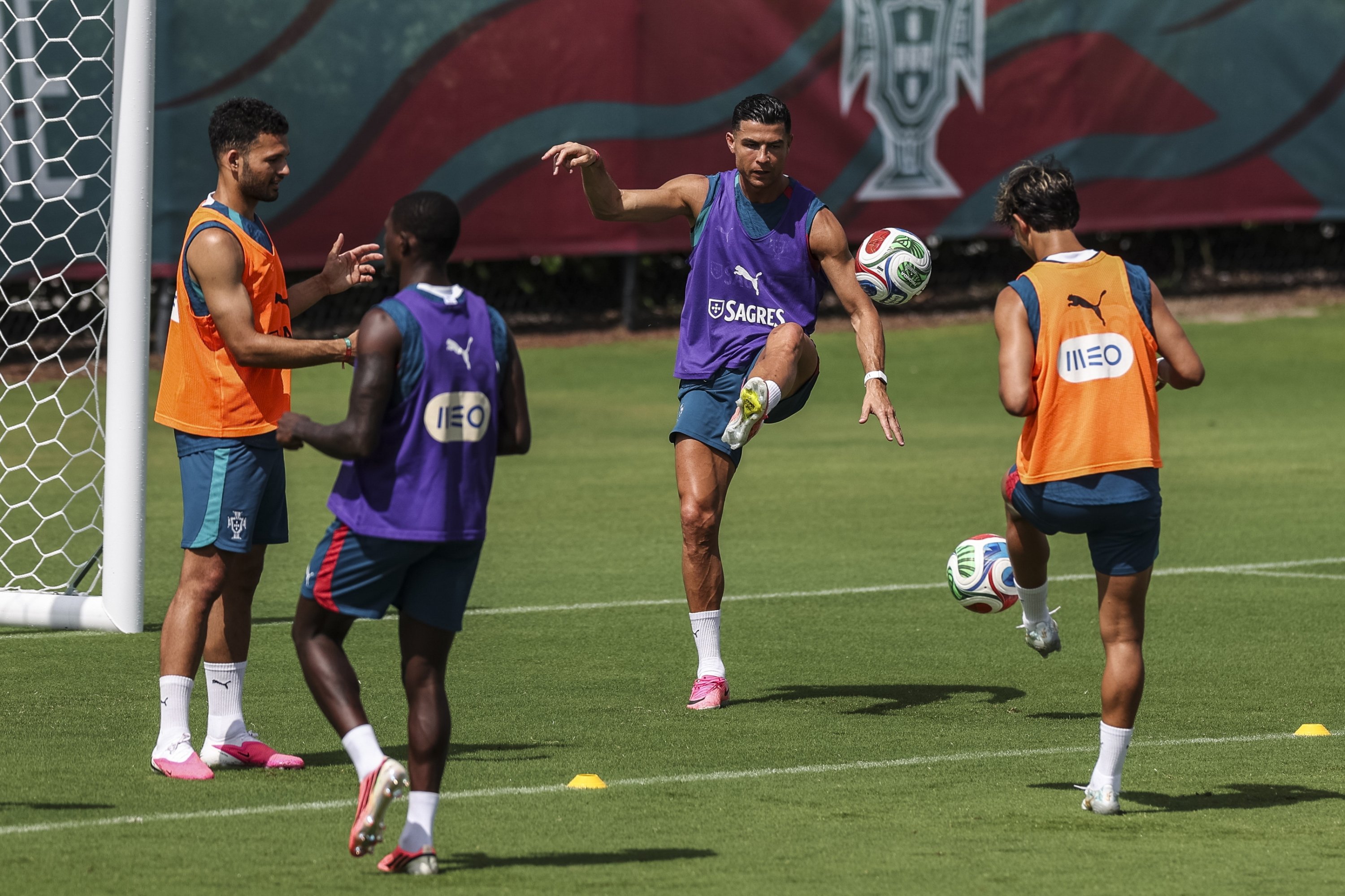
Portugal begin another high-expectation World Cup campaign on Wednesday in Houston, opening Group K against the Democratic Republic of the Congo in a meeting that contrasts one of football’s most established modern powers with a side ending a 52-year absence from the tournament.
For Portugal, the mission is familiar but unfinished. The talent level has rarely been in question, yet the trophy has consistently slipped away. Their best finish remains third place in 1966, with recent campaigns producing deep runs without final reward, including a quarter-final exit in 2022 after a loss to Morocco.
This tournament again centers on Cristiano Ronaldo, who arrives at 41 still shaping Portugal’s identity in attack while chasing the one major title missing from an otherwise complete career. His presence anchors both expectation and scrutiny, particularly after a muted 2022 World Cup return.
Around him, Portugal carry one of their most balanced squads in years. Bruno Fernandes remains the creative reference point, while Nuno Mendes, Joao Neves and Vitinha represent a younger core arriving with major club success and rising international responsibility. The defensive line is expected to be shaped around Ruben Dias, though his separate training session ahead of the opener introduced a small note of uncertainty.
Coach Roberto Martínez has pushed a message of control and urgency, stressing that early group matches leave no margin for error. Portugal’s recent record supports their status as favorites, with just two defeats in their last 15 World Cup group-stage games, yet the warning signs remain in isolated lapses that have cost them in knockout moments.
Their Group K path is not limited to this opener. Encounters with Colombia and Uzbekistan will likely define qualification, making a strong start in Houston essential rather than optional. Portugal enter off encouraging form, including a qualification campaign that featured a dominant 9-1 win over Armenia and a series of friendly victories that reinforced squad depth.
Opposing them, the Democratic Republic of the Congo arrive with a very different narrative, built on survival, adaptation and a long-awaited return to football’s biggest stage. Their qualification came through a tense intercontinental playoff, sealed by a narrow extra-time win over Jamaica, ending decades of absence since their only previous appearance in 1974 when the nation competed as Zaire.
Their preparation, however, was shaped by disruption. A health crisis in their home country forced strict precautions and an extended training period in Belgium and Spain before travel to the United States. Despite those constraints, coach Sébastien Desabre has emphasized stability and adaptability, pointing to a draw with Denmark and a narrow loss to Chile in pre-tournament friendlies as signs of competitiveness rather than concern.
The squad reflects a global footprint, with many players based in Europe. Aaron Wan-Bissaka, Axel Tuanzebe, Chancel Mbemba and Arthur Masuaku bring top-level club experience, forming the backbone of a defensive structure expected to rely heavily on organization and discipline.
In midfield, Noah Sadiki is viewed as a key connector between phases, while the attacking threat rests largely on Yoane Wissa and Cédric Bakambu. Bakambu leads the squad in international goals, offering a focal point for transitions, while Wissa adds mobility and pressing intensity.
DR Congo’s recent form suggests a side capable of staying competitive. Their Africa Cup of Nations run to the last 16 and a steady record in recent matches have built quiet confidence that they can challenge for at least one result in a group where progression may hinge on fine margins.
The expanded World Cup format adds another layer of possibility, with third-place qualification pathways keeping more teams alive deeper into the group stage. That reality gives DR Congo tangible motivation, especially with Uzbekistan viewed as another potential swing fixture in their campaign.