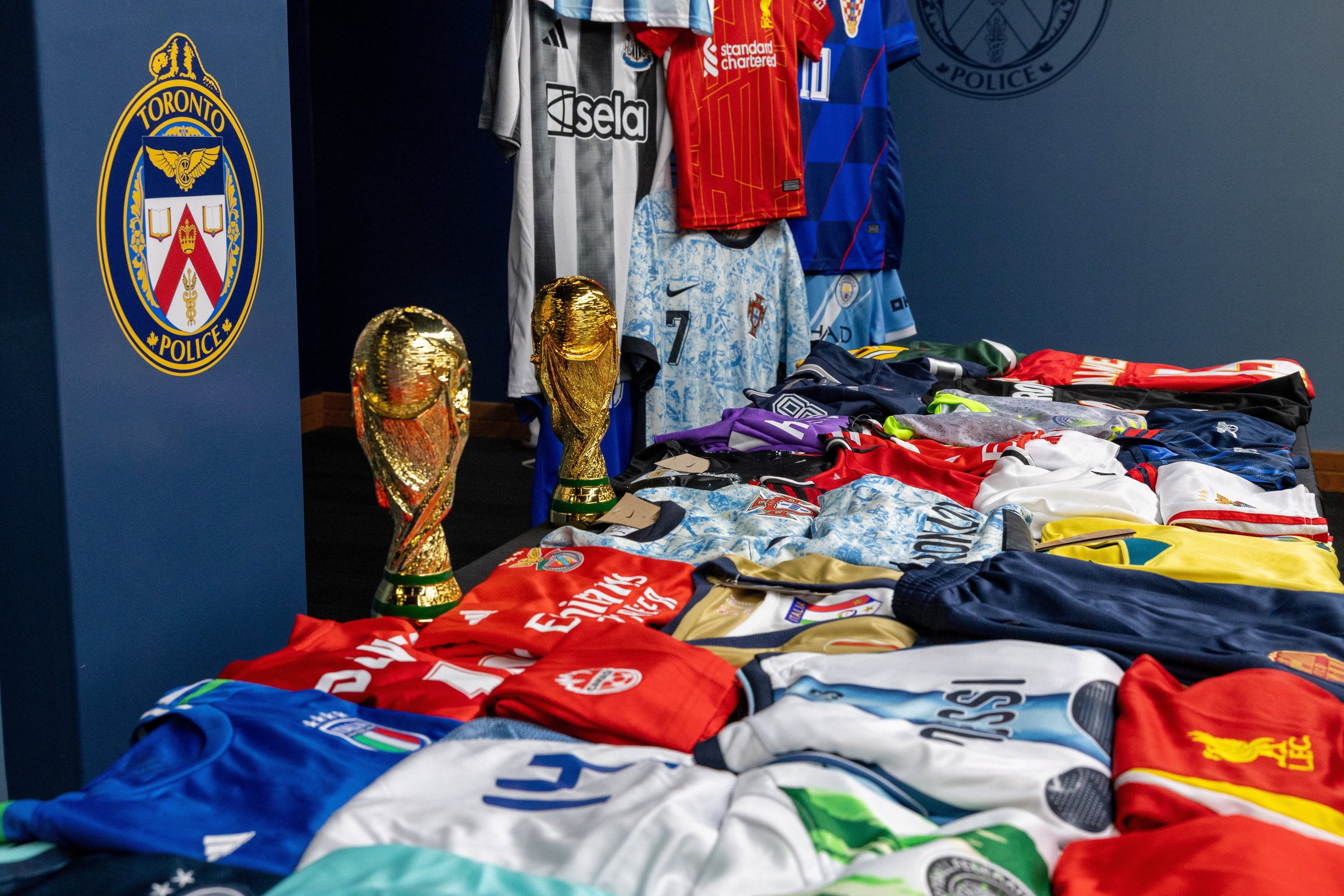
Less than two weeks before the opening match of the 2026 FIFA World Cup, Toronto police say they have dismantled the largest counterfeit soccer merchandise operation ever uncovered in Canada, seizing millions of dollars in fake goods tied to a warehouse distribution network in the Greater Toronto Area.
The Toronto Police Service said officers recovered more than CAD3.5 million ($2.5 miilion) worth of counterfeit items from a Mississauga warehouse, including over 16,000 jerseys, flags and other fan merchandise carrying falsified FIFA, Nike, Adidas and Puma branding, as well as two counterfeit World Cup trophies designed to mimic official tournament prizes.
Investigators say the operation came to light in mid-May after a complaint to the police FIFA planning investigative unit raised concerns that suspected distributors were supplying fake merchandise to retail stores across the region.
That tip triggered a broader probe into what police described as a structured commercial supply chain rather than isolated street-level sales.
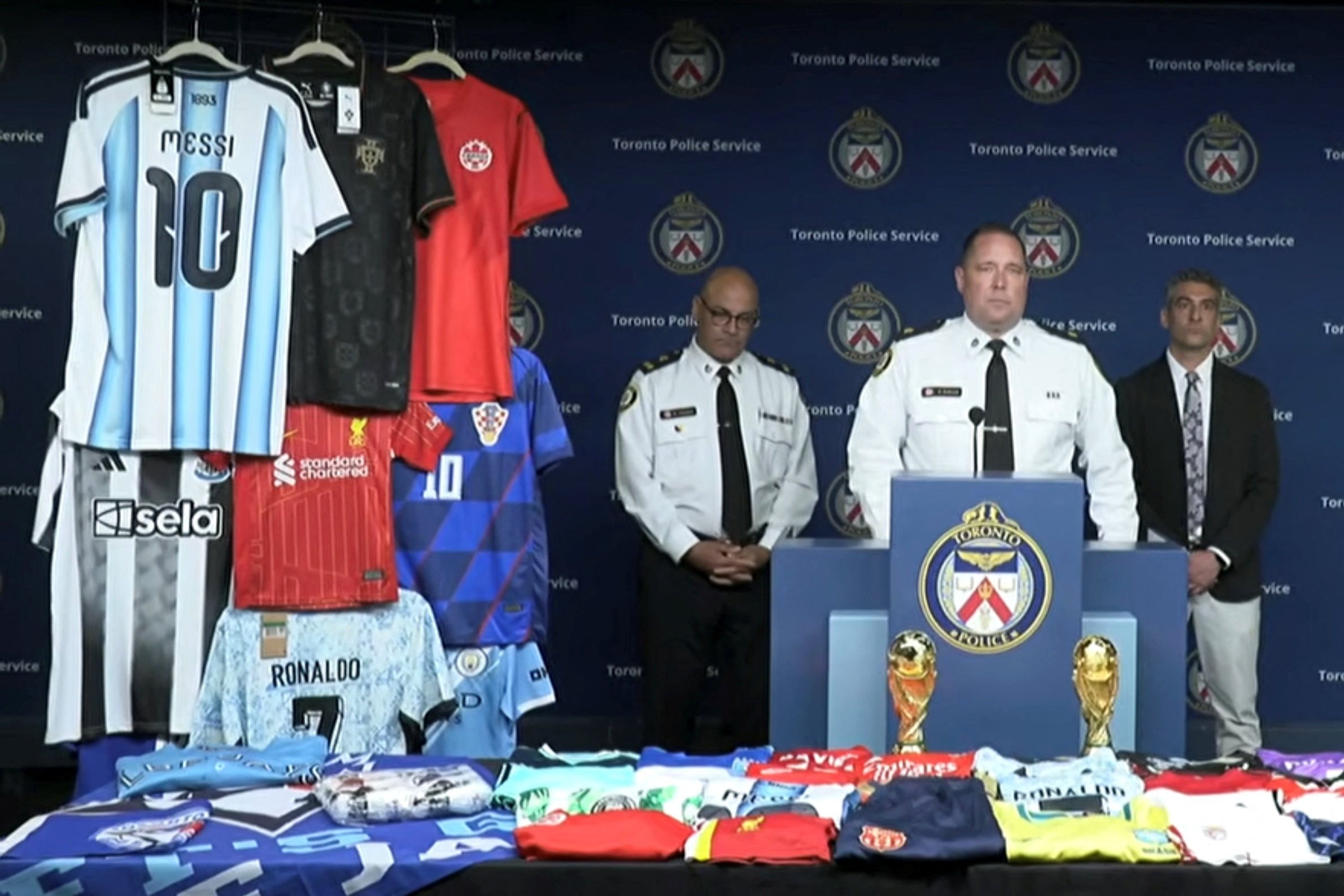
A search warrant was executed at the warehouse in late May, where officers allegedly uncovered large-scale storage and distribution activity linked to the counterfeit network.
Two men have been charged in the case. Police identified them as Ramy Jaber, 41, of Milton, and Walid Sarhan, 62, of Mississauga. They face charges including fraud over $5,000, trademark infringement, possession of proceeds of crime and trafficking in counterfeit goods.
Toronto is set to be one of the key host cities for the 2026 World Cup, which opens June 11 across Canada, the United States and Mexico.
The city will stage six matches at BMO Field, including Canada’s opening Group A fixture against Bosnia and Herzegovina on June 12, and is expecting more than 300,000 visitors during the tournament period.
Officials say that surge in demand for jerseys, flags and memorabilia often creates fertile ground for counterfeit operations, which target fans with cheaper replicas that bypass official licensing systems.
Authorities also warn that such goods can undercut legitimate sponsors and, in some cases, raise consumer safety concerns due to substandard materials and manufacturing.