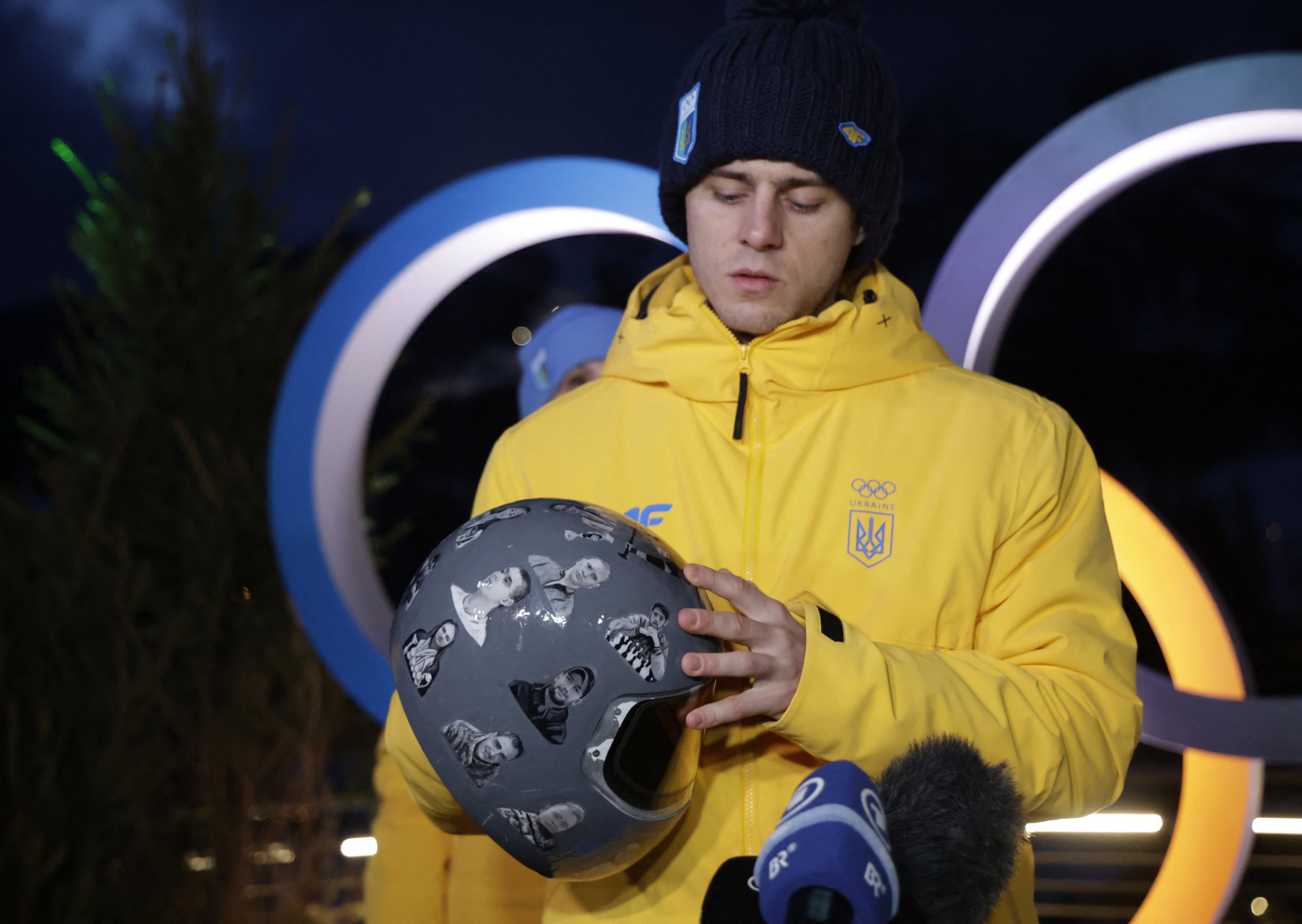
Ukrainian skeleton athlete Vladyslav Heraskevych, a likely medal contender at the Winter Olympics, was barred from racing Thursday after refusing to ditch a helmet that honors more than 20 athletes and coaches killed since Russia invaded his country four years ago.
The decision came roughly 45 minutes before the start of the competition and ended a three-day saga where Heraskevych knew he was risking being pulled from the Milan Cortina Games by wearing the helmet, one that the International Olympic Committee (IOC) says breaks rules against making statements on the field of play.
The IOC said Heraskevych had failed "to adhere to the IOC athlete expression guidelines." Gestures of a political nature during competition are forbidden under the Olympic charter.
Ukrainian President Volodymyr Zelenskyy said the decision plays "into the hands of aggressors."
"(The decision) was taken by the jury of the International Bobsleigh and Skeleton Federation (IBSF) based on the fact that the helmet he intended to wear was not compliant with the rules," the IOC said in a statement.
A defiant Heraskevych posted on the social media platform X: "This is (the) price of our dignity," alongside a picture of his helmet.
Zelenskyy, who gave Heraskevych a State award, took aim at the IOC.
"Sport shouldn't mean amnesia, and the Olympic movement should help stop wars, not play into the hands of aggressors," the Ukrainian president said in a post on social media.
"We are proud of Vladyslav and of what he did. Having courage is worth more than any medal."
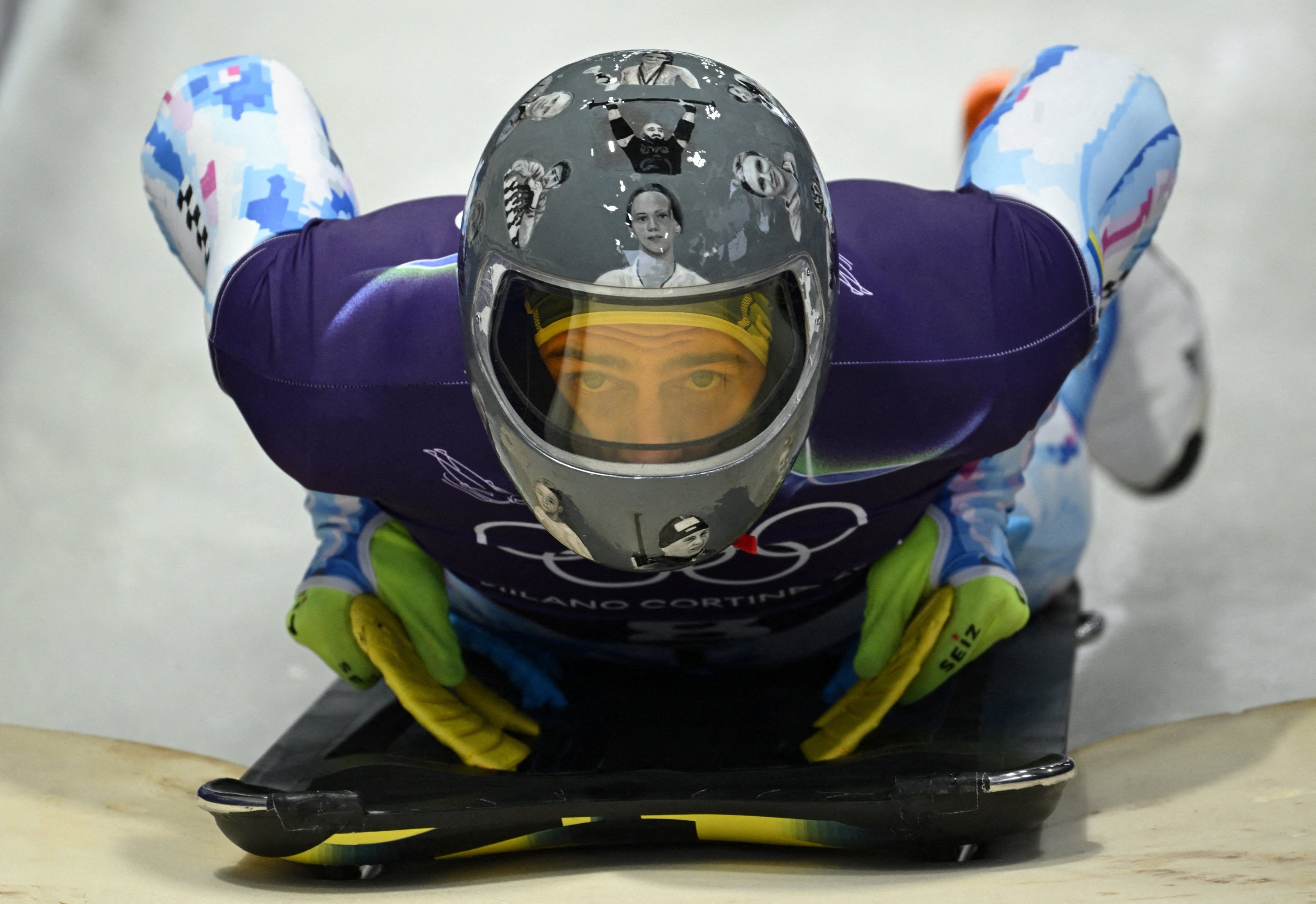
Zelenskyy said 660 Ukrainian athletes and coaches had been killed in the war.
Athletes are permitted to express their views in press conferences and on social media, and the IOC had said on Tuesday it would allow Heraskevych to wear a plain black armband.
A further offer to allow him to carry his helmet into the mixed zone, where athletes talk to journalists after their race, was also rejected.
"Mr Heraskevych was able to display his helmet in all training runs," Thursday's IOC statement added. "The IOC also offered him the option of displaying it immediately after the competition when going through the mixed zone."
Heraskevych has appealed his disqualification to the Court of Arbitration for Sport, CAS confirmed on Thursday.
IOC president Kirsty Coventry met with Heraskevych early on Thursday in a last-ditch attempt to persuade him to change his mind before his competition started.
Coventry, a former Olympic gold medallist in swimming, was in tears after the meeting, according to video images.
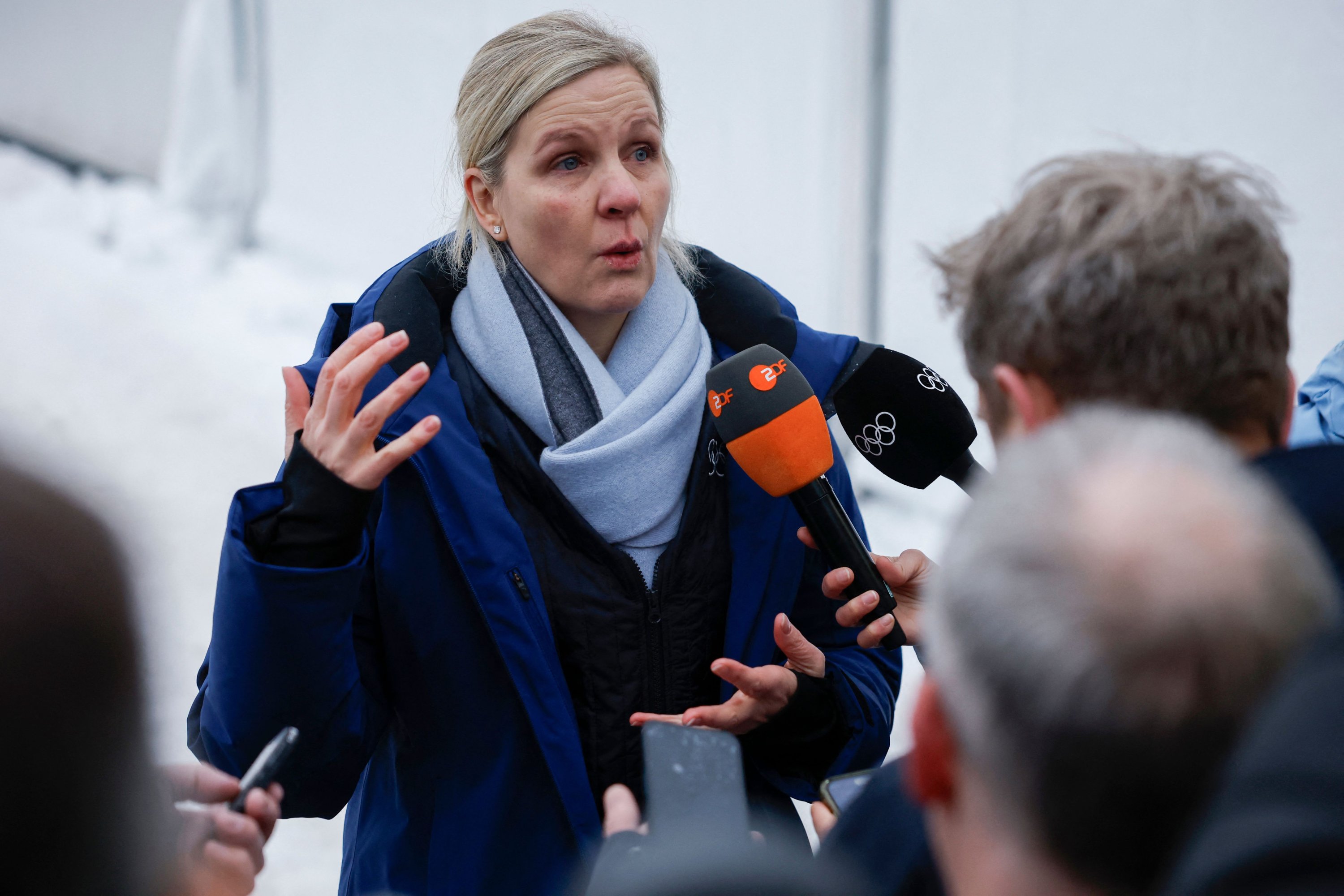
"I was not speaking to him in that room as a president, I'm speaking to him as an athlete," she said.
"We have these rules in place to try and be fair and also to try and allow for us to do both things right – to allow for athletes to express themselves, but also to allow for athletes to be safe."
An impassioned Heraskevych, who is allowed to remain at the Games despite not competing, told reporters at the Cortina Sliding Centre that he believed his disqualification was "totally wrong."
"Especially when we had already in this Olympic Games other cases, when athletes in almost equal situations were treated differently and didn't face any sanctions," he said.
"I have really bad thoughts, and I believe that this situation also plays along with Russian propaganda," he added.
Heraskevych said Ukrainians were being "killed for nothing" in the war, adding: "I believe we should honour people who sacrificed their lives."
IOC spokesperson Mark Adams told a press briefing in Milan that Olympic chiefs "dearly wanted him to compete."
"It would have sent a very powerful message," he added. "It is not about his message, it is not about the message he wanted to give, it is the place. We cannot have athletes having pressure put on them by their political masters."
Ukraine's Olympic Committee said it was planning some sort of protest but would not boycott the Games.
"He did not wear a helmet with political leaders or parties. He wore a helmet with our national heroes, with athletes who were killed by Russia. We are here only because of our defenders dying every day. Why can't we commemorate them," Ukraine's Youth and Sports Minister Matvii Bidnyi told Reuters.
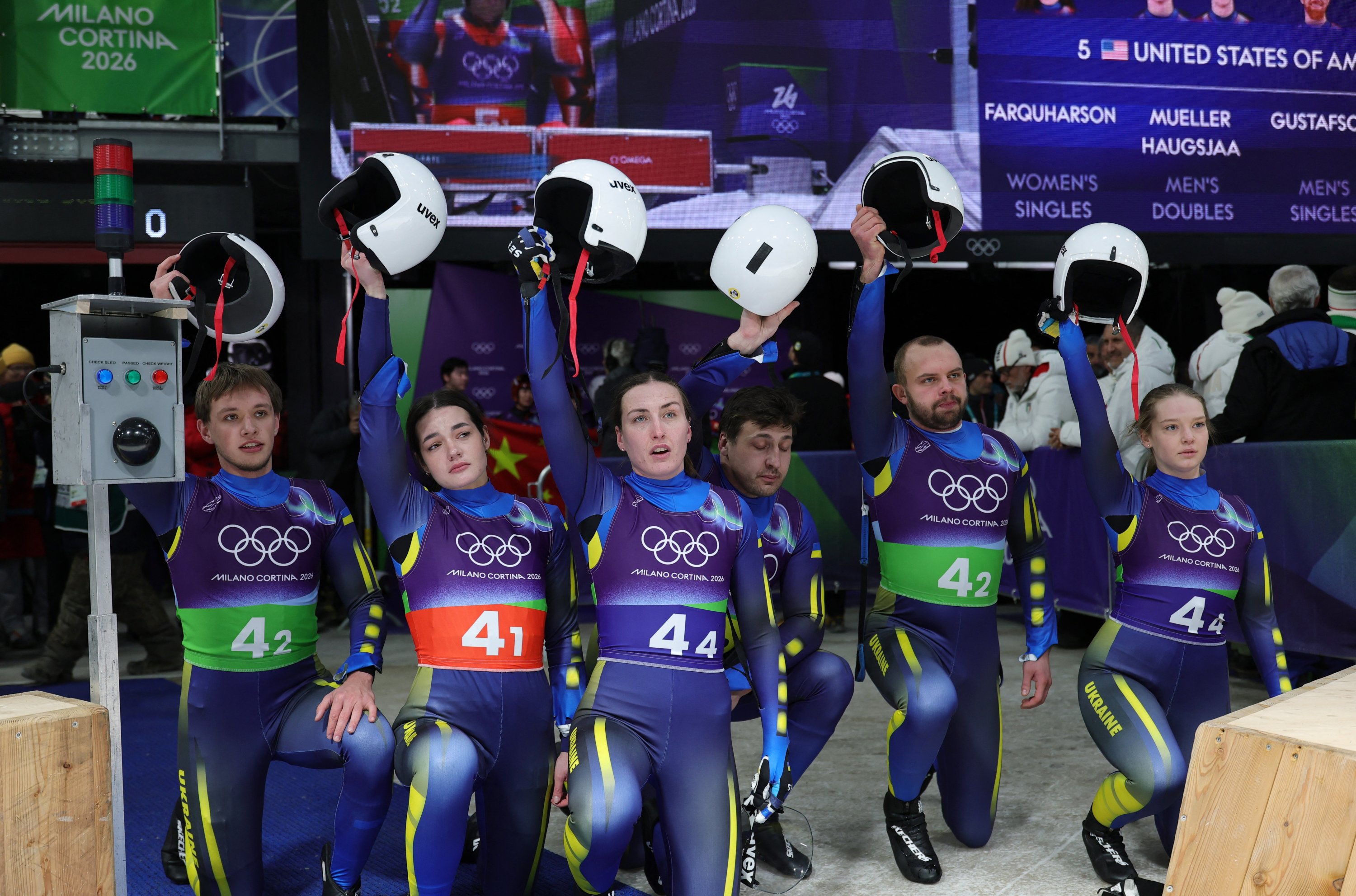
Ukrainian team members were seen in tears and hugging each other after the decision. Their teammates in the mixed relay luge competition later raised their helmets at the end of their run to honor Heraskevych before finishing sixth.
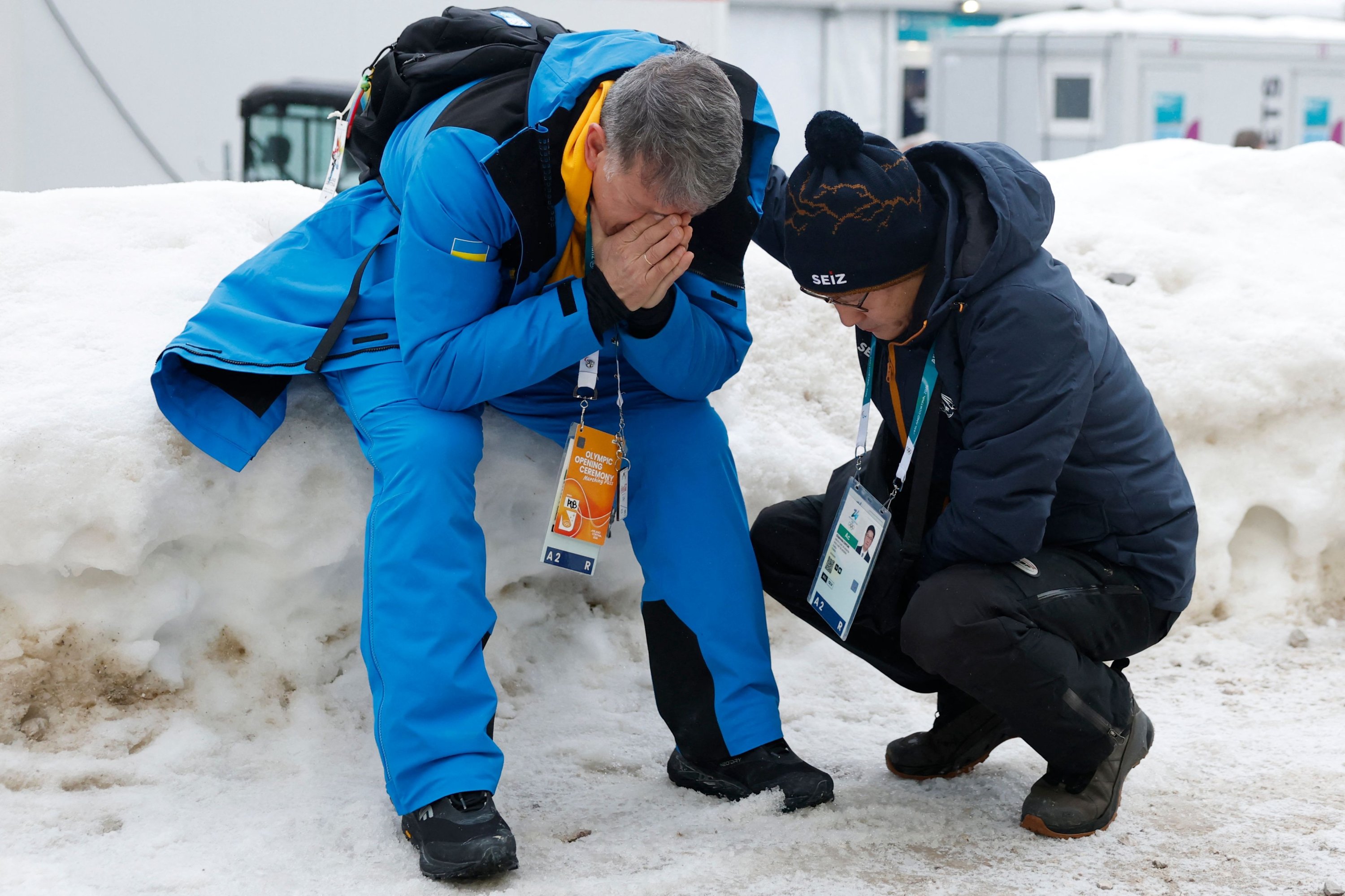
Heraskevych's father and coach Mikhailo Geraskevych sat on a dirty snowbank, his face buried in his hands.
Heraskevych, holding the IBSF notification of his withdrawal, said the case played into Russia's narrative about the four-year war in his nation.
"Even though the IOC wants to betray the memory of these athletes, I will not betray them," added Heraskevych.
"I sincerely believe that it is precisely because of their sacrifice that these Olympic Games can take place at all today."
Speaking from the Olympic village later on Thursday, Heraskevych said: "I really think we could have won a medal and I feel it was taken away from me."
Ukrainian fans at the skeleton venue expressed their dismay over the IOC's decision.
Irina Nalivayko, from Kyiv, said: "These people that he showed in his helmet, they're real people that died because of the Russian invasion.
"The war is still going, we're still freezing, we still have no electricity. People are still dying and this is not good. It's unacceptable."
American skeleton athlete Daniel Barefoot praised Heraskevych's courage.
"First off, he stands by whatever he believes in... he's telling the truth and he's not going to back off on race day," he told reporters.
"But I also was thinking that maybe the IBSF or whoever is in power would sort of back off and let him be.
"When I found out that he was going to be disqualified, to be honest, I was shocked. He's one of the best sliders in the world but he obviously believed that that was more important than the sliding."
Latvian coach Ivo Steinbergs told Reuters he had filed a protest with the IBSF to try to get Heraskevych reinstated and contacted other teams for them to join the action.
A spokesperson said IBSF had received an email, but no formal protest.
Heraskevych displayed a banner that read "No War in Ukraine" at the 2022 Beijing Winter Olympics, just days before Russia launched the invasion of its neighbor.
The conflict has resulted in a massive wave of destruction that has left entire cities in ruins and killed tens of thousands of soldiers and civilians, while forcing millions to flee their homes.
Athletes from Russia and Belarus have been largely barred from international sport, but the IOC has backed their gradual return under strict conditions.
Moscow has condemned the mixing of sport and politics in decisions to exclude its competitors from global competitions.