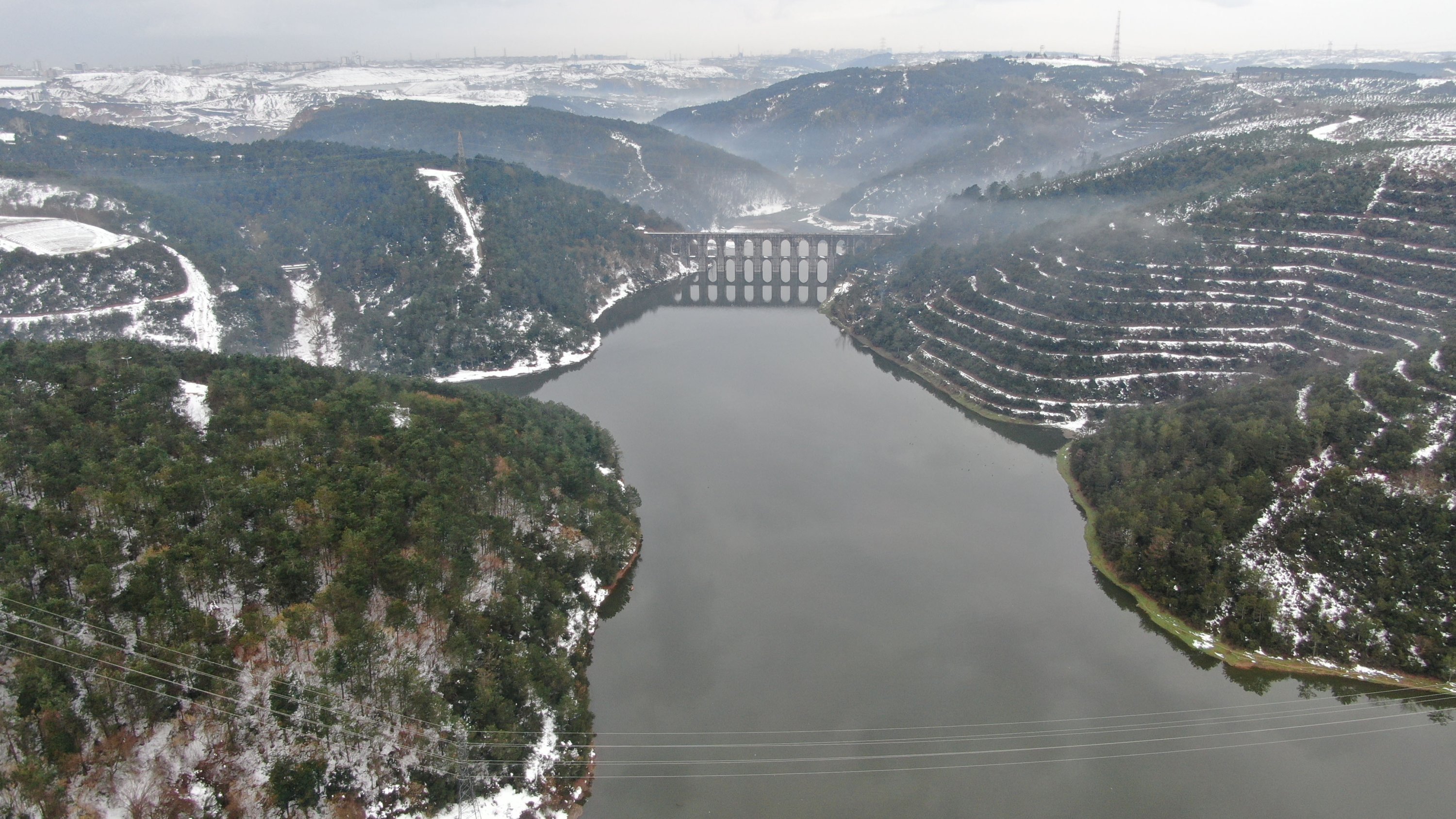
Water levels in the dams supplying water to Istanbul reached an average of 85% as the snow left behind after the cold spell is now melting. Two dams touched the full mark while Alibeyköy, one of the dams hit worst by a dry spell last year, is now at nearly 80% capacity.
It was only a few months ago that goats were grazing on the dried-up reservoir bed where boats are now sailing. Two-meter (6.5-feet) high barbed wires erected on the dried part of the reservoir to keep people off are now almost entirely submerged. The dam was at only about 17% of its capacity about four months ago.
Istanbul, a city of more than 15 million people, was facing the risk of drought though authorities had assured the public that the water capacity was enough to cater to the population for at least seven months. In November 2021, dam levels dropped to around 41%. Lack of rainfall and snowfall in the ensuing months renewed fear of an upcoming dry spell but it all changed in January.
Two days of snowfall, which blanketed the city and threw daily life out of gear, brought water to the dams. A new wave of precipitation that lasted for four days, up until Monday, further increased the water levels. Current levels are highest in the past 12 months. On March 16, 2021, the average water level in dams was around 62%.
Higher water levels also led to a reduction in the rate of water from supply lines from outside the city. Last year, the city had received some 625 million cubic meters of water from Melen and Yeşilçay streams and this year, it has only received 62 million cubic meters so far. As of Wednesday, no extra water is being pumped to the city from supply lines.
Winter precipitation also increased water levels in other big cities. According to official data, dams in Istanbul, the capital Ankara and third-largest city Izmir saw an 11% increase in their water levels on Tuesday, compared to March 15, 2021.