Daily Sabah logo

Politics
Diplomacy Legislation War On Terror EU Affairs Elections News Analysis
TÜRKİYE
Istanbul Education Investigations Minorities Expat Corner Diaspora
World
Mid-East Europe Americas Asia Pacific Africa Syrian Crisis Islamophobia
Business
Automotive Economy Energy Finance Tourism Tech Defense Transportation News Analysis
Lifestyle
Health Environment Travel Food Fashion Science Religion History Feature Expat Corner
Arts
Cinema Music Events Portrait Reviews Performing Arts
Sports
Football Basketball Motorsports Tennis
Opinion
Columns Op-Ed Reader's Corner Editorial
PHOTO GALLERY
JOBS ABOUT US RSS PRIVACY CONTACT US
© Turkuvaz Haberleşme ve Yayıncılık 2025

Daily Sabah - Latest & Breaking News from Turkey | Istanbul

  • Politics
    • Diplomacy
    • Legislation
    • War On Terror
    • EU Affairs
    • Elections
    • News Analysis
  • TÜRKİYE
    • Istanbul
    • Education
    • Investigations
    • Minorities
    • Expat Corner
    • Diaspora
  • World
    • Mid-East
    • Europe
    • Americas
    • Asia Pacific
    • Africa
    • Syrian Crisis
    • Islamophobia
  • Business
    • Automotive
    • Economy
    • Energy
    • Finance
    • Tourism
    • Tech
    • Defense
    • Transportation
    • News Analysis
  • Lifestyle
    • Health
    • Environment
    • Travel
    • Food
    • Fashion
    • Science
    • Religion
    • History
    • Feature
    • Expat Corner
  • Arts
    • Cinema
    • Music
    • Events
    • Portrait
    • Reviews
    • Performing Arts
  • Sports
    • Football
    • Basketball
    • Motorsports
    • Tennis
  • Gallery
  • Opinion
    • Columns
    • Op-Ed
    • Reader's Corner
    • Editorial
  • TV
  • TÜRKİYE
  • Istanbul
  • Education
  • Investigations
  • Minorities
  • Expat Corner
  • Diaspora

Subaquatic sea snot lingers in Turkey’s Marmara and Aegean seas

by Daily Sabah with DHA

ISTANBUL Jul 29, 2021 - 1:39 pm GMT+3
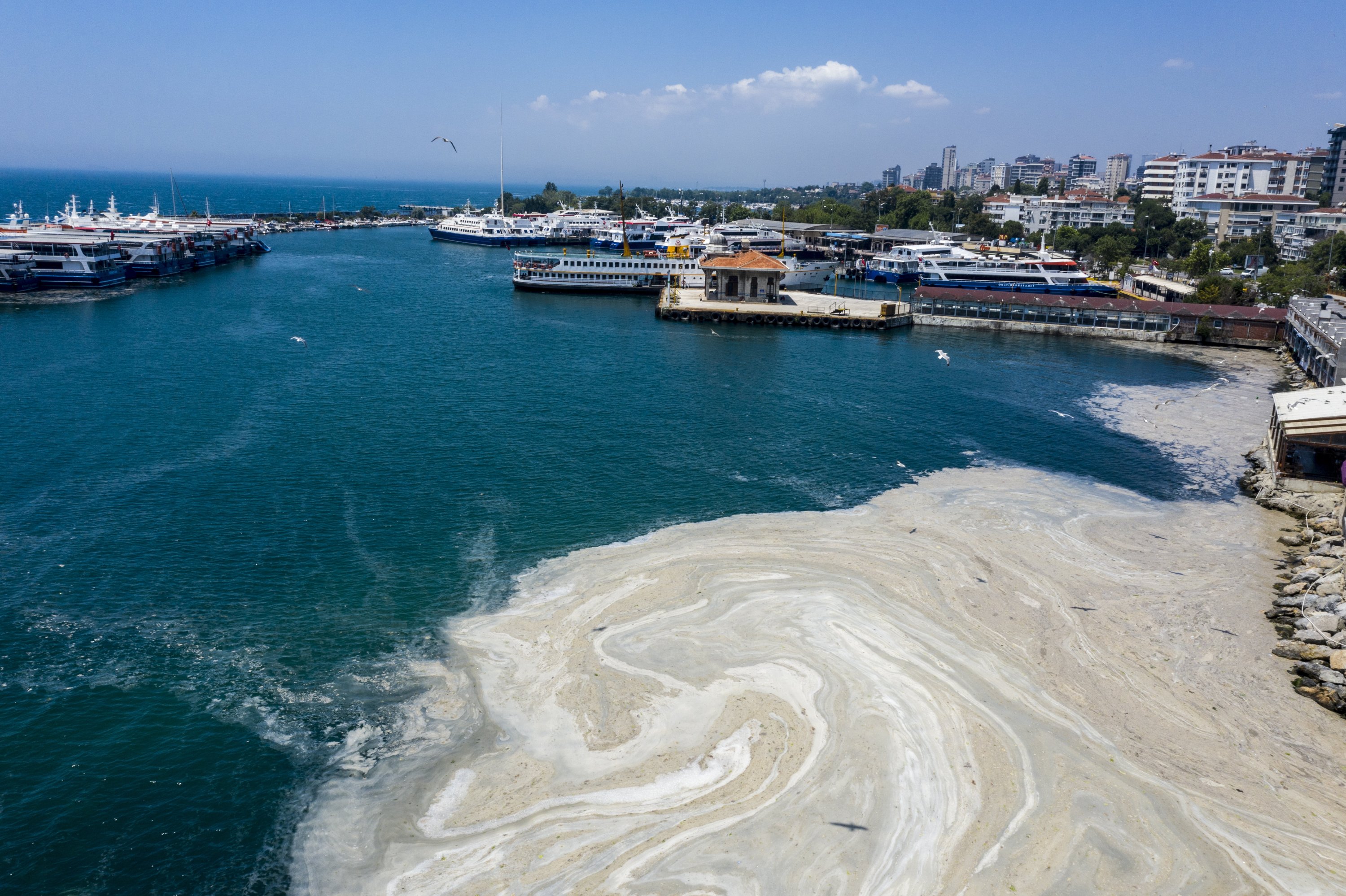
Sea snot on the surface off the coast of Bostancı, in Istanbul, Turkey, June 26, 2021. (AA PHOTO)
by Daily Sabah with DHA Jul 29, 2021 1:39 pm

The surface of the Marmara Sea has been cleared of sea snot, but the mucilage remains at 20-30 meters (65-80 feet) below the surface, killing seagrass in the Aegean Sea. Now experts warn that the sea snot could spread due to the burst of plankton in the Marmara Sea in the fall. Seagrass is one of the most important organisms in the Mediterranean Sea; it creates oxygen, clarifies the water by pulling solid material to itself, hinders coastal erosion and provides shelter to microorganisms and macroorganisms.

Sea snot covers the seagrass, preventing it from carrying out photosynthesis, and thus killing it. “What we call ‘snot’ is no longer on the surface, and we see that mucilage decreases as we go deeper in the sea. But according to our final consultation, snot is still present at 20-30 meters below the surface. Our aim is not to clean such depths but to protect the sea from further pollution by successfully managing waste disposal.

As human actions caused the sea snot, further actions, even if it is to recover the sea from mucilage, disturb the habitat's balance. The best we can do is to relieve the sea and nature from human impact. We have to manage waste disposal effectively and wait for the mucilage to disappear on its own. Sea snot getting stuck within a particular depth might be signaling the end of mucilage, but the multiplication of planktons in fall can alter things. We can’t foresee with certainty,” Cem Dalyan, marine biologist and academic at Istanbul University’s department of hydrobiology, said.

Less detergent, fewer phosphates

The Ministry of Environment and Urbanization launched a study looking into how to decrease the impact of phosphates on the Marmara Sea. “The use of cleaning products that contain phosphates and the active matter will be decreased. We will mandate the use of non-phosphate cleaning products at state institutions and organizations,” said Eyüp Karahan, general manager of environmental management of the Ministry of Environment and Urbanization.

“There are three main reasons for mucilage in the Marmara Sea; stagnation of the sea, increasing temperature due to the climate change and phosphor and nitrogen waste flowing to the Marmara Sea. The only thing we can work on within those three is the waste management of phosphates and nitrogen. What we aim in the light of the Marmara Sea Action Plan is to monitor the detergent market, increase inspections and tighter regulations,” Karahan added.


  • shortlink copied
  • KEYWORDS
    sea snot mucilage marmara sea aegean sea detergent phosphor
    The Daily Sabah Newsletter
    Keep up to date with what’s happening in Turkey, it’s region and the world.
    You can unsubscribe at any time. By signing up you are agreeing to our Terms of Use and Privacy Policy. This site is protected by reCAPTCHA and the Google Privacy Policy and Terms of Service apply.
    No Image
    Top electric cars to buy in 2021
    PHOTOGALLERY
    • POLITICS
    • Diplomacy
    • Legislation
    • War On Terror
    • EU Affairs
    • News Analysis
    • TÜRKİYE
    • Istanbul
    • Education
    • Investigations
    • Minorities
    • Diaspora
    • World
    • Mid-East
    • Europe
    • Americas
    • Asia Pacific
    • Africa
    • Syrian Crisis
    • İslamophobia
    • Business
    • Automotive
    • Economy
    • Energy
    • Finance
    • Tourism
    • Tech
    • Defense
    • Transportation
    • News Analysis
    • Lifestyle
    • Health
    • Environment
    • Travel
    • Food
    • Fashion
    • Science
    • Religion
    • History
    • Feature
    • Expat Corner
    • Arts
    • Cinema
    • Music
    • Events
    • Portrait
    • Performing Arts
    • Reviews
    • Sports
    • Football
    • Basketball
    • Motorsports
    • Tennis
    • Opinion
    • Columns
    • Op-Ed
    • Reader's Corner
    • Editorial
    • Photo gallery
    • DS TV
    • Jobs
    • privacy
    • about us
    • contact us
    • RSS
    © Turkuvaz Haberleşme ve Yayıncılık 2021