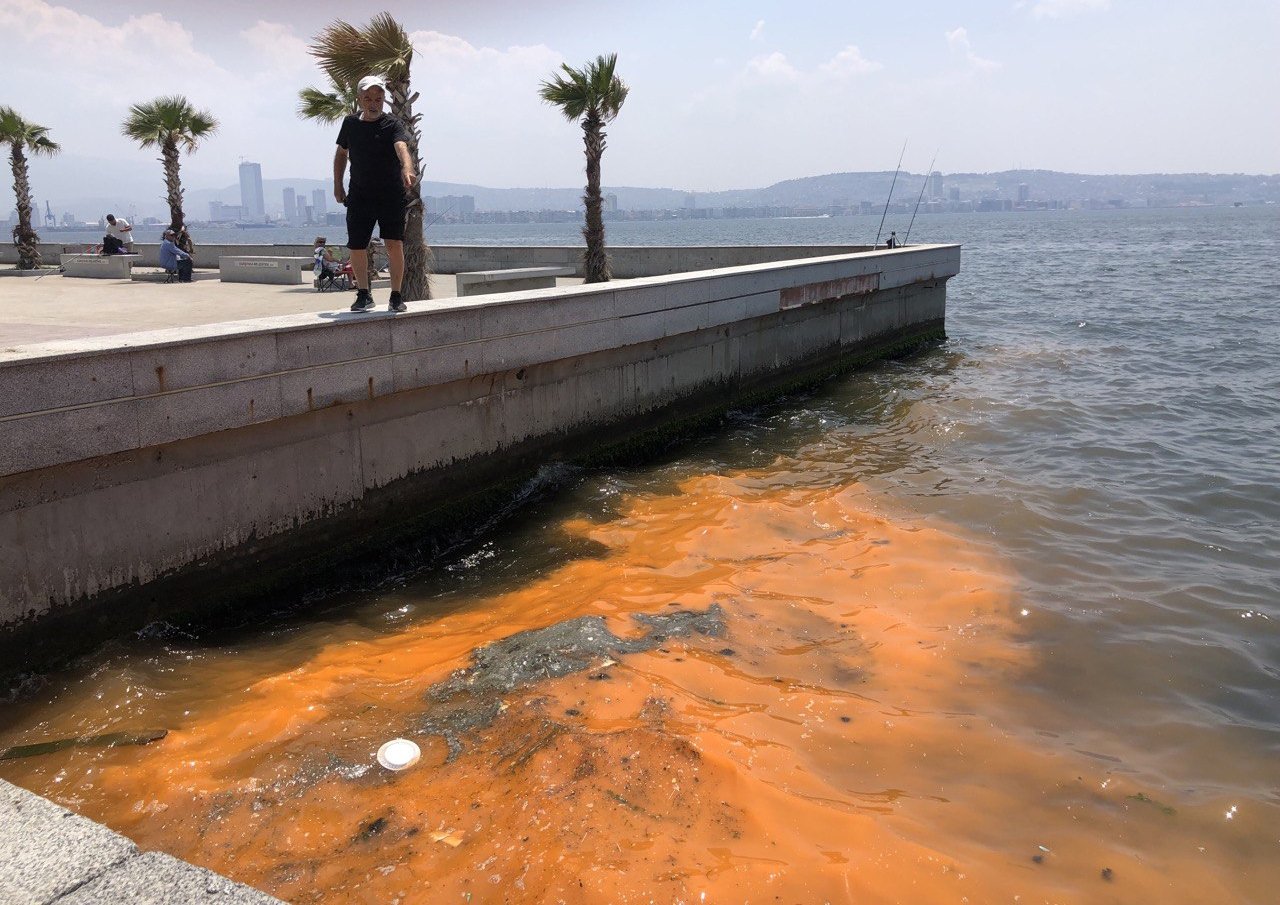
Izmir Bay, a picturesque coastal area in Türkiye, is experiencing a concerning environmental issue caused by algae and sea lettuce proliferation. As a result, the water in various locations of the bay, including Bostanlı, Karşıyaka, Bayraklı, Konak and Narlıdere, has undergone a significant color change, ranging from red to orange. According to Erol Kesici, scientific advisor of the Nature Conservation Association (TTKD), this transformation is attributed to microscopic algae.
Kesici warns that the excessive growth of this algae and the presence of sea lettuce contributes to the pollution in Izmir Bay. As a result, the region's biological diversity is decreasing, and water quality is being compromised. This phenomenon is a crucial indicator of anthropogenic eutrophication and cultural pollution.
The excessive spread of the algae and the subsequent layer formation in the environment lead to reduced oxygen levels. This process causes turbidity and heightens biochemical reactions. Moreover, the lack of sunlight reaching the bay's bottom enhances bacterial activity in the sediment, further deteriorating the marine ecosystem's biological diversity due to the toxic effects of these phenomena. Kesici emphasizes that this is not a natural physical phenomenon but a consequence of pollution.
The delicate balance of Izmir Bay calls for urgent protection and careful management, not just temporary solutions but scientific interventions. The bay is under tremendous pressure from cultural pollution, resulting in unpleasant odors and visual pollution that significantly impact life in the area, especially during the summer months. However, these signs should not be dismissed as temporary inconveniences; they indicate sea pollution. Furthermore, the accumulating clumps on the bay's floor consume oxygen, leading to mass or partial deaths of marine organisms deprived of this vital resource.
Kesici warns that the algae can also trap oil and chemical derivative waste, exacerbating pollution levels in Izmir Bay. He stresses the importance of proactive measures to prevent such undesirable pollution rather than merely reacting to its occurrence. Kesici emphasizes that relying solely on scoops to clean up formations and surface waste is not a sustainable solution. Instead, wastewater discharge into the bay must be prevented, necessitating the establishment of treatment facilities near the streams.
The issue of bottom mud in Izmir Bay is another concerning aspect highlighted by Kesici. In addition to cultural pollution from rainfall, the area is densely populated with buildings and other polluting elements, leading to a gradual increase in the bottom mud. Therefore, annual cleaning of the bay's sediment is crucial. Furthermore, combining sea lettuce and algae can result in mucilage formation, adding to the existing problem. If left unaddressed, this situation could pose significant pollution risks. Therefore, collecting these formations from the surface and thoroughly cleaning the sea bottom mud is imperative.
On a positive note, Kesici acknowledges the natural importance of algae in a balanced ecosystem. Algae plays a vital role in converting elements like nitrogen and phosphorus into carbohydrates, thereby increasing the oxygen levels in the water. However, Kesici emphasizes that cultural pollution, particularly in the case of Izmir Bay, prevents algae from fulfilling their natural functions. He also highlights that these single-celled microorganisms emit a mesmerizing blue-green light during summer nights, exhibiting bioluminescence, which occurs when chemical energy is converted into light energy.
As the situation in Izmir Bay continues to deteriorate, urgent action is needed to address the underlying pollution causes. Implementing long-term strategies that prioritize the bay's protection and leverage scientific solutions is essential. By taking proactive measures, such as preventing wastewater discharge and cleaning the bottom mud, Izmir Bay can be preserved for future generations, ensuring its ecological health and sustainability.