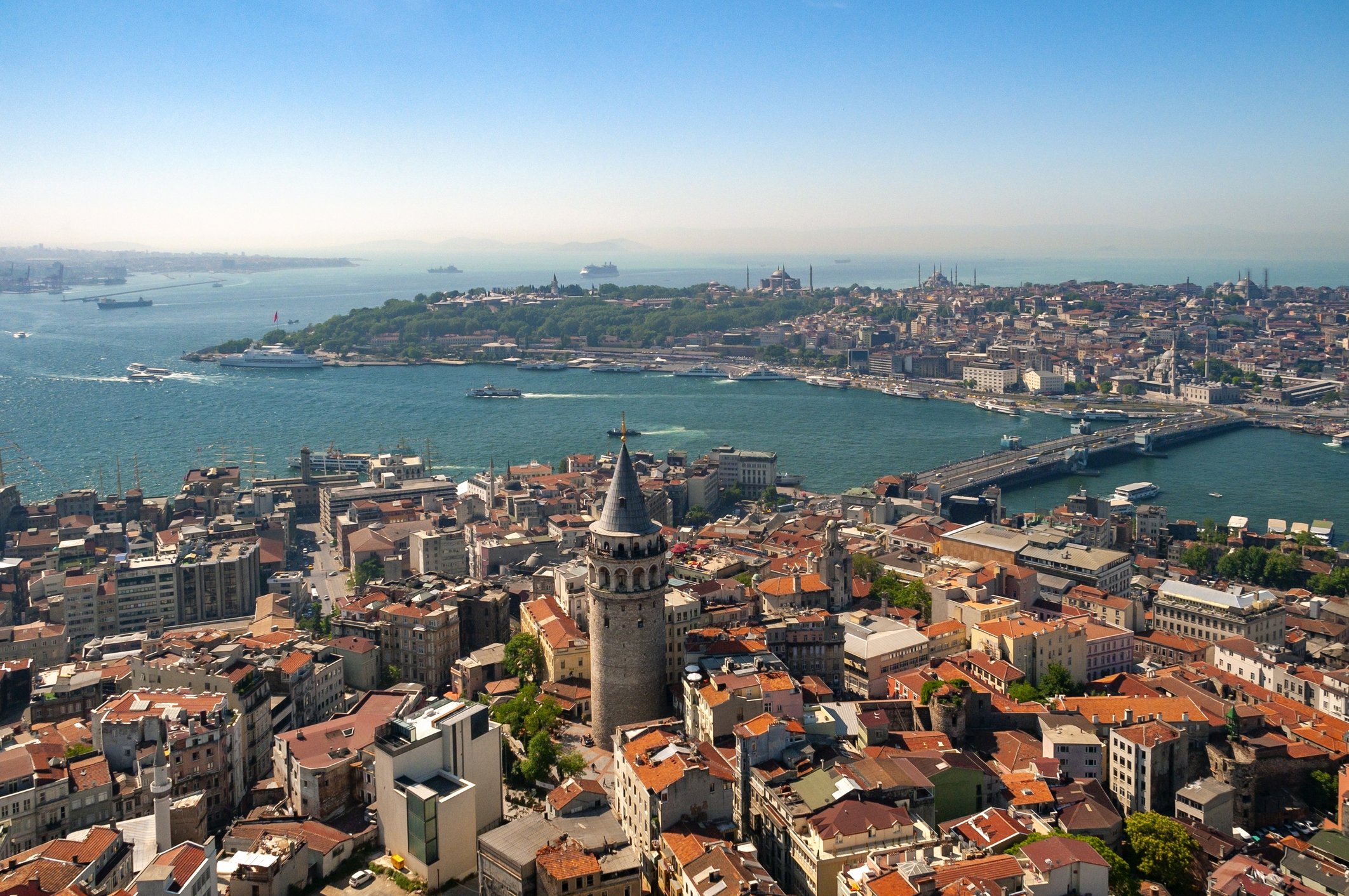
The ground trembled once more. On the evening of Aug. 10, a 6.1-magnitude earthquake tore through the Marmara and Aegean regions of Türkiye, flattening 16 buildings and leaving one person dead. The quake struck at 7:53 p.m. local time in the Sındırgı district of Balıkesir, shaking cities as far away as Istanbul. Since then, aftershocks between magnitude 2 and 4 have rattled the region, leaving residents anxious and sleepless.
For many in Türkiye, and especially for those who live in Istanbul, this fear is all too familiar. Just a few months ago, on April 23, Istanbul and the wider Marmara region were shaken by a 6.2-magnitude earthquake. In the wake of these latest tremors, one question echoes across the nation: Are these recent earthquakes connected, and could another one be on the way?
To explore this pressing concern, Daily Sabah reached out to one of Türkiye’s foremost earthquake authorities, professor Şener Üşümezsoy, for an exclusive interview on Aug. 14.
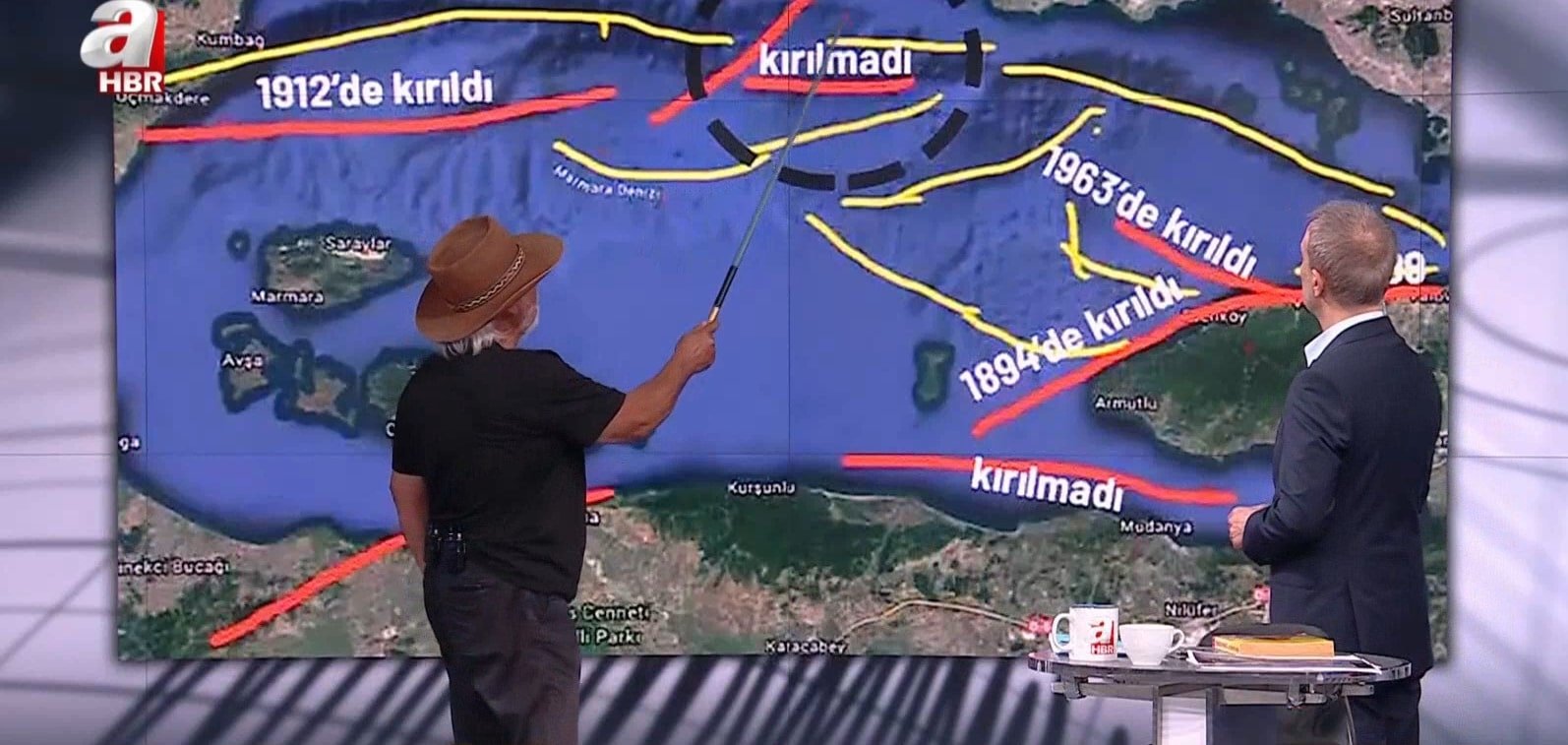
“I stated that the only fault line carrying risk in the Marmara region is the 10-kilometer (6-mile) deep, 25-30 kilometer-long fault line in between the Silivri Basin and Kumburgaz Basin,” said Üşümezsoy, an expert geologist, adding, “Exactly as I described, the latest 6.2-6.3 magnitude earthquake based in Silivri, Istanbul caused a 30-kilometer-long rupture over an area of 250 square kilometers.”
According to Üşümezsoy, the Silivri-Kumburgaz fault was the only unbroken segment of the broader fault system in the Northern Marmara Sea near Istanbul until April 23, 2025. He explained that this fault is part of a larger series of fault lines stretching from Silivri-Kumburgaz to Marmara Island, with its western end extending toward Gökçeada and Greece's Lemnos Island.
“After the 140-kilometer fault line broke with a magnitude 7.4 earthquake off the coast of Marmara Island in 1912,” continued Üşümezsoy, “the fault extending from Gökçeada to Lemnos Island broke with a magnitude 6.8 in Gökçeada in 2014.” However, the eastern end of this fault, located between the Silivri-Kumburgaz basins, remained unbroken until the latest Istanbul earthquake, he added, and since now it is also broken, there is not any other fault line that can trigger a devastating earthquake near Istanbul.
The Marmara region has experienced its own share of devastating experiences that have left a lasting impact on residents’ memories. A 7.4 magnitude earthquake struck Gölcük in Kocaeli province on Aug. 17, 1999. While the wounds from that quake were still healing, Düzce was hit by another powerful earthquake, measuring 7.2, on Nov. 12, 1999. According to official figures, 18,373 people lost their lives in the two earthquakes, 48,901 were injured, and 5,840 went missing. The 1999 earthquakes in the Marmara region left every resident asking the same question: Will it happen again, and if so, where?
When asked where in the Marmara region carries risk, “The fault line running from Çınarcık to Esenköy, which has not ruptured since the 1999 earthquake, carries risk,” answered Üşümezsoy, marking the southeast coasts of the Marmara Sea.
“The fault runs along the Yalova-Çınarcık coastline to the south, then eastward toward Karamürsel and from there toward Mudurnu. The 1509, 1719, 1766, 1894 and 1999 earthquakes all occurred on this fault line, resulting from the rupture of six separate faults in different combinations.”
A few other faults that carry risk lie in the South Marmara. Üşümezsoy said: “The Yenice-Gönen fault has not ruptured since 1953. There is a belt, which is Bandırma-Sarıköy, which ruptured in 1737, and the other is the fault line that cuts off the Kapıdağ peninsula from the coast. There may be risk in these faults.”
Üşümezsoy, who mentioned that he wrote about his arguments in five books throughout the years of his academic studies, argued that he disproved many claims, such as that there is a fault in Avcılar in the Northern Marmara Sea that poses a threat to Istanbul, or that the Adalar fault, another Northern Marmara fault, is active.
“In this sense, the absence of any aftershocks opposite Avcılar indicates that there is no fault there. In the bathymetric surveys we conducted, there was no fault there,” he said, adding, “There were no aftershocks either on the 65-kilometer-long Adalar Fault or on its east-west section. The Adalar Fault is a dead fault.”

This is also why Üşümezsoy’s claims have been proven correct many times throughout Türkiye’s earthquake history. Üşümezsoy, who predicted an earthquake along the Sındırgı fault in the Aegean region of Türkiye before it occurred on Aug. 10, explained how he was able to foresee it.
“Because this is the Menderes massif – an uplifted dome of the earth's crust – it is fractured by sharp east-west faults as it rises upward. Earthquakes occurred in Demirci in 1968, Gediz in 1971 and Simav in 2014. Knowing the story of the earthquake in Sındırgı is like knowing that the keys on a piano will come one after another in the order of do, re, mi, fa, sol – that is, knowing that the yet-to-be-played sol is coming. Sol has come in Sındırgı.”
When asked if there is a connection between the most recent earthquakes of Istanbul and Balıkesir and if the Istanbul earthquake triggered the one in Sındırgı, Balıkesir, Üşümezsoy denies any such link.
“The North Anatolian Fault is not an extensional fault; rather, it is an oblique fault, meaning it is part of a compressed system. In such a system, the basins that previously opened can no longer continue to extend. Instead, they begin to uplift along with the sediments they contain.”
However, he added, the faults in the Aegean region of Türkiye are formed by the stretching of the Aegean Plate. “This stretching occurs because, as the Mediterranean crust moves southward toward Libya, the Aegean Plate above it expands and slides over it, much like a plate gliding on top of another. As it expands, the Anatolian Plate rotates counterclockwise toward Rhodes. There, Anatolia and the islands continue rotating counterclockwise toward the southwest.”
There is no relation between the recent earthquakes, Üşümezsoy concluded, adding that: “The event along the North Anatolian Fault is due to the Atlantic Ocean opening up, causing Europe to move eastward. Thrace and the Black Sea mountains are moving eastward, creating a lateral rupture. One is due to the opening in the Aegean Sea, and the other is due to Europe moving eastward. Therefore, there is no connection between the two.”