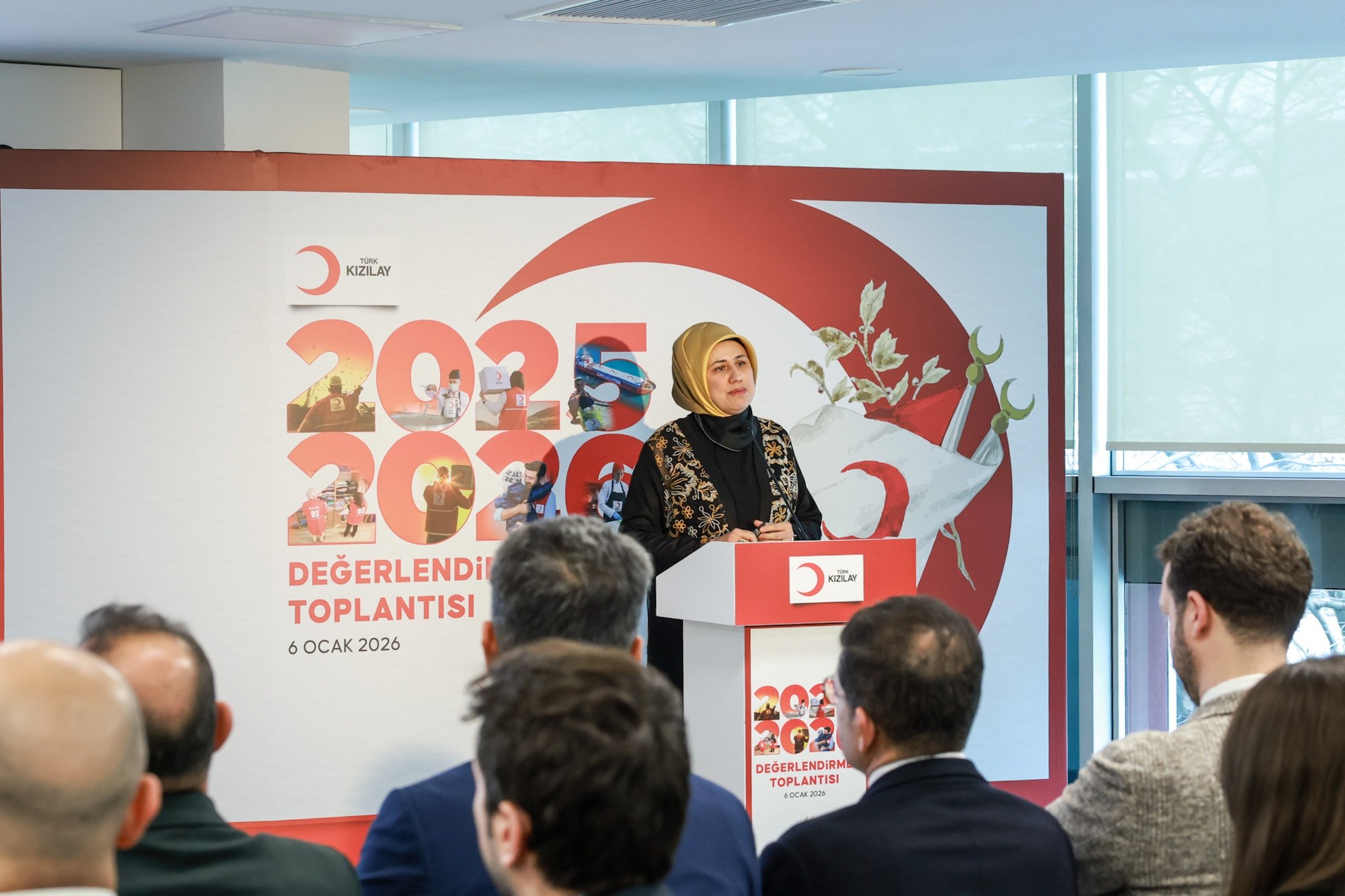
The Turkish Red Crescent (Kızılay) announced Tuesday plans to significantly expand its humanitarian infrastructure, pledging to establish soup kitchens in all of Türkiye’s 81 provinces by 2026 as part of a broader strategy to strengthen social support and domestic capacity.
Kızılay President Fatma Meriç Yılmaz, speaking at a news conference in Istanbul, presented the organization’s 2025 performance while outlining what she described as a shift toward long-term social resilience, domestic production and dignity-based assistance models. The initiative, titled “81 Provinces, 81 Soup Kitchens,” aims to expand the reach of the current program, which operates 45 facilities across 34 provinces.
According to officials, the existing soup kitchens produce approximately 41,000 hot meals each day throughout the year. Under the planned expansion, the facilities are expected to evolve beyond food distribution points into community-based support hubs. Volunteers will continue delivering meals directly to elderly people, individuals with disabilities and residents who have difficulty leaving their homes, while also providing regular social contact and psychosocial support.
Kızılay officials said volunteers are trained to monitor the needs of beneficiaries on-site, helping strengthen social solidarity and ensuring continuity of assistance. The soup kitchens also serve as a critical component of the organization’s disaster response infrastructure, allowing for rapid mobilization during emergencies.
As part of its 2026 planning, Kızılay said it will expand the scope of its public awareness and community education programs. In addition to existing training on disaster preparedness, first aid, healthy living and family support, the organization plans to introduce new modules addressing peer bullying.
Officials said the goal is to reach a total of 10 million people through education and awareness programs during 2026, building what they described as a more preventive and community-oriented approach to social welfare.
A central pillar of the organization’s road map involves reducing Türkiye’s reliance on imported medical supplies. Yılmaz announced the launch of the country’s first plasma-derived medicine production project, aimed at ensuring a secure and domestic supply of life-saving drugs that are currently sourced largely from abroad.
In parallel, Kızılay is finalizing a blood bag production facility in Istanbul’s Silivri district. Türkiye uses approximately 3 million blood bags annually, most of which have historically been imported. The new facility is intended to reduce external dependency and create a more sustainable supply chain for the national health care system.
In blood and stem cell services, Kızılay reported that it met its 2025 target of collecting 3 million units of blood. The number of registered stem cell donor candidates reached more than 1.2 million, with over 33,000 matches recorded since 2015. A Scientific Advisory Board for Blood Services was established to provide guidance and align practices with international medical standards.
Kızılay said it reached a total of 32.9 million people worldwide in 2025, supported by donations totaling TL 12.6 billion ($292 million). Of those assisted, 21.6 million were inside Türkiye, while 11.2 million received support abroad.
International operations were particularly extensive in Gaza, where the organization delivered more than 20,000 tons of humanitarian aid, distributed over 10 million hot meals and provided drinking water support. Assistance efforts also continued in Syria, Sudan, Afghanistan, Niger and Uganda, including food aid, humanitarian convoys and water well projects. Programs targeting migrants reached nearly 4.7 million people.
Disaster response remained a priority in 2025, with Kızılay assisting more than 1.3 million people affected by earthquakes, floods and wildfires. As part of preparedness efforts, disaster containers equipped with generators, inflatable tents and catering infrastructure are planned to be positioned across all 39 districts of Istanbul to enable rapid deployment following a major earthquake.
Beyond emergency logistics, the organization is increasingly emphasizing dignity-centered assistance models. Through the "Kızılay Butik" program, a Red Crescent-operated initiative that allows people in need to select new clothing and footwear free of charge, and its network of social markets providing food assistance, millions were supported in 2025.
Officials said the approach is designed to protect privacy and preserve freedom of choice, moving away from traditional aid distribution methods toward a model that prioritizes human dignity and individual agency.
Kızılay also reported reaching 7.2 million people in 2025 through its Community Education and Awareness Program, reinforcing its emphasis on preparedness, prevention and long-term social resilience.