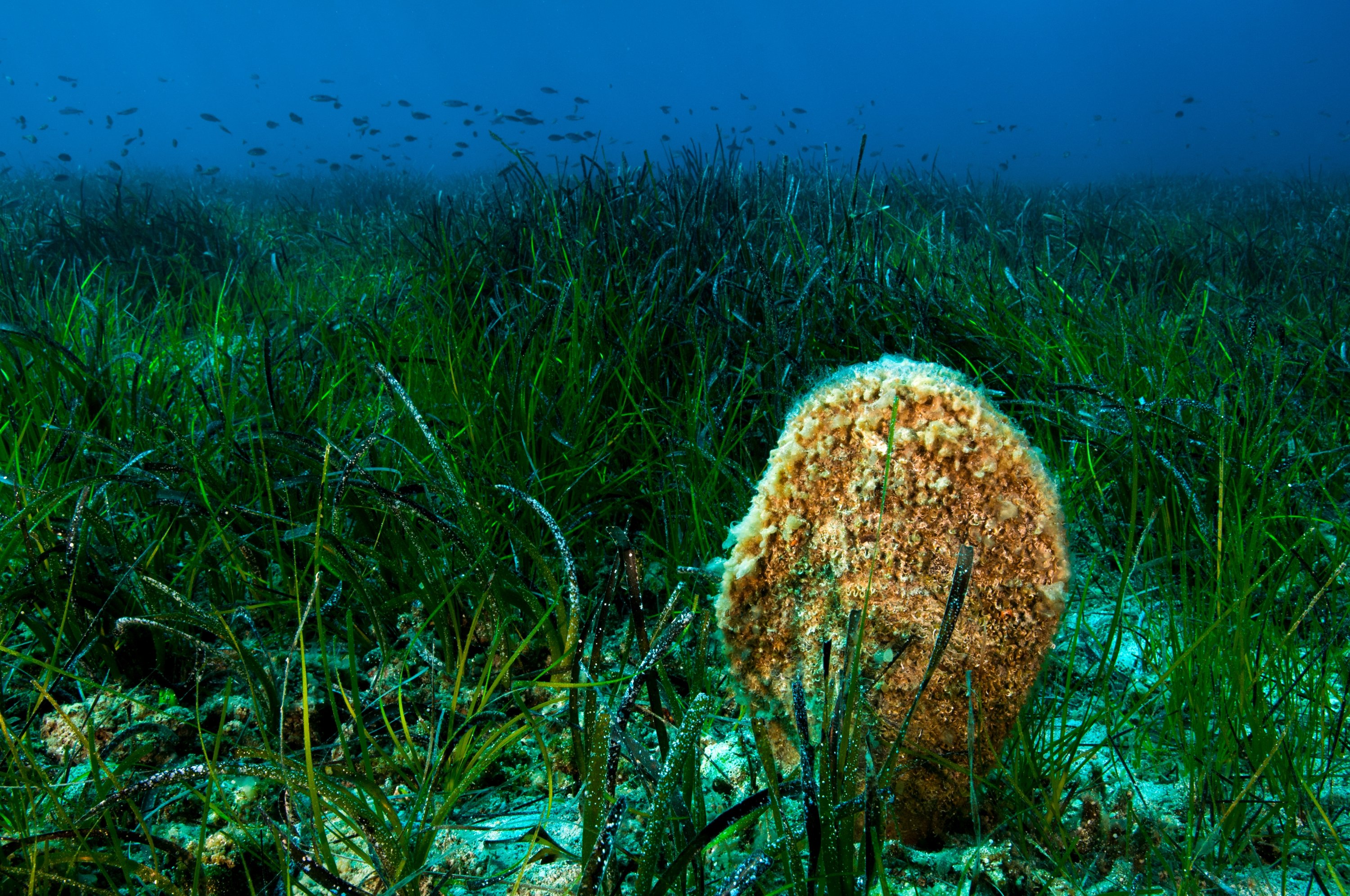
Seagrass meadows, known as the "lungs of the seas" for their ability to capture carbon dioxide, are at risk due to increasing temperatures, pollution and the activities of boats, the chairperson of the board of the Mediterranean Conservation Association warned Wednesday.
Zafer Kızılkaya, the first environmental activist from Türkiye who received the prestigious "Green Nobel" award for his efforts to protect and monitor the ecosystem earlier this year, speaking to Anadolu Agency (AA) explained that these plants are only representatives of land-based flowering plants in the sea.
Seagrass meadows in the Mediterranean are referred to as "Posidonia oceanica" in the literature, and they are an endemic species unique to the Mediterranean and are not found in any other sea, he explained.
Saying the plant produces oxygen and traps a significant amount of carbon dioxide in the seawater, Kızılkaya noted that an average seagrass meadow can store 8 kilograms (17 pounds) of carbon per square meter in a year, which is an "incredible figure."
"Research in the world shows that the plant that can store the most carbon dioxide in the world is the seagrass in the Mediterranean. Rainforests can store 800 grams (28 ounces) of carbon dioxide, while seagrasses can store 10 times more than rainforests.
"A plant with such a high carbon storage ability will provide a way to battle carbon dioxide tomorrow and in the future. Türkiye will have a very serious blue carbon inventory as we can protect these," he added.
Seagrass meadows, which can live up to 40 meters below the surface (0-130 feet) and grow up to 50-60 centimeters (1.6-1.96 feet) in a healthy environment, are very crucial to the ecosystem, he said, noting that juvenile fish and invertebrates can hide in seagrass meadows, and squid lay their eggs there.
Noting that the seagrass meadows are more common in shallow seas, Kızılkaya said that among the countries in the Mediterranean, Tunisia is home to the largest population of the plant in this regard.
However, there has been a severe decrease in the seagrass meadows in the Mediterranean in the last 100 years, Kızılkaya said, adding: "A lot of domestic and agricultural pollution in places close to cities and stream mouths enters the sea and this creates very serious pollution, blocking the sunlight. Just as a plant dies, so does the sea. What's worse is the mixing of potable water or bilge water from boats into the sea. Sea traffic and boats' chains and anchors cause serious damage to seagrass meadows."
Sea meadows are not well protected, Kızılkaya also noted, stressing that although there are penalties regarding the anchoring of the boats, there are problems with regard to inspection.
He said that although it is prohibited up to 1.5 miles from the shore, illegal trawling is practiced along the 20-30-meter (65-98-foot) line and that fishing, especially its illegal form, has a very serious effect on the destruction of seagrass meadows.
Areas with healthy seagrass should be entirely closed for fisheries and serious inspections should be made there, Kızılkaya said, adding that increasing seawater temperatures are another threat to seagrass meadows.
"In summer, seawater rises to 29 degrees Celsius (84 degrees Fahrenheit) on our Mediterranean and Aegean coasts and up to 30 degrees on the surface. The seagrass meadows growing in a depth of up to 15 meters (49 feet) died in Fethiye last year," he also said, referring to the coastal district of western Muğla province.
An urgent action plan should be implemented regarding seagrass meadows, Kızılkaya stressed and noted: "We threaten seagrasses incredibly with heat and pollution from above, but also with anchors and chains of boats from below. Seagrasses are plants that we all need to preserve. Since our macroalgae, which currently live on the rocks, are eaten and consumed by invasive fish, the area in which our fish fry can live is the sea. That's why every square meter of seagrass is very, very valuable."