The month of Muharram, one of the holiest periods in the Islamic calendar, continues to serve as a time of reflection on the values of justice, sacrifice and unity symbolized by the Battle of Karbala.
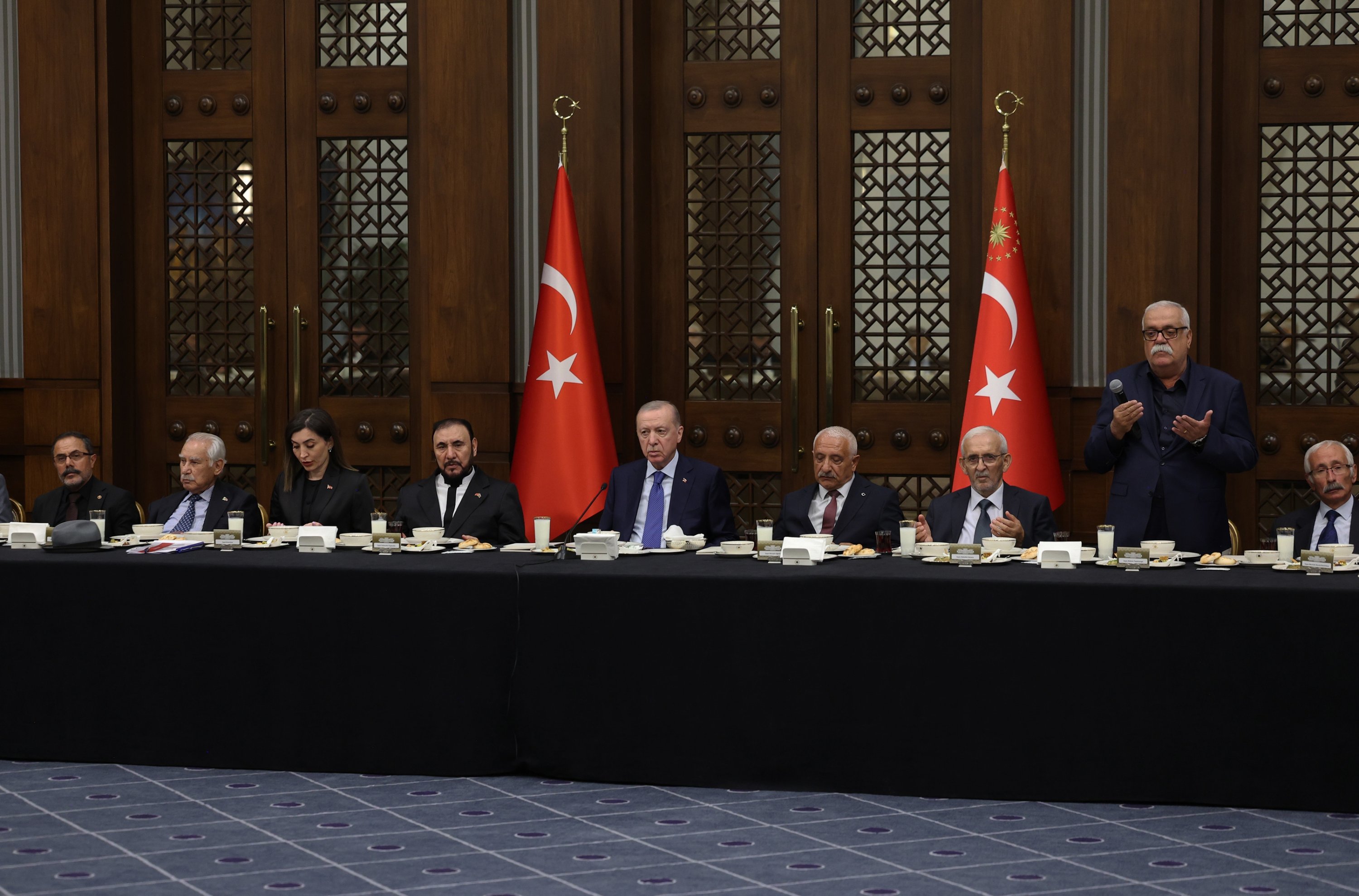
President Recep Tayyip Erdoğan on Wednesday emphasized unity, solidarity and continued support for Türkiye's Alevi community during the "Mah-ı Muharrem Fast-Breaking Meal" program held at the Presidential Complex in Ankara.
Addressing participants during the gathering, Erdoğan congratulated Muslims on the holy month of Muharram, describing it as a time for reflection, prayer and unity. He expressed hope that the month would bring peace and blessings to Türkiye, the Islamic world and humanity.
Ahead of Ashura Day, Erdoğan commemorated Imam Hussein and more than 70 of his companions who were martyred in the Battle of Karbala, saying the tragedy continues to hold deep significance for Muslims centuries later.
"We still carry the pain of Karbala in our hearts," Erdoğan said. "For 14 centuries, we have mourned the martyrdom of Imam Hussein and his companions."
He said the events of Karbala demonstrated that while people may lose their lives, the principles of justice and truth endure.
"Respect and devotion to the Ahl al-Bayt are the essence and foundation of this nation," Erdoğan said, adding that love for the Prophet Muhammad's family has long been an integral part of Anatolia's cultural and spiritual identity.
Calling for unity, Erdoğan cited Quranic teachings urging believers to remain united and avoid division, saying social cohesion is the strongest safeguard against attempts to create discord.
He also referred to the words of Hacı Bektaş Veli, "Let us be united, strong and alive," describing them as a lasting foundation of brotherhood in Türkiye.
Turning to government policies, Erdoğan said his administration has sought to embrace all citizens equally, regardless of their faith, sect or worldview, adding that Alevi citizens have remained an important focus of these efforts. "We have never neglected our Alevi brothers and sisters," he said.
Erdoğan highlighted the work of the Alevi-Bektashi Culture and Cemevi Presidency, established in 2022 to coordinate services for cemevis, the houses of worship of Türkiye's Alevi community, and strengthen institutional support for Alevis.
According to Erdoğan, the government currently covers the electricity costs of 1,133 cemevis across Türkiye. Over the past three years, it has also allocated TL 800 million ($20 million) for the maintenance, renovation and furnishing of 533 cemevis.
He said that as of March 2026, requests from 311 cemevis had entered the implementation process and that support would be extended to 500 cemevis by the end of the year.
Erdoğan also highlighted reconstruction efforts following the devastating Feb. 6, 2023, earthquakes. He said the government had met the needs of 113 cemevis in the 11 affected provinces, while reconstruction and restoration work continues on 13 cemevis in seven provinces that were destroyed or heavily damaged.
Reaffirming his government's commitment to the Alevi community, Erdoğan said efforts to strengthen dialogue and provide support would continue.
Concluding his remarks, Erdoğan once again honored Imam Hussein and the martyrs of Karbala and expressed hope that the Muharram fast would contribute to greater unity, solidarity and brotherhood throughout the country.
Speaking at the "Universal Ashura Mourning Ceremony" in Istanbul on Thursday, Vice President Cevdet Yılmaz said the lessons of Karbala remain relevant today, arguing that justice and the rule of law must prevail over the misuse of power.
Drawing parallels between the tragedy of Karbala and contemporary global conflicts, Yılmaz said the world continues to face challenges from those who believe power alone grants legitimacy.
"There are those who believe, 'I am powerful, therefore I can do whatever I want.' We cannot accept such a mentality," he said. "Power detached from justice, compassion and the rule of law has no lasting value. History has shown that no power lacking legitimacy and respect for the law can endure."
Yılmaz said Türkiye advocates combining moral legitimacy with strength during a period of growing regional uncertainty.
"As the Republic of Türkiye, we say that we must be both right and strong. We must achieve both at the same time," he said.
He also warned against attempts to divide societies along ethnic and sectarian lines, arguing that diversity should be viewed as a source of strength rather than conflict.
"Unless we see our identities and differences as elements that complement and enrich one another, we will continue to serve the interests of others," he said.
Referring to recent conflicts in the region, Yılmaz said Türkiye has resisted efforts to inflame sectarian tensions by respecting different identities while emphasizing shared values.
"We will live together by respecting one another's identities, without trying to change or transform anyone," he said. "We will be united, strong and resilient. We will remain brothers and sisters, and together we will continue to overcome these challenges."