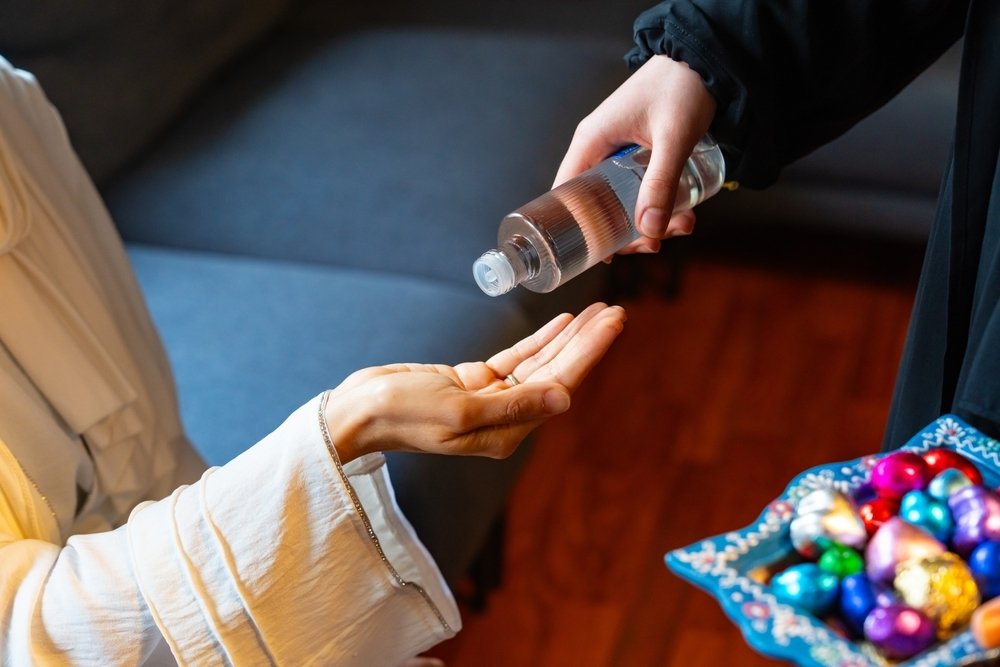
In Türkiye, bottles of lemon cologne sit beside cash registers, near the entrances of homes and inside the pockets of long-distance bus attendants. Known locally as "kolonya," the citrus-scented cologne has remained part of everyday life for generations.
A quick splash onto the hands can signal a greeting, the end of a meal or simply a moment of refreshment during a crowded journey. With its sharp citrus scent and high alcohol content, kolonya functions both as a fragrance and disinfectant while remaining a familiar part of daily interactions across Türkiye, from barbershops and restaurants to ferries, shops and cafes.
The origins of kolonya trace back to medieval Europe, where an early fragrance known as “Hungarian Water” was reportedly produced for Queen Elizabeth of Hungary in the 14th century. Over time, Italian perfumers refined the formula by adding citrus essences such as bergamot, lemon and orange, helping shape the fragrance later known as “Eau de Cologne.”
Initially used for medicinal purposes, the scent spread across Europe after commercial production expanded in Cologne during the early 18th century.
In its early years, eau de cologne was widely regarded as a medicinal “miracle water” rather than simply a cosmetic product. People commonly dropped it onto sugar cubes or mixed it with wine to treat ailments ranging from digestive problems to heart palpitations.
Napoleon Bonaparte was famously said to consume sugar infused with eau de cologne during military campaigns, reflecting the fragrance’s reputation at the time as both a perfume and a medicinal tonic. The practice gradually faded during the 19th century, when regulations required medicinal products to disclose their formulas, prompting many producers to market cologne primarily as a fragrance instead.
Kolonya entered Ottoman lands during the reign of Sultan Abdulhamid II in the late 19th century, when imported European colognes became fashionable among urban elites. The fragrance gradually gained popularity beyond palace circles and became increasingly common in everyday social life alongside traditional rosewater.
By the early 20th century, Turkish producers such as Ethem Pertev, Süleyman Ferid and Eyüp Sabri Tuncer had begun local production, adapting the product into lighter citrus-based versions better suited to local tastes and climate.
Lemon kolonya soon became widespread across the country, while glass bottles became common household items associated with hospitality and modern urban life.
Unlike traditional perfumes, kolonya also developed a practical role beyond fragrance. Most varieties contain around 70% to 80% alcohol, allowing them to function both as a refreshing scent and disinfectant. Long before hand sanitizers became common globally, people in Türkiye were already using kolonya after public transportation, meals and crowded social settings.
Its role also became closely tied to public etiquette. During Eid holidays, weddings, funerals and religious gatherings, kolonya is commonly served alongside sweets, coffee or tea. The gesture often signals cleanliness, attentiveness and respect without requiring formal conversation.
Different regions of Türkiye also developed their own scents over time. Lemon remains the country’s most recognizable variety, but rose, lavender, jasmine, tobacco blossom, olive blossom and tea-inspired versions became associated with different local identities. Antalya became known for orange blossom cologne, Ayvalık for olive blossom varieties, Rize for tea-inspired scents and Düzce for tobacco cologne.
In some traditional shops across Türkiye, glass bottles are still filled by hand using recipes passed down through generations, while younger consumers increasingly embrace boutique fragrances and modern packaging.
If you watch Turkish dramas, you have probably seen the scene before. Someone brings out a bottle of lemon kolonya during a family visit, after a meal or when a character feels faint, pouring it into their hands almost instinctively. Over time, the small ritual becomes one of the everyday details many international viewers associate with life in Türkiye.
Today, some of Türkiye’s best-known kolonya brands continue to operate with roots stretching back generations. Among the most iconic are Atelier Rebul and Eyüp Sabri Tuncer, both known for helping preserve and modernize Türkiye’s long-standing cologne tradition.
So if you are looking for a meaningful gift to bring back from Türkiye, a bottle of traditional lemon kolonya remains one of the country’s most recognizable and widely loved choices.
For decades, kolonya remained largely associated with Turkish daily life. But during the COVID-19 pandemic, the product suddenly entered international conversations around hygiene and disinfectants. As people around the world searched for alcohol based sanitizers, Turkish kolonya attracted renewed global attention for combining practicality with tradition.
According to data from the Istanbul Chemicals and Chemical Products Exporters' Association (IKMIB), exports nearly tripled in 2020, rising from 2.4 million tons to 6.9 million tons in a single year, while revenues jumped from $9.1 million to $28.3 million.