Setting sail in September with the traditional sailor's phrase, “Vira bismillah,” fishermen report a productive fishing season so far, with strong anchovy catches in the Black Sea and abundant sardines in the Aegean Sea, as the 2025-2026 fishing season reaches its midpoint.
Following the end of the annual fishing ban on Sept. 1 in the Black Sea, Marmara Sea and Aegean Sea, and on Sept. 15 in the Mediterranean, fishing vessels across Türkiye returned to active operations. With the season scheduled to conclude in April, crews have now completed roughly half of the fishing calendar.
Industry representatives say the first half of the season has largely met expectations, particularly in the Black Sea, where anchovy catches have been strong, and in the Aegean, where sardines remain plentiful. While unfavorable weather conditions disrupted operations at times, overall catch volumes in key regions have remained stable.
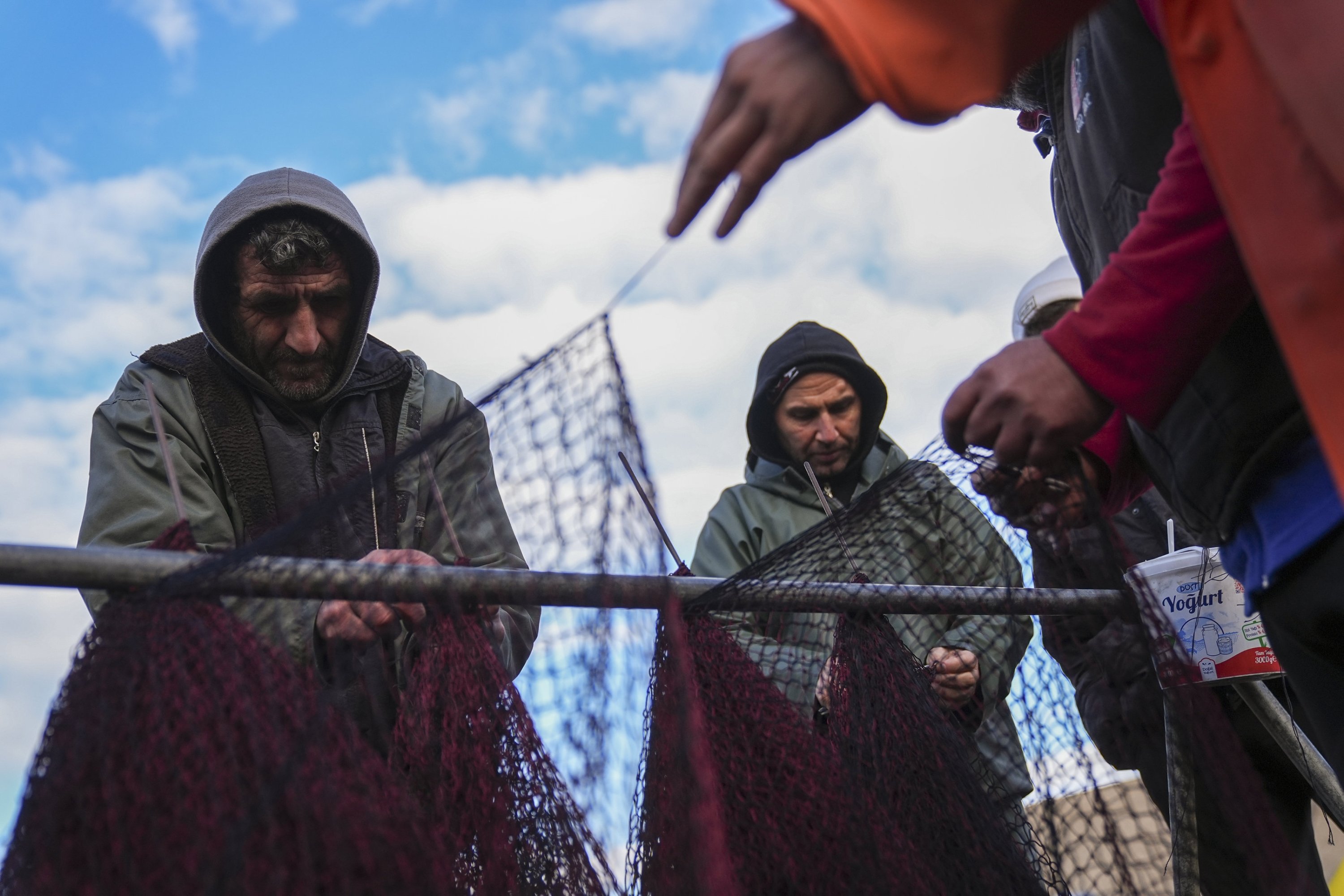
In recent days, harsh weather has forced many vessels to return to port, resulting in a temporary suspension of fishing activities. This pause, expected to last around 10 days, is being used by crews to rest and carry out routine maintenance, including repairs to boats and nets, before resuming work.
Mehmet Aksoy, deputy chair of the Central Union of Seafood Hunters and Producers, said Türkiye continues to hold an important position in the fisheries sector due to its long coastlines and varied marine environments. Speaking to Anadolu Agency (AA) recently, Aksoy noted that the season began with cautious optimism and has generally delivered positive results.
“September and October were productive months,” Aksoy said. “Fishing slowed in November and December because of storms, but overall, the season has progressed in line with expectations.”
He added that fishermen traditionally take a short break in early January, allowing crews to recover from the demanding pace of the season. According to Aksoy, this period helps teams prepare for the remainder of the season with renewed focus.
Aksoy said fishing activity in the Mediterranean has remained below desired levels, attributing this to geographical differences. He noted that the Aegean Sea’s structure, with its bays, gulfs and islands, supports stronger fish stocks compared to other regions.
As temperatures drop, Aksoy said anchovy quality in the Aegean is expected to improve, leading fishermen to increasingly focus on this species. “Anchovy is widely known and consumed,” he said. “While sardine is traditionally associated with the Aegean, anchovy has become more common in the region, and consumption is likely to rise.”
Mustafa Turan, a fisherman who spent the first four months of the season in the Black Sea before moving operations to the Aegean, said the season has been positive overall. He noted that while bonito was abundant last year, it has been largely absent this season, with anchovy filling that gap.
Turan said that although anchovy stocks were strong in the Black Sea, difficult sea and weather conditions limited the duration of fishing there. As a result, many fishermen shifted operations to the Marmara and Aegean seas. “I expect the season to continue productively in the Aegean,” he said.
Fatih Kopuz, a fisherman operating in the Aegean, said the current season has shown improvement compared to the previous year. He pointed to the steady presence of sardines and anchovies as a positive indicator for the remainder of the season.
Kopuz said fishermen plan to focus primarily on anchovies in the coming months, expressing confidence that fish stocks and weather conditions will allow operations to continue until the season ends in April.