Daily Sabah logo

Politics
Diplomacy Legislation War On Terror EU Affairs Elections News Analysis
TÜRKİYE
Istanbul Education Investigations Minorities Expat Corner Diaspora
World
Mid-East Europe Americas Asia Pacific Africa Syrian Crisis Islamophobia
Business
Automotive Economy Energy Finance Tourism Tech Defense Transportation News Analysis
Lifestyle
Health Environment Travel Food Fashion Science Religion History Feature Expat Corner
Arts
Cinema Music Events Portrait Reviews Performing Arts
Sports
Football Basketball Motorsports Tennis
Opinion
Columns Op-Ed Reader's Corner Editorial
PHOTO GALLERY
JOBS ABOUT US RSS PRIVACY CONTACT US
© Turkuvaz Haberleşme ve Yayıncılık 2025

Daily Sabah - Latest & Breaking News from Turkey | Istanbul

  • Politics
    • Diplomacy
    • Legislation
    • War On Terror
    • EU Affairs
    • Elections
    • News Analysis
  • TÜRKİYE
    • Istanbul
    • Education
    • Investigations
    • Minorities
    • Expat Corner
    • Diaspora
  • World
    • Mid-East
    • Europe
    • Americas
    • Asia Pacific
    • Africa
    • Syrian Crisis
    • Islamophobia
  • Business
    • Automotive
    • Economy
    • Energy
    • Finance
    • Tourism
    • Tech
    • Defense
    • Transportation
    • News Analysis
  • Lifestyle
    • Health
    • Environment
    • Travel
    • Food
    • Fashion
    • Science
    • Religion
    • History
    • Feature
    • Expat Corner
  • Arts
    • Cinema
    • Music
    • Events
    • Portrait
    • Reviews
    • Performing Arts
  • Sports
    • Football
    • Basketball
    • Motorsports
    • Tennis
  • Gallery
  • Opinion
    • Columns
    • Op-Ed
    • Reader's Corner
    • Editorial
  • TV
  • TÜRKİYE
  • Istanbul
  • Education
  • Investigations
  • Minorities
  • Expat Corner
  • Diaspora

Uşak reveals 9 graves from Byzantine period in Türkiye

by Daily Sabah with AA

ISTANBUL Sep 11, 2024 - 11:40 am GMT+3
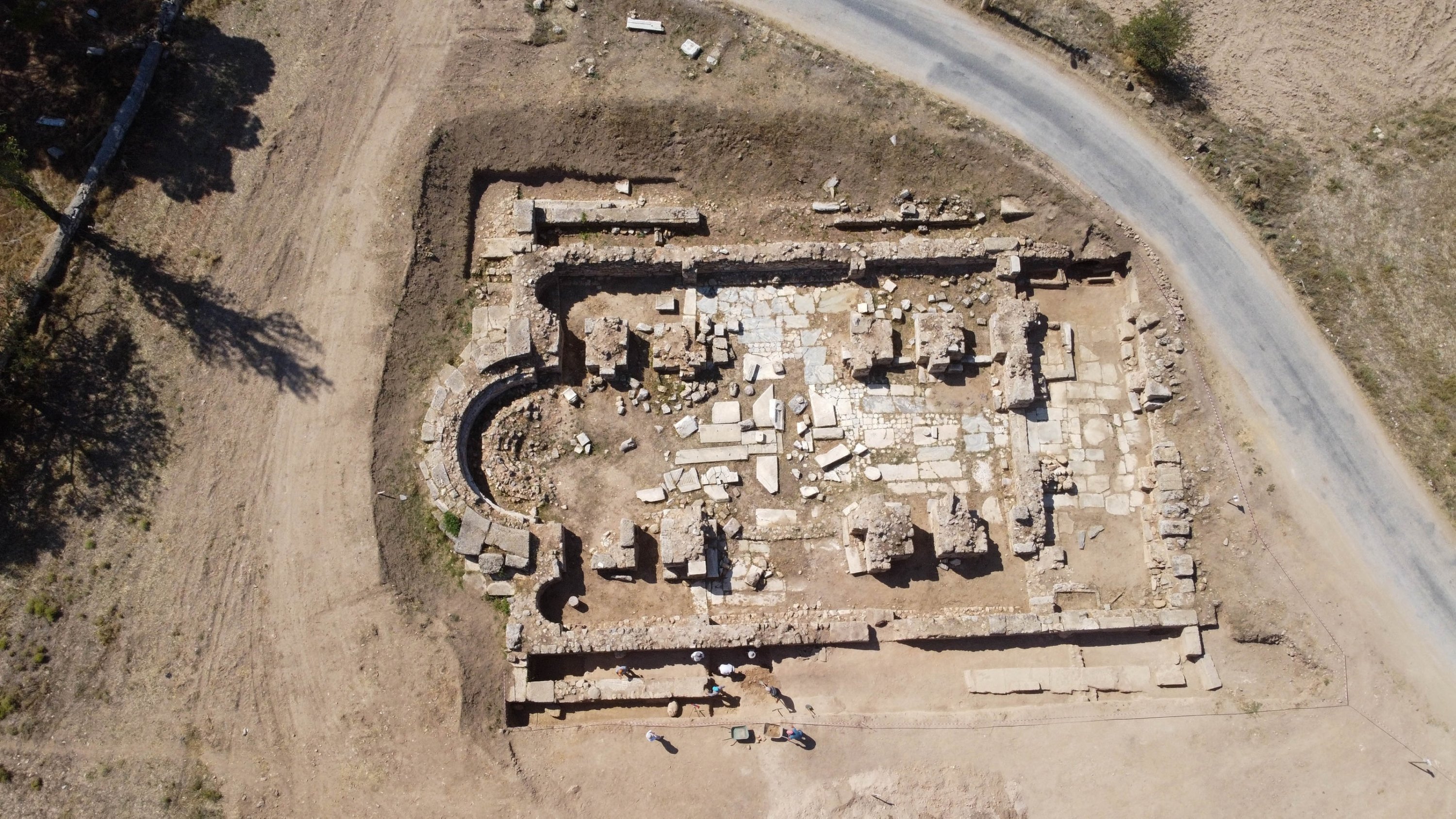
An aerial view of the Sebaste Ancient City shows its historical layout in Uşak, Türkiye, Sept. 9, 2024. (AA Photo)
by Daily Sabah with AA Sep 11, 2024 11:40 am

Nine graves from the Middle Byzantine period have been discovered in the ancient city of Sebaste, founded by Rome's first emperor, Augustus, now located in Uşak, western Türkiye.

Excavation work at Sebaste, located in Selçikler resumed in 2022 after a 44-year hiatus, is ongoing.

The work, led by the Uşak Archaeology Museum, involves faculty members from Uşak University's Faculty of Humanities and Social Sciences, Department of Archaeology, associate professor Emre Taştemür and associate professor Münteha Dinç.

This year, excavations at Sebaste, a significant bishopric center of the Roman Empire in Anatolia, have focused on the area known as the "great church."

In August, the team uncovered nine graves, mostly of infants and children, in the northern section of the house of worship.

Taştemür told Anadolu Agency (AA) that the 2022 excavations began with environmental cleaning and that last year they conducted restoration and conservation work based on mortar samples.

He explained that they concentrated their efforts in the "northern nave" (an area inside the church) because it was believed that the foundations of a Roman bathhouse were preserved there.

However, they encountered nine graves from the late Middle Byzantine Period in this area, these graves date back to between the ninth and early 13th centuries, with most being infant and child graves.

Taştemür noted that they found two different grave types in the burial groups, one type consists of brick graves built with a roof-like structure, while the other is a stone-built grave type.

He explained that the graves date back to the late Middle Byzantine Period, as evidenced by their discovery in a fill about half a meter above the church floor, it is believed that these graves were made during a period when the churches lost their significance.

Research is ongoing regarding the fact that most of the graves are for infants and children, including their causes of death, ages, and reasons for burial in this location. Taştemür suggested that similar to the Konstantin and Helena churches in Niğde, a significant number of graves might be found around the churches here as well.

Excavations have also revealed necklace pendants and glass bracelets, the graves are oriented east to west, aligning with the belief that Christ would come from the east to resurrect the dead.


  • shortlink copied
  • Last Update: Sep 11, 2024 2:39 pm
    KEYWORDS
    byzantine empire byzantine archaeology excavation uşak türkiye
    The Daily Sabah Newsletter
    Keep up to date with what’s happening in Turkey, it’s region and the world.
    You can unsubscribe at any time. By signing up you are agreeing to our Terms of Use and Privacy Policy. This site is protected by reCAPTCHA and the Google Privacy Policy and Terms of Service apply.
    No Image
    Bye-bye bubble: A sendoff and last reminder of zero-COVID measures
    PHOTOGALLERY
    • POLITICS
    • Diplomacy
    • Legislation
    • War On Terror
    • EU Affairs
    • News Analysis
    • TÜRKİYE
    • Istanbul
    • Education
    • Investigations
    • Minorities
    • Diaspora
    • World
    • Mid-East
    • Europe
    • Americas
    • Asia Pacific
    • Africa
    • Syrian Crisis
    • İslamophobia
    • Business
    • Automotive
    • Economy
    • Energy
    • Finance
    • Tourism
    • Tech
    • Defense
    • Transportation
    • News Analysis
    • Lifestyle
    • Health
    • Environment
    • Travel
    • Food
    • Fashion
    • Science
    • Religion
    • History
    • Feature
    • Expat Corner
    • Arts
    • Cinema
    • Music
    • Events
    • Portrait
    • Performing Arts
    • Reviews
    • Sports
    • Football
    • Basketball
    • Motorsports
    • Tennis
    • Opinion
    • Columns
    • Op-Ed
    • Reader's Corner
    • Editorial
    • Photo gallery
    • DS TV
    • Jobs
    • privacy
    • about us
    • contact us
    • RSS
    © Turkuvaz Haberleşme ve Yayıncılık 2021