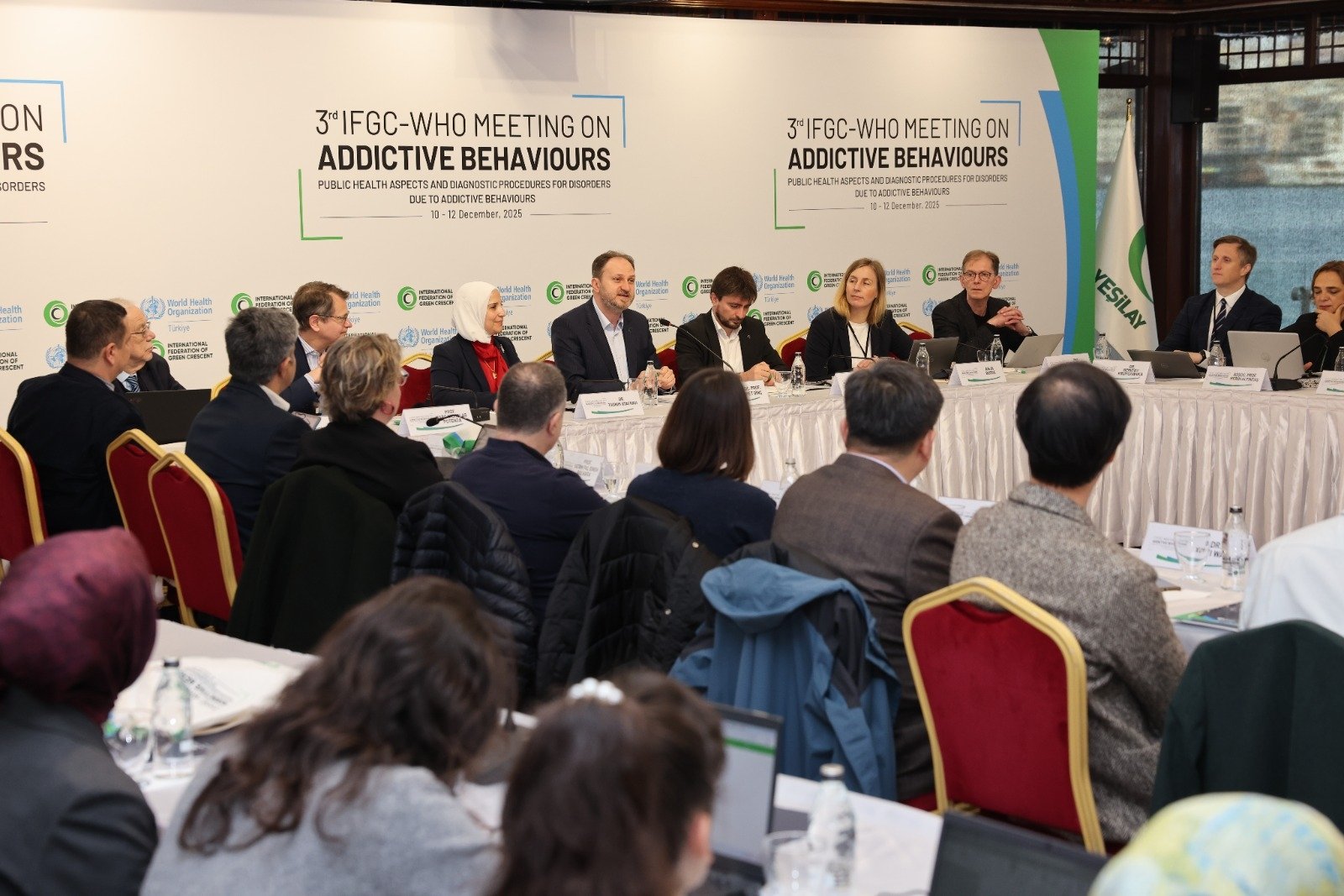
The Turkish Green Crescent (Yeşilay) and the International Green Crescent Federation (IFGC), in cooperation with the World Health Organization (WHO) Türkiye Country Office, opened their third behavioral addictions meeting in Istanbul on Wednesday.
The three-day gathering at Yeşilay’s headquarters brings together 52 participants from 25 countries to shape a global response to fast-growing behavioral addictions linked to digital platforms, online gambling and gaming.
Organizers say the meeting aims to strengthen awareness, guide policy processes and develop more effective prevention and treatment solutions at national, regional and global levels. The agenda includes public health approaches to addictive behaviors, early detection and a review of existing diagnostic procedures and assessment tools.
Speaking at the opening, Yeşilay President Mehmet Dinç warned that digital ecosystems are increasingly engineered to capture attention and drive compulsive use, leaving societies to pay the cost in mental health, finances and family well-being.
“Digital platforms are designed to keep people engaged, shape behavior and create addiction. Governments are beginning to respond with advertising limits, age-verification systems, algorithmic transparency rules and spending caps in gambling and gaming environments,” Dinç said. “But regulation is not keeping pace with the scale and speed of the threat. In the fight against behavioral addictions, we need to move much faster and far more decisively.”
Dinç also stressed that international cooperation is essential for building comprehensive prevention and treatment systems, arguing that the issue has become a cross-border public health challenge.
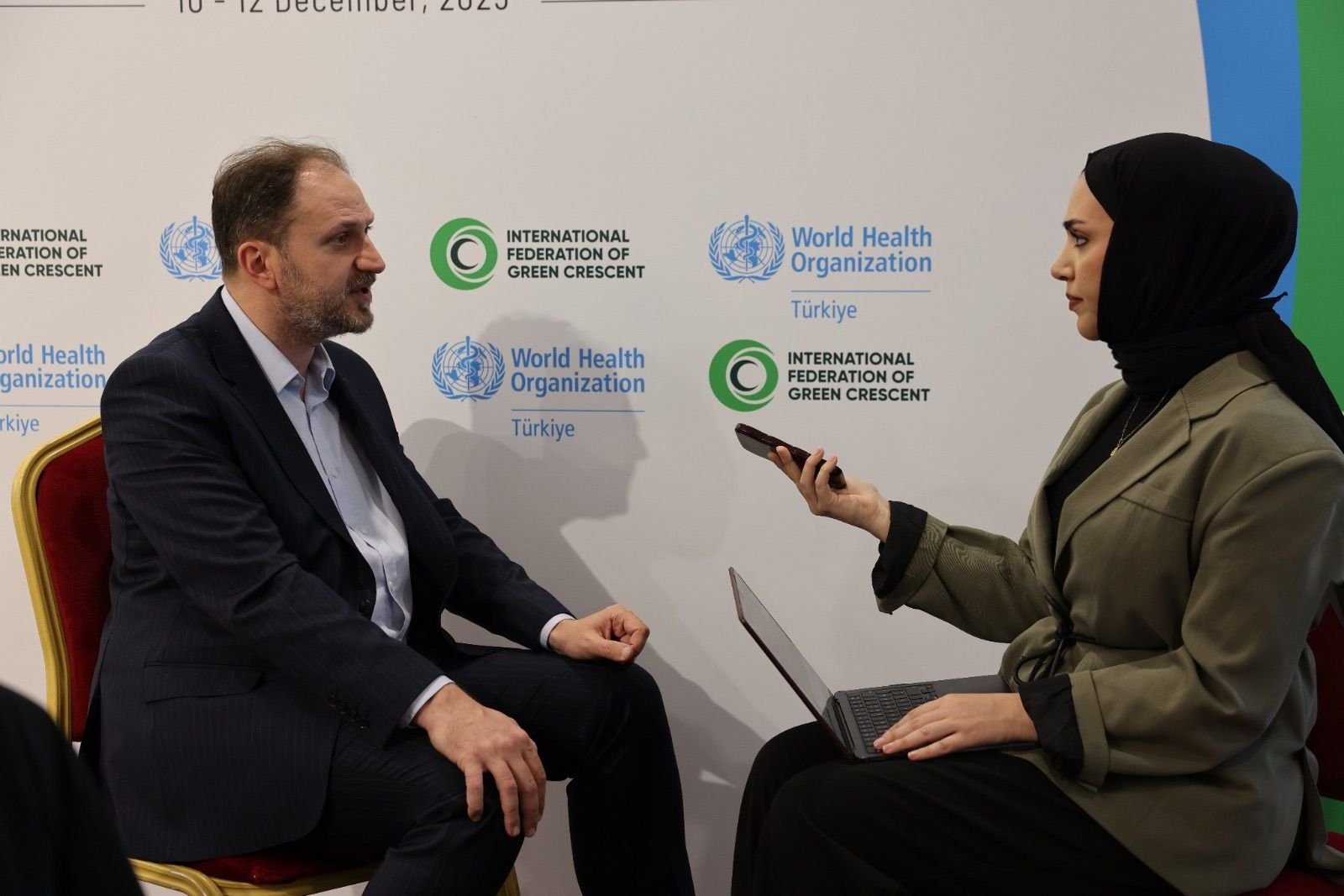
In an interview with Daily Sabah, Dinç said Yeşilay has worked with WHO for years on addiction policy, including participation in U.N. nongovernmental organization (NGO) programs in Vienna and New York. But he described behavioral addictions as a particularly urgent and under-regulated field.
“Behavioral addictions are one of the world’s biggest problems today,” Dinç said. “Research is limited, the number of experts is limited, intervention programs are limited, and legal regulations are limited. Technology, however, moves far faster than regulations, and by the time rules arrive, the harm has already spread widely in society.”
Dinç recalled that a previous WHO expert meeting hosted by Yeşilay in Istanbul in 2019 helped secure the inclusion of online and offline gambling and gaming addiction in ICD-11, the WHO’s international diagnostic classification. “It was a major turning point,” he said. “For the first time, a behavioral addiction was clearly recognized as a disease with defined criteria.”
The current meeting, he added, is focused on the next step: refining how behavioral addictions are measured and diagnosed. Unlike substance addictions, which can often be detected through more straightforward clinical patterns, behavioral addictions are harder to define because the line between normal use, risky use and addiction is blurred.
“What looks like normal social media use for one person can be harmful or addictive for another,” he said. “To intervene early, we need an ‘optimal threshold’ that can reliably distinguish risk from addiction.” According to Dinç, more than 50 top specialists from 22 countries will work over three days to develop a diagnostic and measurement tool intended for global use.
Asked about recent operations in Türkiye against illegal betting sites and the impact of gambling advertising on young people, Dinç said scientific evidence shows advertising has a strong power to initiate and reinforce gambling behavior, particularly among children and adolescents.
“The industry uses algorithms extremely effectively,” he emphasized. “They track where young people spend time online and target them in their own language. Behavioral scientists are employed to understand how to steer people toward addiction.”
Dinç listed three priorities Yeşilay is pushing in Türkiye and internationally: eliminating any distinction between legal and illegal gambling in public health messaging; an outright ban on gambling advertising similar to bans on alcohol and tobacco promotion; and narrowing the channels through which online gambling is pushed into everyday digital spaces.
“People who want to gamble can find it,” he said. “But those who don’t want to gamble shouldn’t be bombarded with it on shopping sites, banking apps or telecom platforms. This is a dangerous trap.”
Dinç also addressed potential social media regulations being discussed in Türkiye, saying children and teenagers are increasingly exposed to cyberbullying, exploitation and harmful ideologies through platforms.
Pointing to Australia’s move to bar social media for under-16s and similar debates in France, the U.K. and the U.S., Dinç argued Türkiye should adopt clear age-based restrictions. “This is not about limiting freedom,” he added. “It is about protecting children’s rights and ensuring real freedom from harm. We believe a strict regulation for those under 15 is essential, and we support ongoing work by relevant ministries and the ICT Authority.”
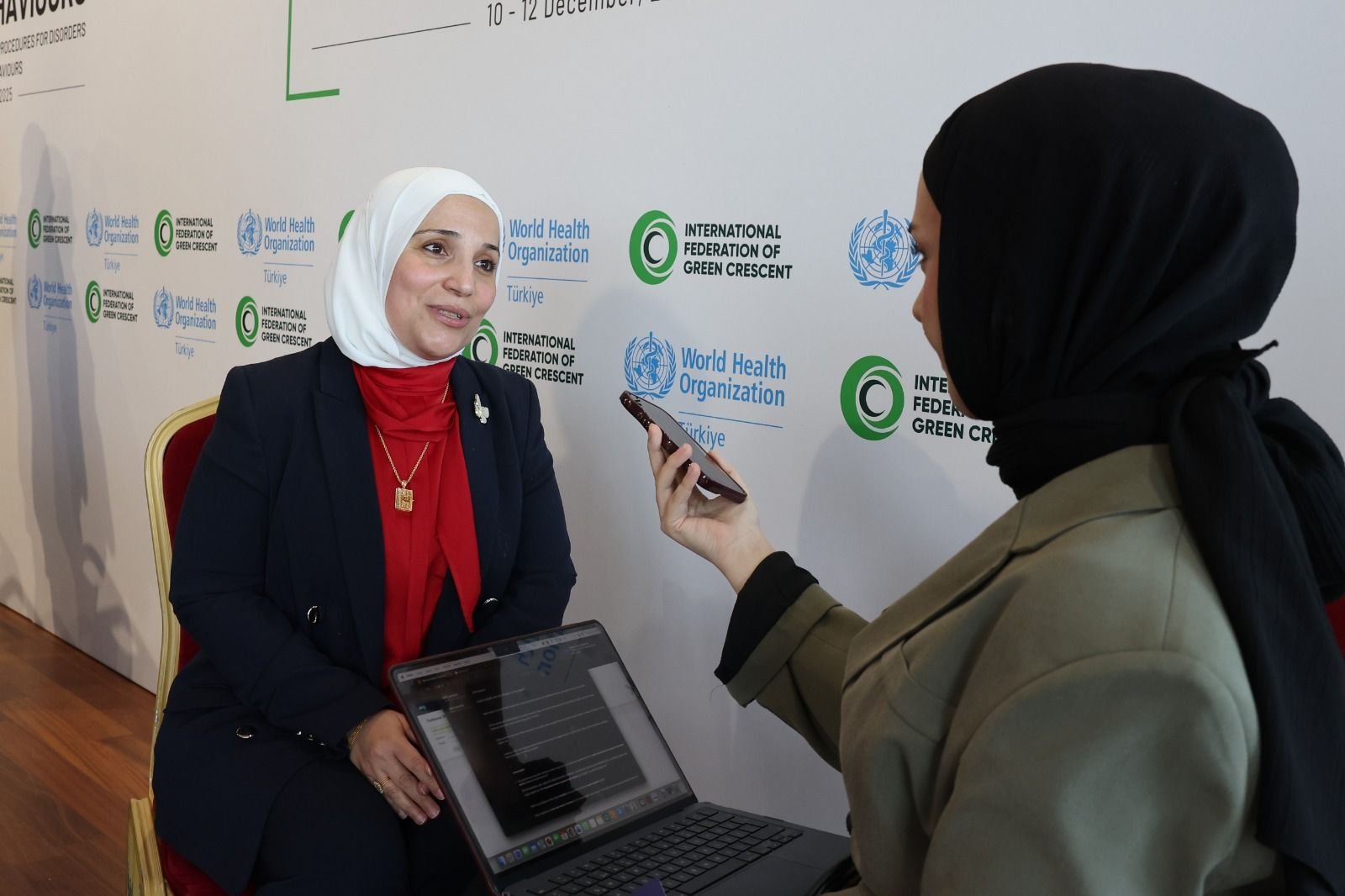
WHO Türkiye representative Tasnim Atatrah said the meeting reflects a long-running WHO-Yeşilay partnership and responds to a global gap in evidence-based diagnosis. Speaking to Daily Sabah, Atatrah highlighted the value of gathering scientists and clinicians from multiple regions to standardize tools and expand the evidence base.
WHO’s classification of behavioral addictions as diseases in ICD-11, adopted by member states in 2019, was a milestone that enabled more coordinated diagnosis, treatment and prevention worldwide, she said.
Atatrah also praised Türkiye’s policy approach, pointing to a high-level anti-addiction committee led by the vice president as an example of multisectoral leadership. “Türkiye is offering a leading model for developing strategies that address addiction from different perspectives,” she emphasized.
Asked which single prevention measure could create the biggest impact in 2026 for countries such as Türkiye, Atatrah said success depends on combining early screening in schools, family programs and community services under strong cross-sector coordination. “The more actions are taken together, the more we can address this issue,” she elaborated.
Organizers say the meeting will review diagnostic procedures and evaluation instruments, with a focus on supporting WHO’s Diagnostic Interview Schedule for Disorders due to Addictive Behaviors (DISDAB) and expanding its global standardization. Following the sessions, Yeşilay and partners plan to establish a standing international platform linking experts and civil society groups to sustain policy and clinical collaboration on behavioral addictions.