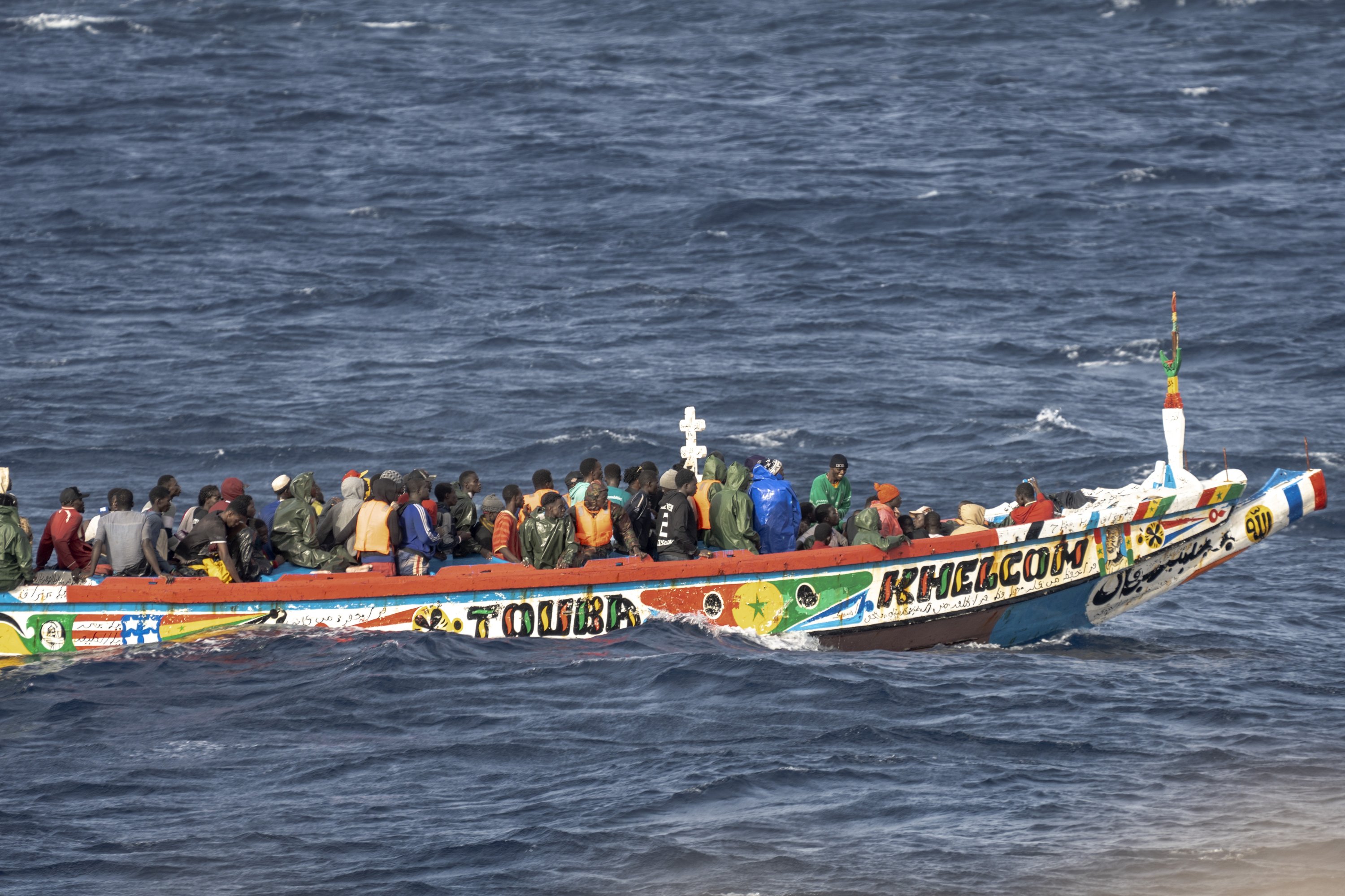
Seven bodies were recovered and 96 people rescued after an overcrowded boat carrying migrants capsized overnight off Gambia’s Atlantic coast, the country’s defence ministry said Thursday, underscoring the persistent dangers of the West African route to Europe’s Canary Islands.
The wooden vessel, believed to have been carrying more than 200 migrants, overturned near Jinack village in Gambia’s North Bank Region shortly after midnight as it attempted the perilous crossing to Spain, authorities said.
Ten of the survivors were listed in critical condition and rushed to the hospital for urgent treatment.
Gambia’s navy and coast guard launched a search-and-rescue operation after receiving distress alerts, pulling dozens from the water amid rough seas.
Survivors were treated for hypothermia, dehydration and exhaustion, while search efforts continued for an unknown number of missing passengers.
“This tragedy once again exposes the extreme risks associated with irregular migration,” the defence ministry said in a statement, adding that the boat was likely overloaded and poorly equipped for the open-ocean journey.
The Atlantic route from West Africa to the Canary Islands is widely regarded as one of the deadliest migration corridors in the world.
Migrants, many fleeing poverty, unemployment, conflict or climate-related hardship, attempt the journey aboard fragile fishing boats ill-suited for voyages of more than 1,000 kilometers across unpredictable waters.
According to European Union data, more than 46,000 irregular migrants reached the Canary Islands in 2024, a record high.
The human cost was devastating: rights group Caminando Fronteras estimates that more than 10,000 people died or went missing attempting the crossing that year, a 58% increase from 2023.
While overall arrivals declined in 2025 following increased cooperation between Spain and several West African nations, fatalities remained alarmingly high.
Caminando Fronteras documented more than 3,000 deaths or disappearances on routes to Spain last year, with the Atlantic accounting for the majority due to its isolation and treacherous conditions.
Thursday’s disaster revives memories of one of the deadliest incidents in recent years.
In August 2025, at least 70 people were killed when a migrant boat believed to have departed from Gambia capsized off the West African coast, leaving dozens missing and families without answers.
Despite public awareness campaigns and stepped-up patrols, departures continue from remote coastal areas, driven by desperation and fueled by smuggling networks that exploit limited economic opportunities at home.