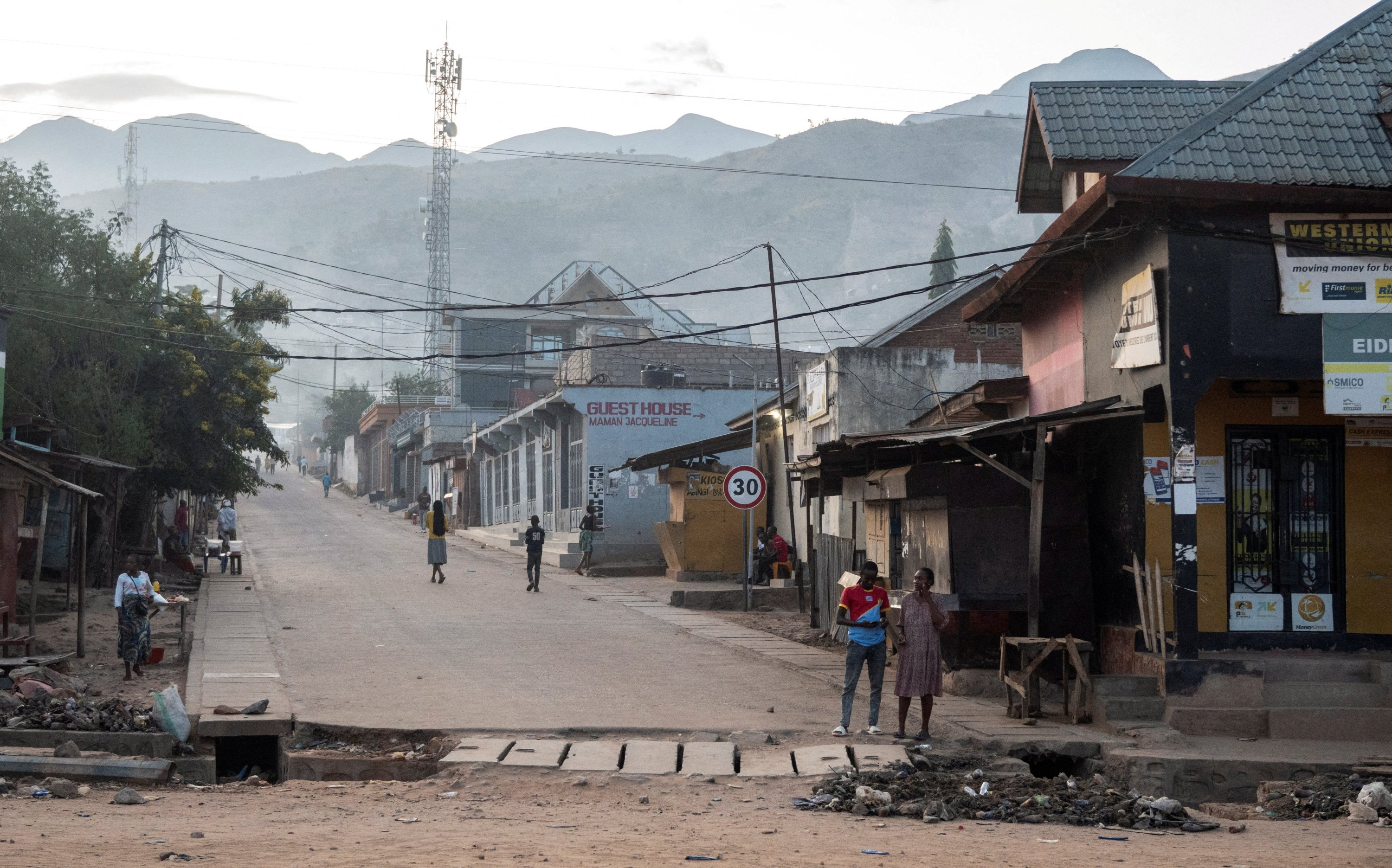
International concern surged on Thursday as the U.S., European Union, and global partners condemned ongoing cease-fire violations in eastern Democratic Republic of Congo, urging all parties to return to negotiations.
The warnings come amid intensified clashes involving the Rwanda-backed M23 rebel group, which captured key cities including Goma, Bukavu, and Uvira in 2025 and early 2026, exacerbating one of the world’s worst humanitarian crises and disrupting critical economic activities like mining.
The warnings followed the deadly Jan. 28 collapse at Rubaya’s Luwowo coltan mine in North Kivu. Local authorities reported at least 200 miners killed when hand-dug tunnels gave way.
The Congolese Ministry of Mines called it the latest in a series of disasters fueled by unsafe mining in rebel-held territories.
M23 officials disputed the toll, claiming bombings triggered the collapse and only five deaths occurred. Miners on the ground told a grimmer story.
Ibrahim Taluseke, a miner at the site, said he helped recover more than 200 bodies and feared figures were underreported due to pressure from mine controllers.
Previous collapses in December 2025 and February 2026 had already claimed hundreds of lives, highlighting the dangers of unregulated artisanal mining amid conflict.
Rubaya sits at the heart of the global coltan supply.
The DRC produces nearly 40% of the world’s coltan, vital for capacitors in smartphones, computers, and aircraft engines.
Rubaya alone supplied more than 15% of global tantalum in 2024.
Since May 2024, M23 has taxed production and trade, generating around $800,000 per month and smuggling tons of coltan into Rwanda.
These revenues have strengthened the group’s military operations despite international sanctions, including recent U.S. measures targeting Rwanda.
Eastern DRC has been plagued by ethnic tensions, resource competition, and foreign interference for decades.
M23, formed in 2012, resurged in 2021, claiming to defend Tutsi communities but accused of atrocities and resource exploitation.
The group’s 2025 offensives captured major urban centers, displacing hundreds of thousands and prompting international condemnation.
Peace efforts, including the Washington Accords, Doha talks, and African Union mediation, have repeatedly stalled.
Although Congolese forces briefly retook Uvira in January 2026, M23 retains significant territorial control.
U.N. Security Council Resolution 2773 called for withdrawal, but enforcement remains limited.
The conflict has created a staggering humanitarian crisis.
By September 2025, 8.2 million Congolese were displaced, with projections of 9 million by the end of 2026. Eastern provinces saw over 1.1 million people displaced in just the first quarter of 2025.
Violence around Uvira in late 2025 killed dozens, wounded scores, and forced thousands across borders into Burundi and Rwanda, halting aid operations.
Overall, nearly 15 million people require assistance in 2026, yet funding gaps leave only 7.3 million reached.
Acute food insecurity affects 28 million, compounded by cholera, gender-based violence, and attacks on displacement sites.