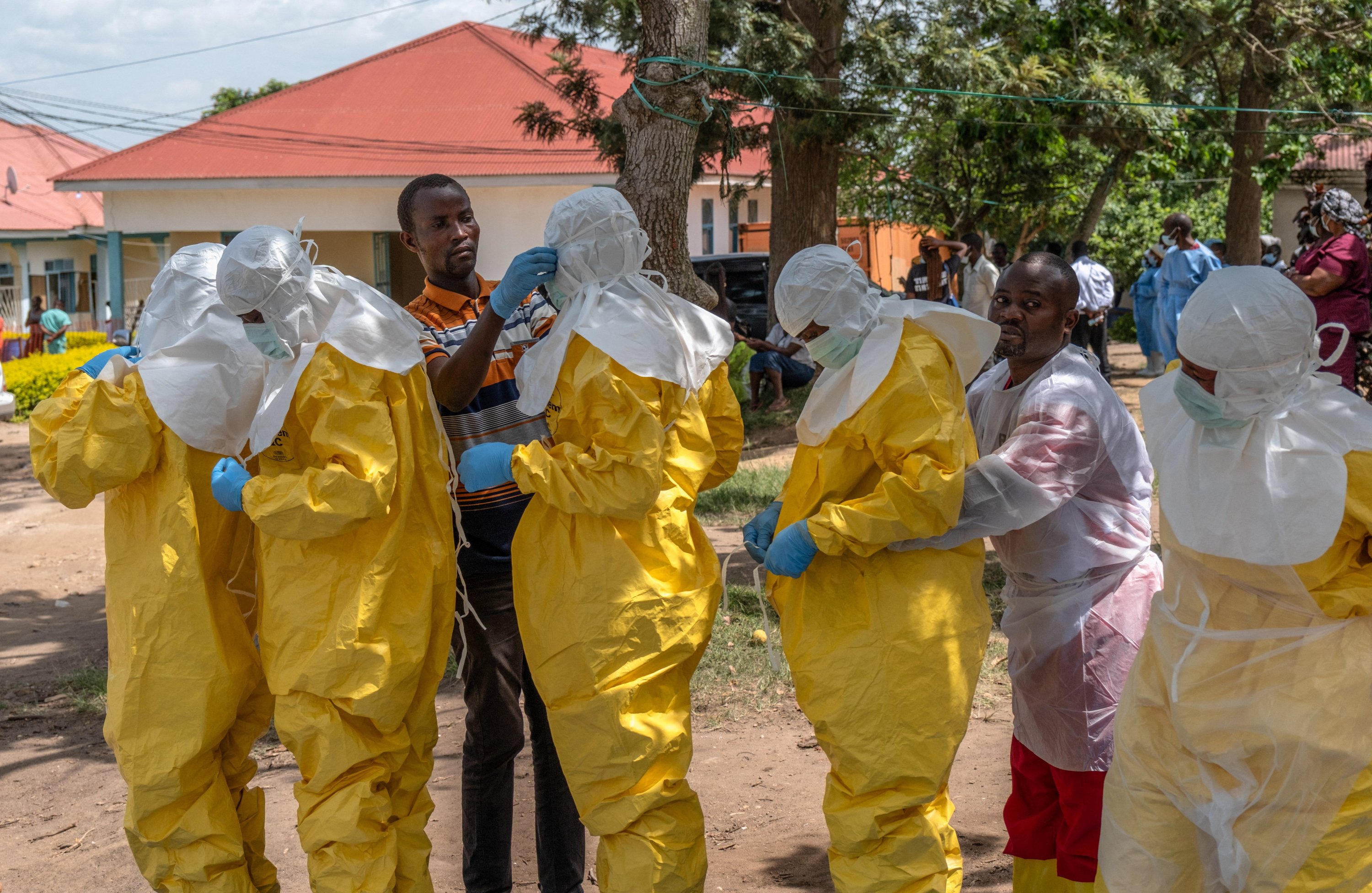
The deadly Ebola outbreak unfolding in eastern Democratic Republic of Congo is rapidly spiraling into a humanitarian disaster, with health officials warning that ongoing violence, mass displacement and deep mistrust of authorities are crippling efforts to contain the virus.
As fighting intensifies across Ituri province, overwhelmed medical teams are battling a fast-moving outbreak of the rare Bundibugyo strain of Ebola, a variant with no approved vaccine or treatment and a fatality rate that can reach 50%.
The World Health Organization says the outbreak has already claimed 10 confirmed lives, alongside more than 220 suspected deaths and roughly 900 suspected infections since Congolese authorities declared the outbreak on May 15.
At the center of the crisis is Rwampara Hospital, where exhausted doctors and nurses are working around the clock in conditions shaped as much by conflict as disease. One recent arrival captured the scale of the emergency: a visibly ill young woman, bleeding from the nose and struggling to move, arrived clinging to the back of a motorcycle after a desperate journey from a rural community with little access to healthcare.
“She gave birth a month ago, and two weeks later she began to fall ill,” her sister told hospital staff, explaining that the family initially believed it was malaria. Like many families across Ituri, they first turned to tablets and traditional remedies before realizing the sickness was something far more dangerous.
The woman’s arrival also exposed the severe lack of medical infrastructure in the region. With ambulances scarce or nonexistent, suspected Ebola patients are often transported by motorcycle, increasing the risk of spreading infection. The driver who brought the woman to the hospital wore only a surgical mask and no protective gear before health workers rushed to disinfect both him and the bike with chlorine.
The WHO warned Wednesday that the outbreak is spreading faster than response teams can contain it. WHO Director-General Tedros Adhanom Ghebreyesus described the situation as a “catastrophic collision of disease and conflict,” stressing that humanitarian access is now the key battleground in the fight against Ebola.
“Stopping this Ebola transmission depends entirely on humanitarian access,” Tedros wrote on social media, urging all armed groups and warring factions to agree to an immediate ceasefire. He warned that ongoing clashes are forcing exposed individuals into overcrowded displacement camps while attacks on clinics and health centers are making contact tracing nearly impossible.
Eastern Congo has endured decades of violence involving militias and armed groups, leaving state institutions weak or absent in many rural communities. That instability has become a major obstacle for health workers trying to isolate cases, monitor contacts and convince frightened residents to seek treatment.
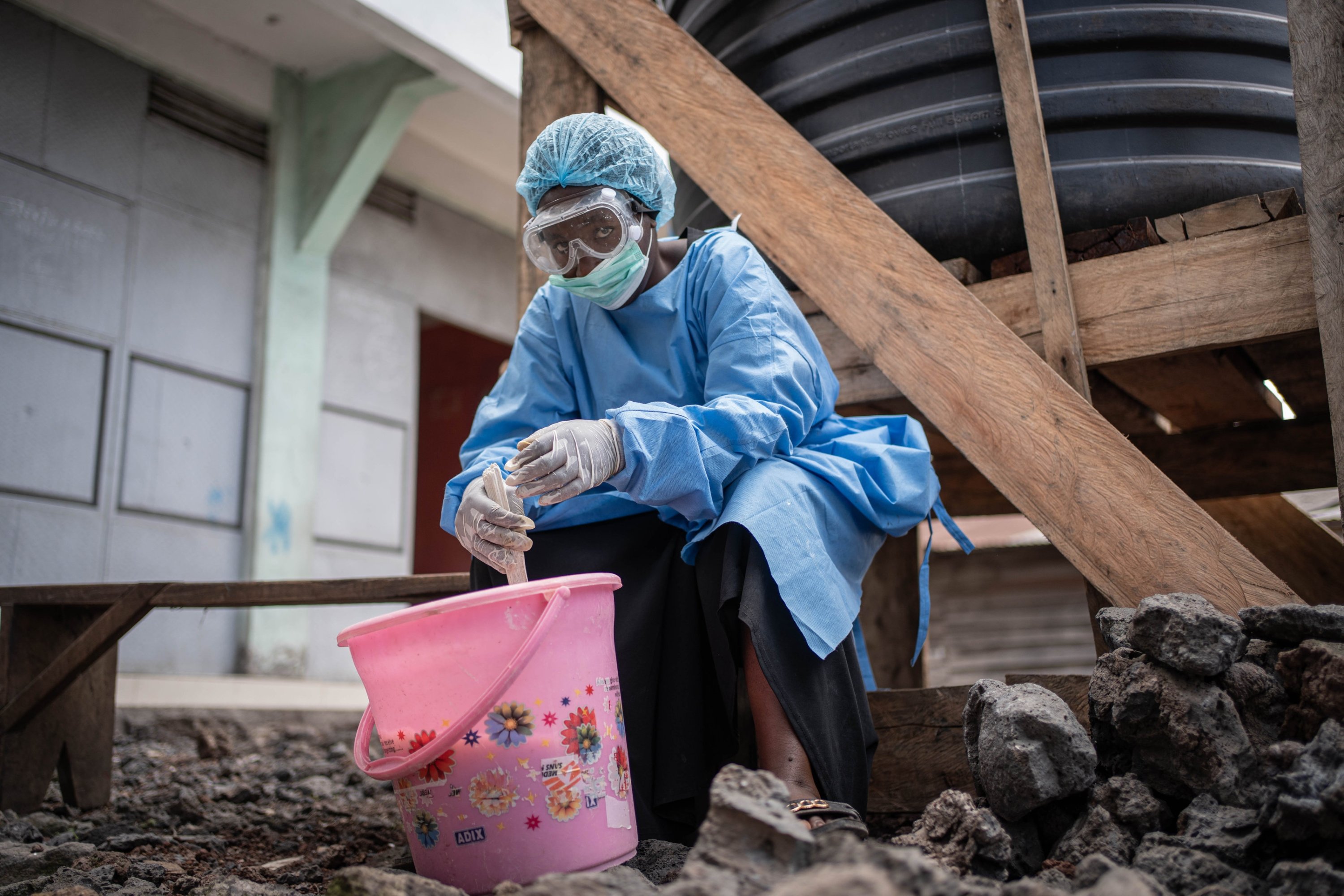
The outbreak response has already suffered serious setbacks. Two isolation tents established by the medical NGO Alima were burned down by an angry crowd after the death of an Ebola patient whose friends demanded the body be returned. Soldiers eventually dispersed the crowd with warning shots, but several isolated patients fled back into nearby communities during the chaos.
“Our concern is that several patients who were in isolation returned to the community,” said Dr. Isaac Mukengi, medical director at Rwampara Hospital. Teams are now traveling across affected areas trying to locate missing patients and persuade them to continue treatment before the virus spreads further.
Containment efforts are also being strained by logistical disruptions. Bunia, the region’s main hub for medical aid deliveries, has seen flights restricted under a government ban that allows only specially authorized aircraft. Health workers are still waiting for critical supplies while improvising temporary treatment centers inside overcrowded facilities.
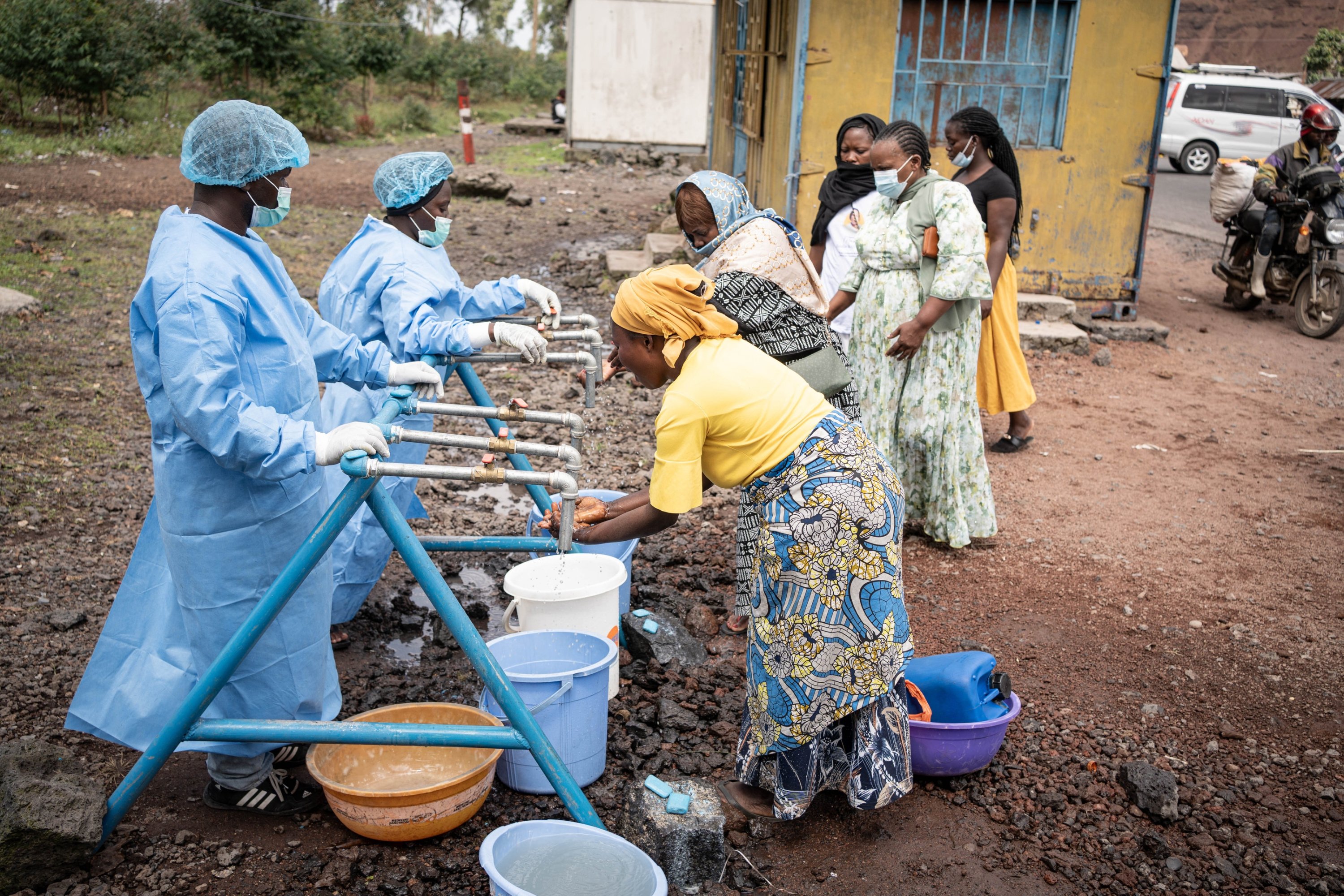
Experts say the outbreak’s true scale may still be unknown. The virus is believed to have circulated undetected for weeks before officials formally recognized it, raising fears that infections may already be deeply embedded in remote communities.
For healthcare workers on the ground, gaining public trust has become just as important as medical treatment. Families are often terrified of isolation centers, where patients are separated from relatives behind layers of protective equipment and strict infection protocols.
“To follow isolation rules, safe burials and contact tracing, there must be trust,” said Pierre Boisselet of the Ebuteli research institute. “The current situation of conflict and fragmented authority does not seem very favorable.”
Despite the risks, medical staff continue trying to maintain human connections inside the treatment centers. Families are allowed supervised visits in hopes of reducing fear and encouraging more people to seek help before it is too late.
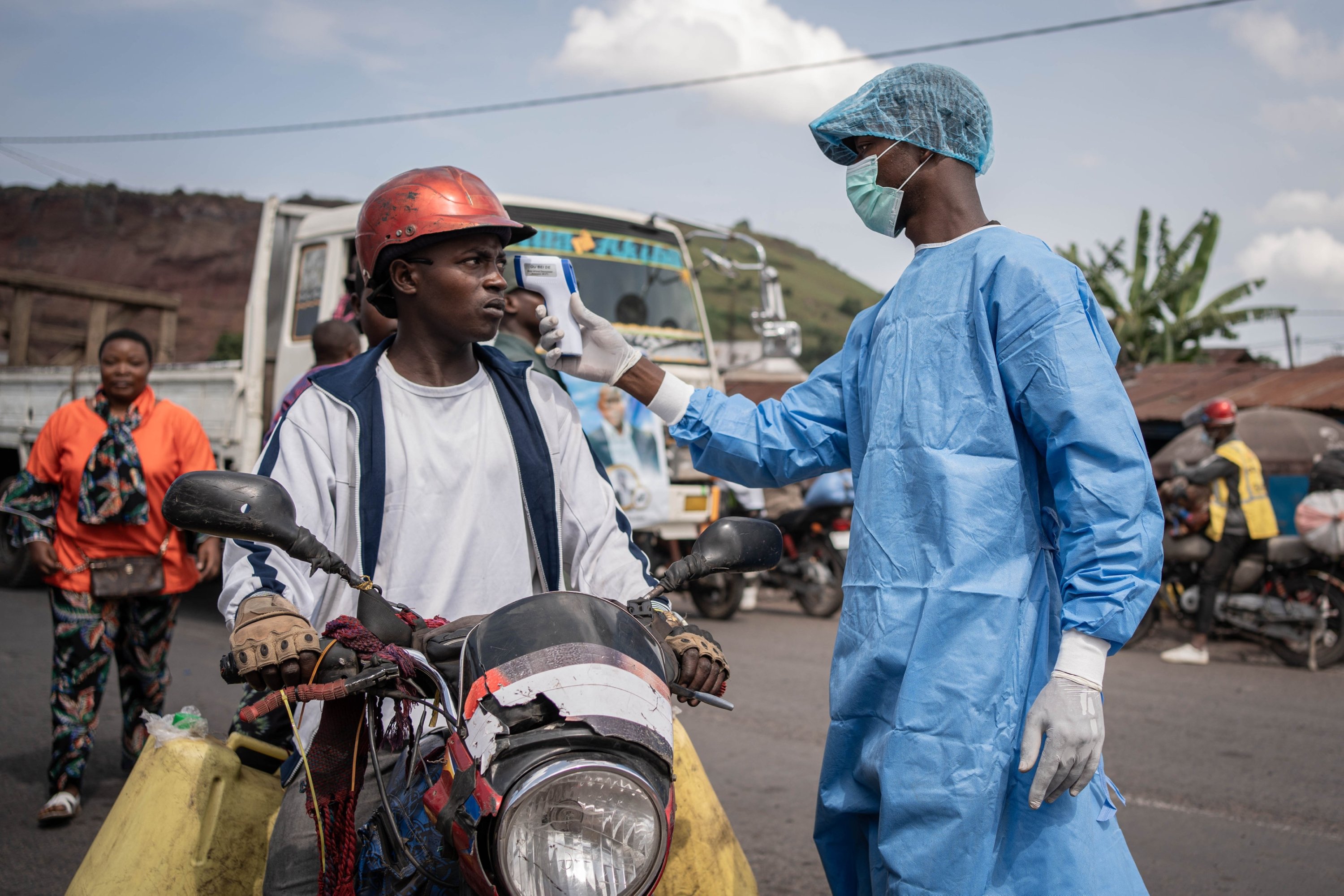
“From a moral standpoint, it is important to establish communication between patients and their family members,” said Ganou Lamissa, logistics coordinator for Alima. “It reassures both the patients and their relatives.”