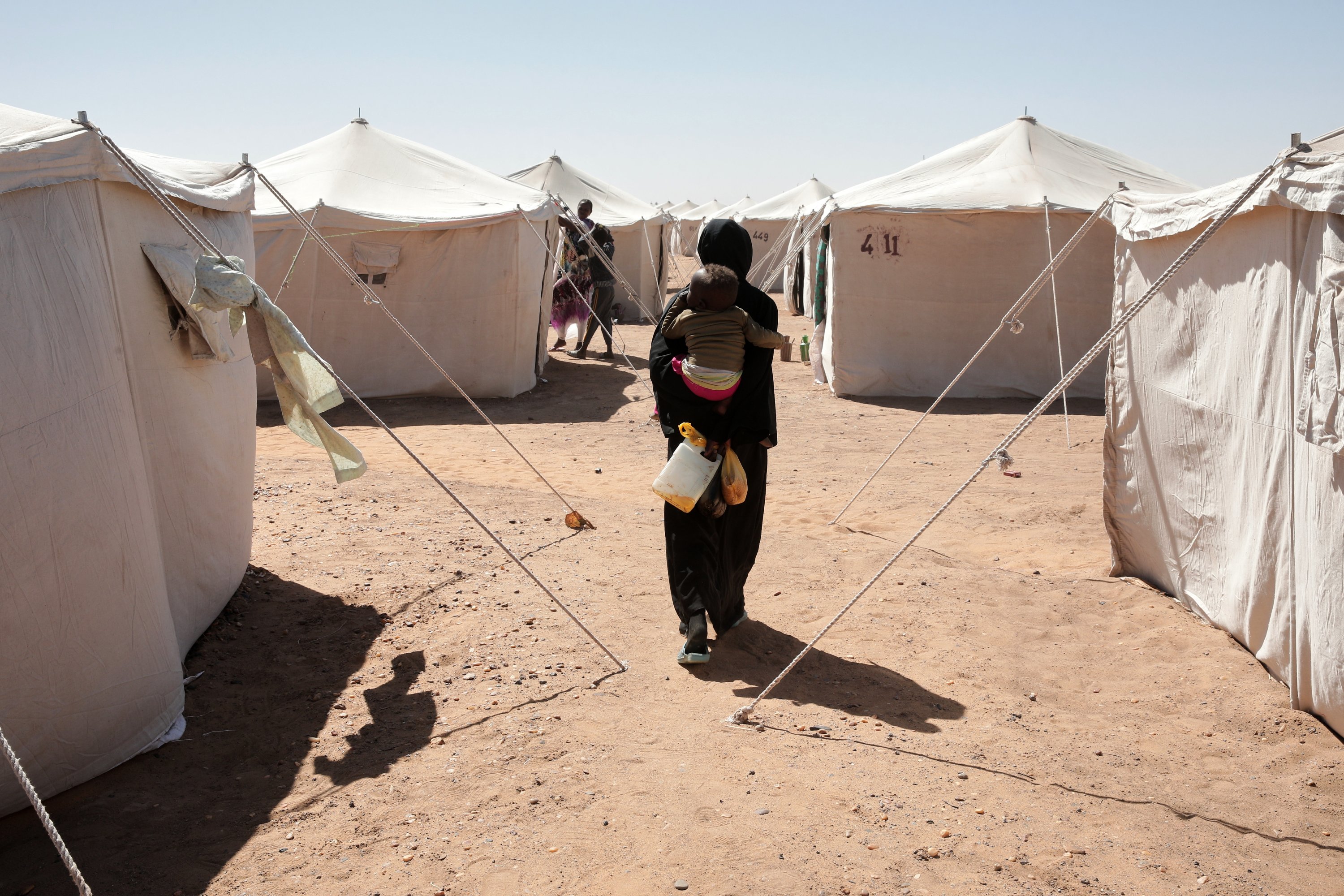
Sudan marks Wednesday three years since the outbreak of the civil war, which has devolved into a devastating cycle of repeated violence that has killed tens of thousands and displaced more than 11 million people.
What began on April 15, 2023, as hostilities between the Sudanese army and the paramilitary Rapid Support Forces (RSF), is now entering its fourth year, defined by what the U.N. describes as the "world's largest humanitarian crisis."
A sharp escalation in modern warfare marks the anniversary, specifically the use of unmanned aerial vehicles, said U.N. aid chief Tom Fletcher Tuesday.
"In the first three months of this year, nearly 700 civilians were reportedly killed in drone strikes," Fletcher said in a statement.
In recent months, near-daily drone strikes have disrupted life across Sudan, particularly in the southern Kordofan region, now the war's main battleground, and in RSF-controlled areas of the west, including Darfur.
"Millions have been driven from their homes across Sudan and beyond its borders, with entire communities emptied and families uprooted time and again. The risk of wider regional instability is high," said Fletcher.
Analysts note that fighting is intensifying rather than de-escalating, with recent clashes also spreading into Blue Nile state.
The economic toll of the three-year conflict has been equally catastrophic. A new report from the U.N. Development Programme (UNDP) reveals that seven in 10 Sudanese now live in poverty, a staggering increase from the 38% recorded before the war. Average incomes have plummeted to levels last seen in 1992, effectively erasing decades of development.
Luca Renda, the UNDP’s Sudan representative, warned that the nation is witnessing the "systematic erosion of a country's future," noting that 7 million people were pushed into extreme poverty in 2023 alone. For many, the situation is even more dire; at least a quarter of the population survives on less than $2 a day.
"These figures are not abstract," Renda said. "They reflect families torn apart, children out of school, livelihoods lost and a generation whose prospects are steadily diminishing."
On the humanitarian front, the scale of suffering is immense. Approximately 34 million people – nearly two out of every three citizens – now require urgent assistance.
Hunger is surging as the lean season approaches, leaving hundreds of thousands of children acutely malnourished. More than 21 million people in Sudan face acute food insecurity, while two-thirds of the population urgently needs assistance, according to the U.N.
Beyond the threat of starvation, the conflict remains defined by systemic atrocities. Denise Brown, the U.N.’s resident and humanitarian coordinator in Sudan, warned that the country is "stuck in a cycle" of repeated sexual violence and displacement.
Brutal sexual violence against women and girls remains a "defining feature" of the war, particularly in the Darfur region.
Despite the magnitude of the crisis, international support has been criticized as woefully inadequate. The U.N. appeal for $2.9 billion to fund the 2026 response is currently only 16% covered as global contributions decline.
Fletcher said that last year, humanitarians reached 17 million people with support and this year, they would try to help 20 million.
The eyes of the international community now turn to Berlin, where donors and diplomats are scheduled to gather Wednesday. The conference aims to revive faltering peace talks and mobilize much-needed aid for a population that has been "uprooted time and again."
"The response is critically underfunded," he said. "We need action now – to stop the violence, protect civilians, ensure access to communities in greatest danger, and fund the response."
"This grim and chastening anniversary marks another year when the world has failed to meet the test of Sudan," said Fletcher.
Brown echoed this frustration, questioning what more must occur "for everyone to sit up and pay attention to find the solution."
For the millions of Sudanese facing acute food insecurity and a generation of children deprived of education, the stakes of these talks could not be higher as the war enters its fourth year.