Sudan’s military leadership is considering a fresh United States-Saudi proposal aimed at securing a humanitarian truce and a broader cease-fire, a rare diplomatic opening as the country’s grinding civil war approaches its 1,000th day with no durable peace in sight.
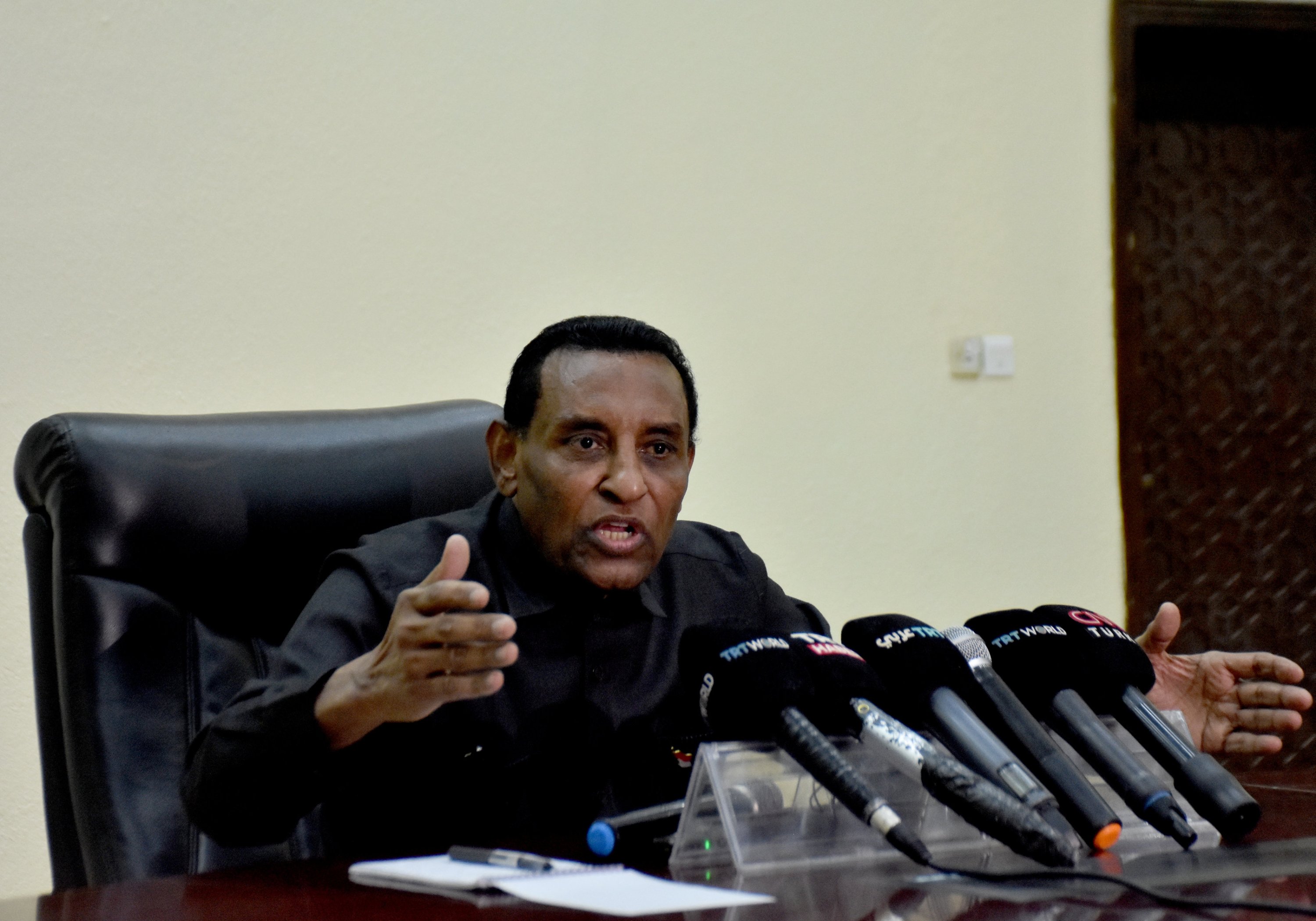
A Sudanese government source said the Sudanese Armed Forces (SAF) received the joint initiative and that the Security and Defence Council, bringing together senior military figures and allied civilian officials, met Tuesday to review it.
The plan, according to the source who spoke on condition of anonymity, outlines operational steps to implement and monitor a cease-fire, with humanitarian access at its core.
The timing underscores the scale of the crisis. Since fighting erupted on April 15, 2023, Sudan has splintered into rival zones of control, mediation efforts have repeatedly collapsed, and the war has produced one of the world’s worst humanitarian disasters.
The conflict pits the SAF, led by Gen. Abdel Fattah al-Burhan, Sudan’s de facto head of state, against the Rapid Support Forces (RSF) commanded by Mohamed Hamdan Dagalo, known as Hemedti.
Their alliance, formed after the 2019 overthrow of autocrat Omar al-Bashir and cemented by a 2021 coup that derailed civilian rule, fractured over power, money and the fate of the RSF, whose integration into the regular army became a flashpoint.
What began in Khartoum quickly spread.
The RSF seized large swaths of the capital and western Sudan, while the SAF leaned on air power to hold Port Sudan, now the seat of government, and much of the east.
By late 2025, the RSF had consolidated control across much of Darfur, including El Fasher, while heavy fighting spilled through Kordofan into early 2026.
The human cost is staggering. Tens of thousands have been killed, with some estimates, counting indirect deaths from hunger and disease, pushing far higher.
More than 20 million people need urgent health assistance. Famine has been declared in parts of Darfur and North Kordofan, including displacement camps.
Displacement has reached historic levels: roughly 9-11 million people are internally displaced, with another 2-3 million fleeing to neighboring countries.
UN projections warn that 33.7 million people, about two-thirds of Sudan’s population, will require humanitarian aid in 2026.
Hospitals have collapsed in many areas, and investigators have documented sexual violence, ethnic-targeted killings in Darfur, and systematic looting.
Both sides face accusations of war crimes and violations of international humanitarian law.
Diplomatic efforts have repeatedly faltered. U.S.-and Saudi-brokered talks in Jeddah produced short-lived humanitarian pauses.
Subsequent initiatives in Manama, Geneva and Cairo stalled amid distrust and battlefield shifts.
The so-called Quad, Egypt, the UAE, the United States and Saudi Arabia, has been paralyzed by mutual recriminations.
Al-Burhan has accused the UAE of backing the RSF, a claim Abu Dhabi denies but which U.N. experts and international reports say is supported by evidence of supply routes via Chad and Libya.
Sudan cut ties with the UAE in 2024 and pursued unsuccessful legal cases.
A Quad-linked proposal late last year, a three-month humanitarian truce followed by a national cease-fire and political roadmap, was dismissed by al-Burhan as unacceptable, even as the RSF floated conditional support that never translated into calm.
Regional rivalries further complicate the picture.
Egypt and Iran are reported to support the SAF, with Iran supplying drones, while the RSF is alleged to benefit from Emirati backing.
Saudi Arabia has positioned itself as a mediator, driven by Red Sea security concerns and a desire to limit destabilizing spillover.
The latest initiative appears to be a more focused US-Saudi push, potentially bypassing the stalled Quad.
While details remain closely held, the emphasis is on humanitarian access and credible monitoring, two elements aid agencies say are essential for any truce to matter on the ground.
Washington’s engagement has intensified under the Trump administration, inaugurated in January 2025, while Riyadh has sustained high-level diplomacy.
As of Tuesday, the RSF had not publicly responded to the proposal.
For the SAF, the council’s deliberations suggest cautious interest amid intensified fighting and warnings of further escalation.
Still, expectations are low.
Analysts note that both sides continue to pursue military gains, the SAF seeking to claw back territory, the RSF entrenching control in resource-rich areas, while external arms flows and deep mistrust sap the prospects for compromise.
U.N. officials insist that any pause must prioritize civilian protection, unimpeded aid delivery and accountability to have lasting effect.